The first time someone asked me to describe what relaxed felt like, I couldn’t answer. Not because I was being difficult, but because I genuinely didn’t have a reference point. My shoulders lived somewhere near my ears. My jaw held tension I didn’t know was there until someone pointed it out. Even in sleep, my body seemed to be listening for something—always ready, always slightly coiled.
I thought this was just who I was. The vigilant one. The one who noticed everything, felt everything, anticipated everything. It wasn’t until I began to understand the intricate dance between my adrenals and my nervous system that I realized this wasn’t a personality trait—it was a biology that had forgotten how to find neutral.
The human nervous system is designed to move between states: alertness when needed, rest when safe. Mine had gotten stuck in the middle ground—not quite emergency, not quite peace.
Just a constant low-level hum of readiness that I had mistaken for normal.
The Biology Behind the Buzz

Your adrenal glands sit like small caps on top of your kidneys, quietly orchestrating your body’s response to stress through the hormone cortisol. In a healthy system, cortisol rises in the morning to help you wake up, stays steady through the day to maintain alertness, and drops in the evening to prepare you for rest. It’s elegant when it works. But chronic stress—whether from work pressure, relationship strain, or just the general pace of modern life—can dysregulate this rhythm.
Your adrenals begin producing cortisol at inappropriate times or in inappropriate amounts. Too much in the evening keeps you wired when you should be winding down. Too little in the morning leaves you dragging when you should feel energized.
What I didn’t understand for years was that my anxiety wasn’t just in my head—it was in my hormones. The tight chest, the racing thoughts, the inability to fully exhale weren’t character flaws or lack of willpower. They were my body’s way of saying the stress response system needed attention, needed recalibration, needed support to remember how to find balance again.
Ready to support your adrenals’ natural morning rhythm?
When Rest Becomes Foreign

I remember the exact moment I realized how far from baseline I had drifted. I was lying in a hammock on vacation, sun warm on my skin, nowhere to be for hours, and my body was still humming with low-grade tension. My mind kept scanning for problems to solve, tasks to remember, scenarios to prepare for. Even paradise couldn’t convince my nervous system it was safe to truly let go.
This is what happens when your stress response system gets stuck in the “on” position. Your body begins to interpret rest as unsafe, relaxation as vulnerability.
The very state you need most—deep, restorative calm—becomes the hardest thing to access. You start to forget that stillness is possible, that peace is your birthright, not something you have to earn or achieve. The irony was profound: the more anxious I became about being anxious, the more my cortisol levels stayed elevated. The more I fought the feeling, the more entrenched it became. My nervous system was caught in a loop, and I needed to address the biology, not just the psychology, to find my way out.
Tired of that constant low-level hum of tension?
The Missing Piece in My Healing

I had tried everything that anxiety experts recommend: meditation, therapy, exercise, better boundaries. Each practice offered some relief, but none addressed what I now understand was the foundation issue—my cortisol patterns were chaotic. My morning levels were low when they should have been high. My evening levels were high when they should have been dropping. No amount of breathing exercises could override a hormonal system that was fundamentally out of rhythm.
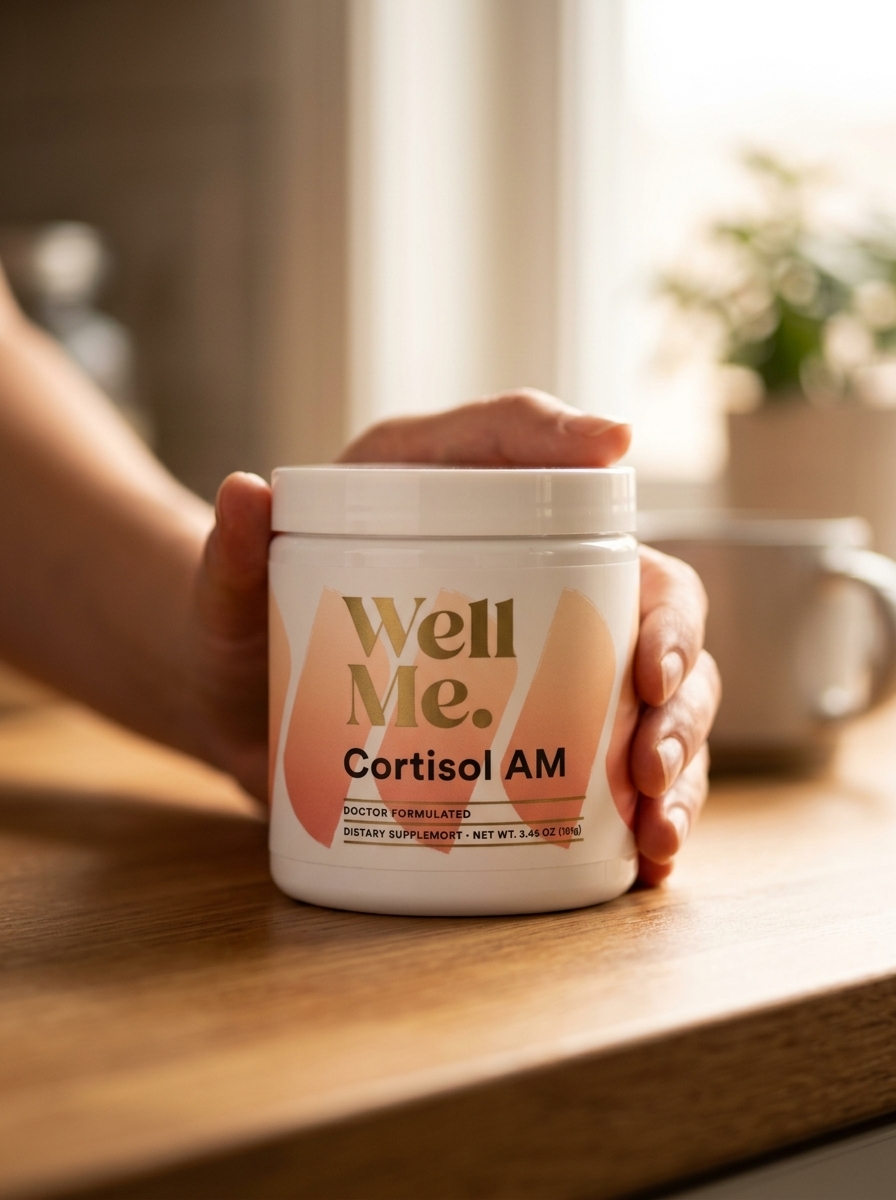
This is where Cortisol AM became a game-changer in my healing process. Rather than trying to suppress or ignore my body’s stress response, this supplement worked with my natural circadian rhythms to gently guide cortisol back toward its intended pattern.
The morning adaptogens helped my adrenals remember how to provide clean, sustained energy without the jittery peaks and crashes I had grown accustomed to. What struck me most was how subtle the shift felt at first. Not dramatic, not overwhelming—just a gradual settling, like my nervous system was slowly remembering an old song it used to know. The constant background hum of vigilance began to quiet. My shoulders started to drop away from my ears without conscious effort. Sleep became deeper, more restorative.
Your nervous system is wise and wants to heal.
Learning to Trust the Quiet

One of the strangest parts of nervous system healing is learning to trust calm when it arrives. After years of hypervigilance, relaxation can feel almost dangerous—like you’re letting your guard down at the wrong moment. Your brain, trained to scan for threats, doesn’t immediately recognize peace as safe. I found myself testing the stillness at first, almost suspicious of it.
Was this real? Would it last? What if I needed to be anxious about something and couldn’t access that familiar state of readiness? It sounds ridiculous now, but anxiety had become so familiar that its absence felt foreign, almost uncomfortable.
This is normal, I learned. When your nervous system begins to regulate, there’s often a period of adjustment where calm feels unfamiliar.
Your body has to relearn that safety is possible, that you can be alert without being anxious, present without being hypervigilant. The key is to move slowly, to let your system adjust gradually rather than forcing dramatic change.
Reclaim Your Morning Energy
Support your adrenals’ natural rhythm without the jittery peaks and crashes.
Cortisol AM works with your circadian rhythms to gently guide cortisol back toward its intended morning pattern. Morning adaptogens help your adrenals provide clean, sustained energy while supporting nervous system regulation. No forcing dramatic change—just gradual settling as your body remembers its natural song.
- ✓ Shoulders drop naturally without conscious effort
- ✓ Clean morning energy without afternoon crashes
- ✓ Deeper sleep as evening cortisol finds balance
The Ripple Effects of Regulation

As my cortisol patterns began to stabilize, other aspects of my health shifted in ways I hadn’t anticipated. My digestion improved—apparently, chronic stress had been affecting my gut more than I realized. My skin cleared up; those stress breakouts that I thought were just part of adult life began to fade. Even my relationships felt different as I became less reactive, less likely to interpret neutral situations as threatening.
Sleep transformed from something I did between periods of worry to actual restoration. I would wake feeling rested instead of already planning how to manage my energy through the day.
The afternoon crashes that had me reaching for caffeine or sugar became less frequent, then disappeared entirely as my adrenals found their natural rhythm again. Perhaps most surprisingly, my creativity returned. I hadn’t realized how much mental energy anxiety was consuming until I had that energy back. Colors seemed brighter, conversations more engaging, possibilities more accessible. It was as if I had been living life through a filter of tension I didn’t know was there until it lifted.
Give your adrenals the foundation support they’re asking for.
The Practice of Coming Home to Yourself

Nervous system regulation isn’t a destination—it’s an ongoing practice of coming home to yourself. Some days, stress will spike your cortisol and you’ll feel that familiar hum return. The difference now is that you recognize it as temporary, as information rather than identity. You have tools to support your body back toward balance instead of accepting dysregulation as permanent.
I still use Cortisol AM as part of my morning routine, not as a crutch but as support for the foundation I’ve built. Think of it like taking a daily multivitamin—not because you’re sick, but because you want to maintain optimal function.
My adrenals now have the resources they need to respond appropriately to stress without getting stuck in chronic activation. The practices that didn’t work before—meditation, breathwork, gentle exercise—now have space to be effective because my biological foundation is stable. It’s easier to find your breath when your nervous system isn’t constantly braced for impact. It’s easier to be present when your cortisol isn’t pulling your attention toward imaginary threats.
Experience what it feels like when your body remembers safety.
What Healing Actually Feels Like

People often ask me what nervous system healing feels like, expecting a dramatic before-and-after story. The truth is more subtle and perhaps more profound. Healing feels like coming home to a version of yourself you forgot existed. It feels like your body remembering how to be a safe place to live.
Now, when someone asks me what relaxed feels like, I have an answer. It feels like sinking into a warm bath after a long day. It feels like the exhale at the end of yoga class. It feels like your shoulders dropping away from your ears without conscious effort.
It feels like trust—in your body, in the moment, in the possibility that you don’t have to be constantly prepared for disaster.
The vigilance is still available when I need it—for actual challenges that require attention and response. But it’s no longer my default state. I can access calm as easily as I can access alertness, and that flexibility, that range of responses available to me, feels like the greatest gift of all. Your nervous system wants to heal. Your adrenals want to find their rhythm. Sometimes they just need the right support to remember how.
The body you’re living in isn’t broken—it’s wise, responsive, and capable of profound restoration when given what it needs to thrive.
Written by Liora Menden — for those who seek nervous system peace
Your shoulders are ready to drop away from your ears.