My medicine cabinet looked like a crime scene.
Three bottles of magnesium — different forms, none of which I could tell apart anymore. A tub of greens powder I’d stopped mixing two weeks in. Fish oil capsules turning slightly amber near the back. And a B-complex that made my pee neon yellow but didn’t seem to do much else.

I wasn’t reckless about any of it. That was the frustrating part. Every single purchase had a reason. A podcast recommendation. A blood panel that looked “a little low.” A friend who swore this one changed everything for her. I’d done the reading. I’d done the buying. What I hadn’t done was feel any different.
The tiredness I carried wasn’t dramatic. It wasn’t the kind that sends you to bed at six. It was the kind that made four o’clock feel like a dare — like my body was daring me to try one more focused task before it shut down. The kind where you finish dinner, look at the dishes, and feel something almost like grief. Not sadness. Just… absence. The energy that should’ve been there wasn’t.
And I kept wondering: what am I actually missing?
⸻
When the Problem Isn’t What You’re Taking — It’s Where It Goes

Here’s what nobody told me during all those supplement hauls: most of what I was swallowing never reached the part of the cell that actually makes energy.
Your mitochondria.
I know the word gets thrown around like a buzzword now. But once I actually sat with what mitochondria do, everything clicked into place. These are the structures inside almost every cell in your body that convert what you eat into something called ATP — your body’s actual fuel. Not metaphorical fuel. Literal chemical energy that powers your muscles, your brain, your breath.
When mitochondria work well, energy feels effortless. You don’t notice it. You just… do things.
When they start to slip — and they do, gradually, especially past your early thirties — energy stops being a given. It becomes a negotiation. You start budgeting it. Choosing between the workout and the errands. Between being present at dinner and collapsing on the couch afterward.
Most of what I’d been supplementing was upstream. Vitamins, minerals, adaptogens — all good things. But none of them were directly addressing the tiny engines that convert those nutrients into something usable. It was like putting premium gasoline in a car with a failing alternator.
⸻
What I Learned About the Best Mitochondrial Support Supplements

Once I started reading specifically about mitochondrial function — not general wellness, not vague “energy support” — the landscape looked completely different.
There are nutrients that actually participate in the energy cycle inside mitochondria. CoQ10 is one. It plays a direct role in the electron transport chain, which is the final step before ATP is produced. PQQ is another — it helps generate new mitochondria entirely, a process called biogenesis. Then there are plant-based compounds like rhodiola and astaxanthin, which protect existing mitochondria from oxidative stress, the kind of damage that accumulates silently as you age.
What surprised me wasn’t that these existed. It was how rarely they showed up in the supplements I’d been buying. Most “energy” formulas lean on caffeine or B-vitamins. Those are stimulants and cofactors — they can nudge wakefulness, but they don’t rebuild the infrastructure that produces energy in the first place.
I wanted something that went deeper. Not a spark. A foundation.
The Shift I Wasn’t Expecting

I came across a formula built around six plant-based ingredients — Maqui Berry, Rhodiola Rosea, astaxanthin from Haematococcus algae, Amla, Theobroma Cacao, and Schisandra. Each one chosen specifically for how it interacts with mitochondria. Not a kitchen-sink vitamin. Not a proprietary blend with hidden doses. Just a focused capsule designed to do one thing: support the organelles that produce your energy.
It was called Mitolyn. Two capsules in the morning.
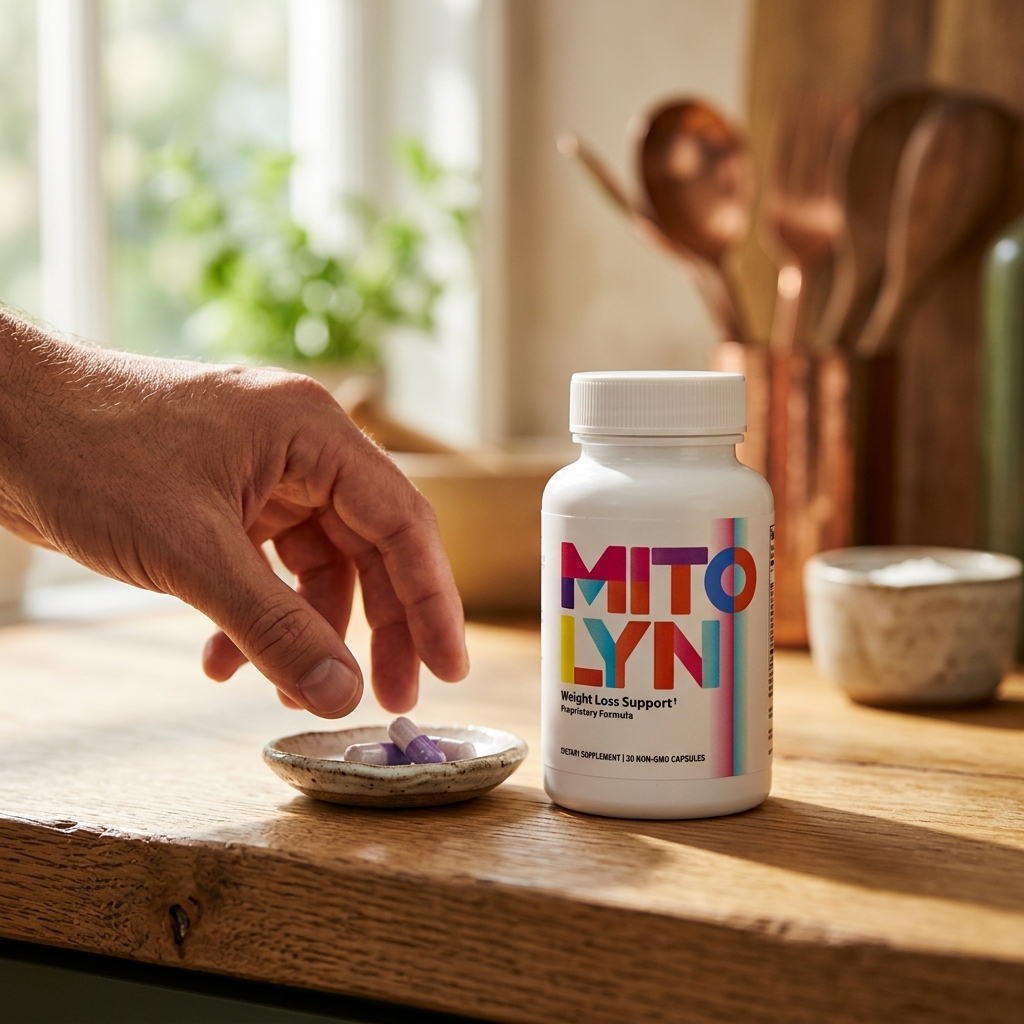
Energy That Doesn’t Fade
What if 4 PM stopped feeling like a wall you hit every single day?
Mitolyn delivers six plant-based ingredients — Maqui Berry, Rhodiola, Astaxanthin, Amla, Cacao, and Schisandra — directly to the mitochondria that produce your body’s real fuel. Not a stimulant. Not a temporary spike. A foundation your cells can actually use, morning through evening.
-
Supports the cellular engines that turn food into steady, lasting energy
-
Shields mitochondria from the daily oxidative wear that drags you down
-
Replaces the six-bottle guessing game with one focused daily capsule
I didn’t feel anything for the first week, and honestly, that was reassuring. I’ve learned to distrust supplements that hit fast — that’s usually stimulation, not support. Around day ten, something shifted. Not a jolt. More like the background hum of fatigue got quieter. Four o’clock stopped feeling like a wall. I got through dishes after dinner without that weird internal negotiation.
By the third week, I noticed I wasn’t thinking about energy at all. Which, if you’ve spent months tracking it, is the strangest kind of relief — the absence of the problem becoming the proof that something changed.
⸻
Why This Felt Different From Everything Else I Tried

I’ve taken CoQ10 on its own before. I’ve tried standalone adaptogens. Rhodiola by itself gave me a kind of wired calm that I liked but couldn’t sustain. The difference with a multi-pathway approach — something that combines mitochondrial protection, biogenesis support, and antioxidant coverage in one formula — is that it doesn’t ask you to stack six bottles and hope for the best.
- Maqui Berry brings a dense concentration of anthocyanins, which shield mitochondria from the oxidative wear that comes with daily metabolic activity.
- Rhodiola helps the body resist physical and mental fatigue at the cellular level.
- Astaxanthin — the red pigment from Haematococcus algae — is one of the most potent natural antioxidants studied for mitochondrial membrane protection.
- Amla delivers a massive dose of natural vitamin C for immune and cellular repair.
- Cacao supports healthy blood flow, which means better nutrient delivery to cells.
- Schisandra, used for centuries in traditional practice, helps the body adapt to stress without overstimulation.
Together, they don’t just top off a deficiency. They support the system that turns everything else you eat into something your body can actually use.
That’s the part I had been missing for years.
What I’d Tell Someone Still Standing in the Supplement Aisle

If you’re reading this with that same tired frustration I carried — the feeling that you’re doing everything right and still dragging — I’d gently suggest looking one level deeper.
Not at what your blood panel says. Not at what’s trending in wellness circles. At what’s happening inside your cells. At the mitochondria that are either producing enough ATP to carry you through your day, or quietly stalling out while you blame yourself for not having more discipline.
The best mitochondrial support supplements aren’t the ones with the longest ingredient list. They’re the ones that actually reach the part of the cell where energy begins.
For me, Mitolyn was the one that finally matched the science I’d been reading to a felt shift in my body.
I still take my magnesium. I still eat well. But the difference now is that the foundation underneath all of it actually works. And the energy I feel at four in the afternoon — steady, quiet, unremarkable — might be the most remarkable thing that’s changed.
Written by Elias Menden — for those who seek steady energy and quiet strength.
Related reading
- The Cellular Energy Secret: How Mitochondrial Support Changes Weight Loss
- Cellular Energy Support: Why Feeling Better Sometimes Starts Smaller Than You Think
- Best Supplements for Chronic Fatigue That Helped Me Find My Energy Again
- The Best Supplements for Cellular Health: What Nobody Told Me About Where Energy Actually Starts