The first sign wasn’t dramatic. Just a moment at the grocery store when I realized I was holding the cereal box at arm’s length, squinting at the ingredient list like it was written in code. My wife noticed before I did—how I’d lean closer to the television, how I’d pause longer at street signs, how reading became something I did only in perfect lighting.
At fifty-two, I’d accepted that reading glasses were inevitable. What I hadn’t expected was how these changes would ripple through everything else. My depth perception felt off. Colors seemed muted. And strangest of all, I found myself asking people to repeat themselves more often, as if my ears were somehow connected to whatever was happening with my eyes.
That last observation turned out to be more important than I realized.
The Web Your Senses Weave

Your brain doesn’t process vision in isolation. Every time you see something clearly, your auditory cortex is quietly working alongside your visual centers, creating a complete picture of your world. When I started researching what was happening to my sight, I stumbled across something fascinating: the same neural pathways that support sharp hearing also influence how your brain interprets visual information.
Think about it—when you’re straining to see something in dim light, you instinctively lean in and listen more carefully. Your senses are teammates, not competitors. The delicate structures in your inner ear that help you maintain balance also send signals that help your brain stabilize your visual field. When those structures aren’t getting the nutrients they need, both systems can start to falter together.
This wasn’t just academic curiosity for me.
I’d been dealing with occasional ringing in my ears for months, dismissing it as stress or too much coffee. Now I was wondering if these seemingly separate issues were actually connected—different symptoms of the same underlying problem.
Ready to support the connections that keep your senses sharp?
What Really Changes With Time
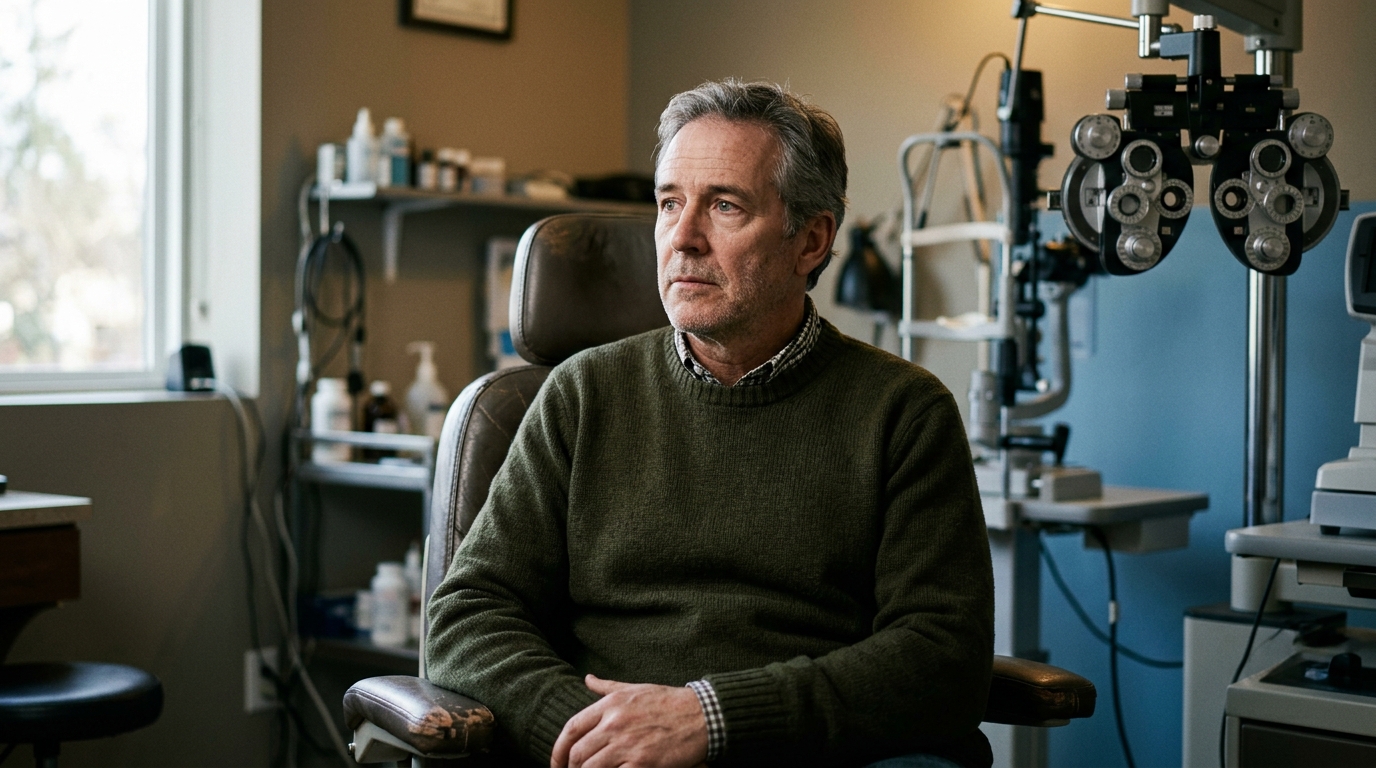
The eye doctors I consulted were thorough but not particularly encouraging. “Normal age-related changes,” they said, prescribing stronger reading glasses and suggesting I get used to more light when reading. But normal didn’t mean inevitable, and I wasn’t ready to accept that my forties meant watching my world slowly blur around the edges.
The research I dove into revealed something that made sense of my experience. As we age, the tiny capillaries that feed both our retinas and our inner ear structures become less efficient. The cellular energy production that keeps these delicate tissues functioning optimally starts to decline. Free radical damage accumulates. The result isn’t just vision changes—it’s a subtle dimming of all your senses.
Your ears and eyes are some of the most metabolically active tissues in your body. They need constant fuel, constant repair, constant protection from oxidative stress. When that support system weakens, you don’t just lose visual acuity—you lose the sharp, integrated sensory experience that makes life feel vivid and immediate.
Curious about a comprehensive approach to sensory clarity?
The Supplement Trail That Led Nowhere

Armed with this understanding, I started what felt like a part-time job: researching eye health supplements. Lutein, zeaxanthin, bilberry extract, omega-3s—I read studies until my eyes burned (which, given my situation, felt particularly ironic). I tried single-ingredient supplements first, then combinations, then expensive “vision support” formulas that promised everything and delivered very little.
The problem wasn’t that these ingredients were useless. Many of them had solid research behind them. The problem was that they were addressing only part of the equation. I was treating my eyes like they existed in isolation, ignoring the intricate network of neural support they depend on.
After six months of supplement experiments that barely moved the needle, I was frustrated and beginning to think that “normal age-related changes” might be all the explanation I was going to get.
That’s when a conversation with my audiologist changed everything.
Want to experience integrated support for hearing and brain health?
The Connection I Wasn’t Expecting

I’d mentioned the vision changes during a routine hearing check, almost as an afterthought. My audiologist—a sharp woman in her sixties who’d been treating age-related hearing changes for decades—leaned back in her chair and smiled knowingly. “Your brain doesn’t just process what you hear,” she said. “It processes how you hear in relationship to everything else. Vision, balance, spatial awareness—it’s all connected.”
She explained something that no eye doctor had mentioned: the auditory processing centers in your brain don’t just handle sound. They also help coordinate the neural networks that support clear vision, especially in challenging conditions like low light or when you’re tracking moving objects. When those auditory pathways are functioning optimally, your entire sensory experience becomes sharper and more integrated.
This wasn’t just theory. She’d seen patients whose vision stability improved when they addressed their hearing health comprehensively—not just the mechanical aspects, but the neural support systems that kept everything working together smoothly.
Ready to move beyond managing symptoms to supporting the whole system?
A Different Kind of Solution

That conversation led me to ZenCortex, a supplement I’d never considered because I’d been focused exclusively on “eye health” formulas. But ZenCortex wasn’t just about hearing—it was designed to support the entire network of auditory and cognitive function that my audiologist had described. The ingredients targeted not just the structures of the inner ear, but the neural pathways that connected auditory processing to overall brain clarity.
What caught my attention was how comprehensive the approach was. Instead of treating hearing and cognitive function as separate issues, ZenCortex recognized that sharp mental focus, clear auditory processing, and stable sensory integration all depend on the same underlying systems—healthy circulation to delicate neural tissues, protection from oxidative stress, and support for cellular energy production.
For someone who’d been struggling with both vision changes and that persistent ear ringing, this made perfect sense. If my senses were connected, maybe supporting them required a connected approach.

Reconnect Your Senses
When hearing and vision work together, everything becomes clearer.
ZenCortex targets the neural pathways that connect your auditory and visual processing, supporting the integrated sensory experience that makes life vivid. This comprehensive formula nourishes the delicate structures of your inner ear while promoting the cognitive clarity that enhances all your senses.
- ✓ Mental clarity feels sharper and more sustained
- ✓ Sensory integration becomes effortless and natural
- ✓ Neural pathways support both hearing and visual processing
What Actually Changed

The shift wasn’t immediate, but it was unmistakable. Within the first few weeks of taking ZenCortex, the ringing in my ears began to fade. More surprising was what happened to my vision. Reading in moderate light became easier. I stopped automatically reaching for my phone’s flashlight when trying to read labels. The colors in our garden seemed richer, more saturated.
But the most profound change was something harder to quantify—a sense of sensory clarity that I hadn’t realized I’d been missing. Watching movies became more immersive. Conversations in noisy restaurants were easier to follow. I felt more spatially aware, more confident moving through spaces in low light.
My wife noticed the difference before I mentioned it.
“You’re not squinting as much,” she observed one evening as we read in bed together. She was right. The constant low-level strain I’d grown accustomed to had lifted, replaced by an ease of perception that felt natural and sustainable.
Interested in the neural support that enhances all your senses?
The Science of Sensory Support

Understanding why ZenCortex worked required diving deeper into how our senses actually function. The supplement targets several key pathways that support both auditory and visual clarity. By nourishing the delicate blood vessels that feed your retina and inner ear, it helps ensure these energy-hungry tissues get the oxygen and nutrients they need to function optimally.
The cognitive support aspect was equally important. The same neural networks that process complex auditory information—filtering background noise, localizing sounds, integrating what you hear with what you see—also contribute to visual processing speed and accuracy. When these networks are functioning well, your entire sensory experience becomes more efficient and less effortful.
This explained why addressing hearing health had such a profound impact on my vision changes.
I wasn’t just supporting one sense—I was supporting the integrated system that allows all your senses to work together seamlessly.
Want to experience the clarity that comes from integrated wellness?
Beyond Managing Changes

What started as a search for supplements to slow vision loss became something more comprehensive—a way to support the sensory clarity and mental sharpness that make life feel vivid and immediate. ZenCortex didn’t just address my symptoms; it addressed the underlying neural health that those symptoms reflected.
Now, two years later, I’m not just managing age-related changes—I’m actively supporting the systems that keep my senses sharp and integrated. Reading is a pleasure again, not a chore that requires perfect lighting. The world feels clear and immediate in a way that makes me grateful for this body that carries me through each day.
The vision changes that initially concerned me have stabilized, but more importantly, I’ve learned that supporting one aspect of neural health supports them all. In treating my senses as the connected system they truly are, I found a path back to the clarity and presence that make every day worth experiencing fully.
Written by Elias Menden — for those who seek integrated wellness
Ready to feel the difference this formula makes?