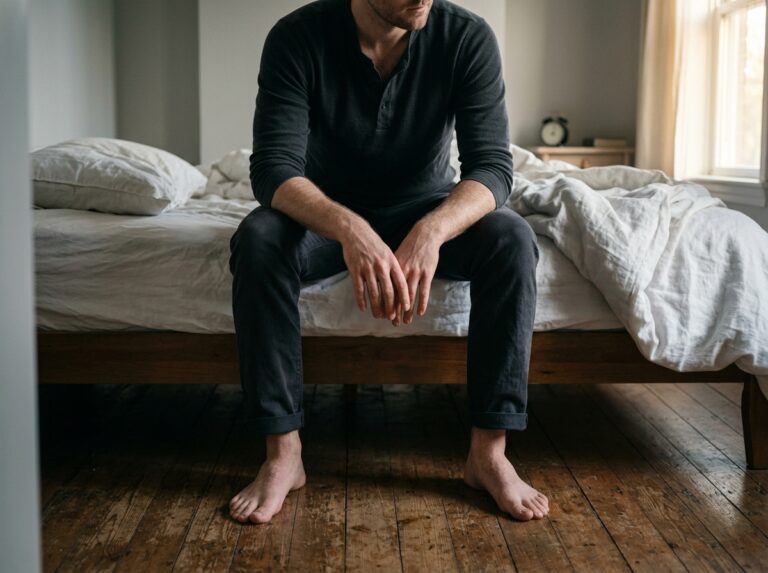
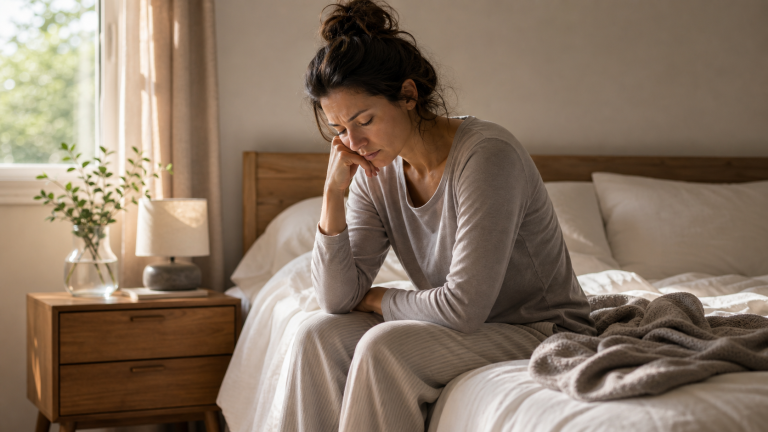
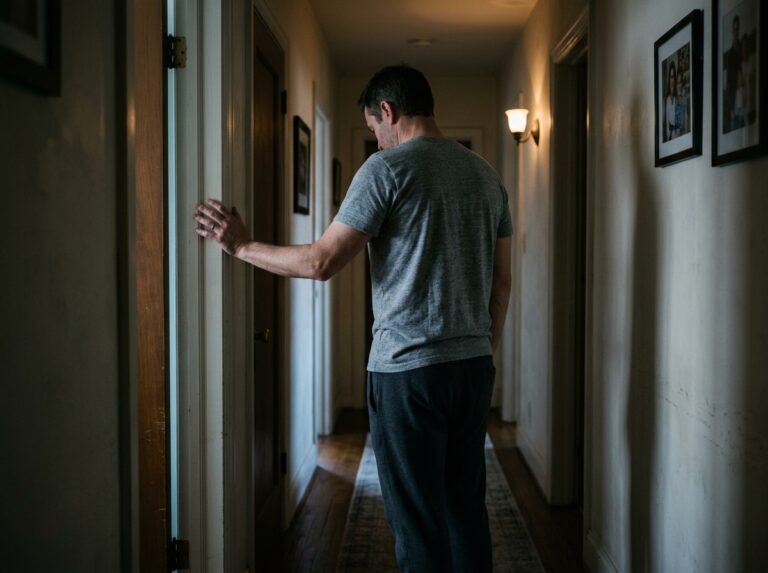
I used to treat sleep like a suggestion. Five or six hours, coffee for courage, and a tight jaw all day. One night, blue screen glow on my face, I felt wired but empty. The next morning, my patience and focus were gone. That’s when I started biohacking sleep—not with gadgets, but with light, rhythm, and one quiet helper that made everything click.
Why Sleep Is the First Biohack

When sleep is steady, your day holds. Energy rises, cravings quiet, mood evens, and the body repairs. Think of your cells as tiny engines; night is the tune-up. Skip it and you run hot, loud, and inefficient.
Key point: Biohacking sleep multiplies every other habit—nutrition, training, and stress resilience all work better on a rested system.
Sleep Cycles: Guard the Repair Window

You don’t sleep in a straight line. You loop through stages:
- Deep sleep: physical repair, hormone rhythm, nervous system downshift.
- REM sleep: memory sorting, emotional processing, neural cleanup.
Light at the wrong time, a hot room, late caffeine, or stress spikes can chip away at these stages. Protect the window and you protect your next day.
The Starter Stack (Begin With One Habit)

Morning light, evening dim
Ten minutes of natural light within an hour of waking sets your circadian rhythm. In the last two hours before bed, dim overheads, warm the bulbs, and soften screens so melatonin can rise.
Cool the room
Aim for 18–20 °C (65–68 °F). A cooler core helps you drop into deep sleep. Add light blankets or socks for comfort.
Keep a steady clock
Pick a bedtime and wake time—even on weekends. The body loves rhythm; it learns to land on cue.
Downshift your mind
Five to ten minutes of breathwork or progressive muscle relaxation tells your nervous system, “It’s safe now.” Fewer 2 a.m. spirals.
Eat and sip with sleep in mind
Pause caffeine after mid-afternoon. Finish dinner 2–3 hours before lights-out. If you want something warm, try chamomile or lemon balm.
Smart support when the basics are set
If you’re consistent yet still feel capped, add a gentle nighttime formula that helps your brain and body complete full sleep cycles.
This is where Renew made the difference for me—steady depth without the morning haze. Used nightly for 4–6 weeks alongside the basics, it helped my nights hold and my mornings clear.
My Turnaround: From Wired-Tired to Even-Keel

My shift started small: morning sunlight on my face and screens off an hour before bed. Week two, I cooled the room and added a short breath sequence. When the base was solid, I brought in Renew. Two weeks later, I fell asleep faster and woke lighter. Over months, my trends showed more deep sleep—and my days showed it first: calmer focus, easier training, kinder moods. That’s the quiet power of a night that holds.
Your Four-Week Sleep Blueprint

- Week 1: Morning sunlight + no screens after 9 pm—anchor your clock.
- Week 2: Fix bedtime/wake time—predictability becomes sleepy.
- Week 3: Cool the room, dim early, add a 10-minute wind-down.
- Week 4 (optional): Add Renew to deepen cycles and smooth wake-ups.
Track simple signals at wake: energy, clarity, mood, and how easily you got up. Change one thing at a time so you know what actually helps.
Quick FAQs
How fast will I notice changes?
Many feel easier wind-down within days; steadier mood and energy often show up after 3–4 weeks of consistency.
Is biohacking sleep risky?
Natural levers—light, rhythm, temperature, gentle supplements—are low risk for most adults. If you have a condition or take medications, check with your clinician.
Do trackers help?
Use them as guides, not judges. Watch trends. If deep sleep runs low, tweak temperature, stress downshifts, or supplement timing.
The Last Piece That Makes the Rest Work

If your light, rhythm, and room are dialed—and you still feel capped—add Renew. It’s the quiet assist that helps cycles land, so morning-you feels clear and steady.
If you’ve been feeling that same burnout I once had, start where I did. Try Renew. Use it nightly for 4–6 weeks while you keep the basics. Let your nights rebuild your days.
When biohacking sleep becomes your anchor, life gets lighter. Habits stick. Energy returns. You meet the morning without a fight.
Written by Liora Menden — for those who seek calm, radiance, and real recovery.
One last note
Biohacking sleep is less about doing more and more about doing less, better. One anchor habit, held for a week. Then another. Your nights rebuild themselves slowly — and your days, just as quietly, start holding again. The body remembers how to rest when you stop interrupting it.
f
I
c
o
u
l
d
o
n
l
y
k
e
e
p
o
n
e
s
l
e
e
p
h
a
b
i
t
,
i
t
w
o
u
l
d
b
e
a
c
o
n
s
i
s
t
e
n
t
w
a
k
e
t
i
m
e
—
e
v
e
n
o
n
w
e
e
k
e
n
d
s
,
e
v
e
n
a
f
t
e
r
b
a
d
n
i
g
h
t
s
,
e
v
e
n
w
h
e
n
I
d
i
d
n
‘
t
w
a
n
t
t
o
.
T
h
a
t
s
i
n
g
l
e
a
n
c
h
o
r
p
u
l
l
e
d
e
v
e
r
y
o
t
h
e
r
s
l
e
e
p
v
a
r
i
a
b
l
e
i
n
t
o
b
e
t
t
e
r
s
h
a
p
e
o
v
e
r
a
m
o
n
t
h
.
B
e
d
t
i
m
e
d
r
i
f
t
e
d
t
o
m
e
e
t
i
t
.
H
u
n
g
e
r
a
l
i
g
n
e
d
.
E
n
e
r
g
y
t
h
r
o
u
g
h
t
h
e
d
a
y
s
m
o
o
t
h
e
d
o
u
t
.
T
h
e
c
i
r
c
a
d
i
a
n
r
h
y
t
h
m
d
o
e
s
n
‘
t
n
e
g
o
t
i
a
t
e
.
G
i
v
e
i
t
a
r
e
l
i
a
b
l
e
w
a
k
e
t
i
m
e
a
n
d
e
v
e
r
y
t
h
i
n
g
e
l
s
e
s
t
a
r
t
s
c
o
o
p
e
r
a
t
i
n
g
.
Why sleep is foundational in a way nothing else is
Every other biohack — the fasting, the cold, the supplements, the workouts — earns its return from a body that actually sleeps. Without the sleep, you’re putting gas in a car with a dying alternator. You’ll still move. You won’t move far. Sleep isn’t one biohack among many. It’s the one that decides whether the rest of them work.