Three slides into a big presentation, my brain simply… emptied.
The faces in front of me blurred. Words I’d rehearsed all week slipped out of reach like they’d fallen behind a locked door. My mouth kept moving, but my thoughts were stuck in thick, invisible glue.
Later, someone said, “You seemed a little off today. Everything okay?”
And that was the moment I realized: no, everything was not okay.
For months I’d been blaming “brain fog” on stress, on being busy, on getting older. But the truth was quieter and much more basic: I was skimping on sleep, and my mind was paying the price.
When Sleep and Brain Fog Started Tag-Teaming My Life

At first it was small things.
- Walking into a room and forgetting why.
- Rereading the same sentence three times.
- Mixing up simple words and laughing it off.
Then it got louder. I’d lose my train of thought mid-sentence. I’d stare at my inbox, unable to decide what to answer first. Tasks that used to take 20 minutes stretched into an hour.
During the day, I felt like my mind was wrapped in cotton. At night, I wasn’t not sleeping—I was just sleeping badly.
- Scrolling in bed “to unwind”
- Falling asleep late
- Waking up at 3 a.m. with my heart racing
- Tossing between shallow dreams and half-awake worry
I was technically in bed for 7–8 hours… but my brain was running on fumes. And the science backs that up: even one night of poor sleep can drag down attention, reaction time, memory, and decision-making. Over time, the effects stack up like compound interest in the wrong direction.
That foggy, slow, “why can’t I think straight?” feeling isn’t imaginary. It’s what happens when the brain is trying to work without the deep, restoring stages of sleep it needs.
What’s Actually Happening Between Sleep and Brain Fog

Here’s the simple version of what I wish someone had told me earlier.
When sleep is broken, too short, or low quality, three big things tend to happen:
- Attention wobbles. Your brain drifts, you miss details, and tiny lapses turn into mistakes.
- Memory doesn’t “save.” Deep and REM sleep are when your brain files away what you learned that day. Poor sleep scrambles that filing system, so names, facts, and steps don’t stick.
- Inflammation creeps up. Lack of sleep can nudge up inflammatory signals in the body, and those changes are linked with slower thinking and more mental fatigue.
Put those together and you get the classic brain fog feeling:
- slow mental “loading time”
- needing extra coffee just to feel normal
- feeling emotionally thin and easily overwhelmed
Researchers are even finding that poor sleep quality is strongly tied to subjective cognitive decline—that quiet, unsettling sense that your thinking just isn’t what it used to be.
So no, sleep isn’t just “nice to have.” It’s one of your brain’s main operating systems. When that system glitches, brain fog is often the error message.
The Night I Finally Paid Attention to My Sleep
There was one night that changed everything.
I was lying in bed, staring at the ceiling, replaying the day’s mistakes like a low-budget highlight reel. Missed detail here. Awkward pause there. The phrase that kept looping in my head was:
“You’re just not sharp anymore.”
That sentence hurt more than any comment from someone else.
So I did something different. Instead of grabbing my phone, I grabbed a notebook. I wrote one simple question:
“If my brain depended on my sleep to survive… would I treat sleep the way I do now?”
The answer, obviously, was no.
That was the night I decided to treat sleep as a non-negotiable part of my brain health—not an optional upgrade. A friend had mentioned a deep sleep supplement she swore by, and I remember thinking, Maybe it’s time I stop trying to white-knuckle this alone.
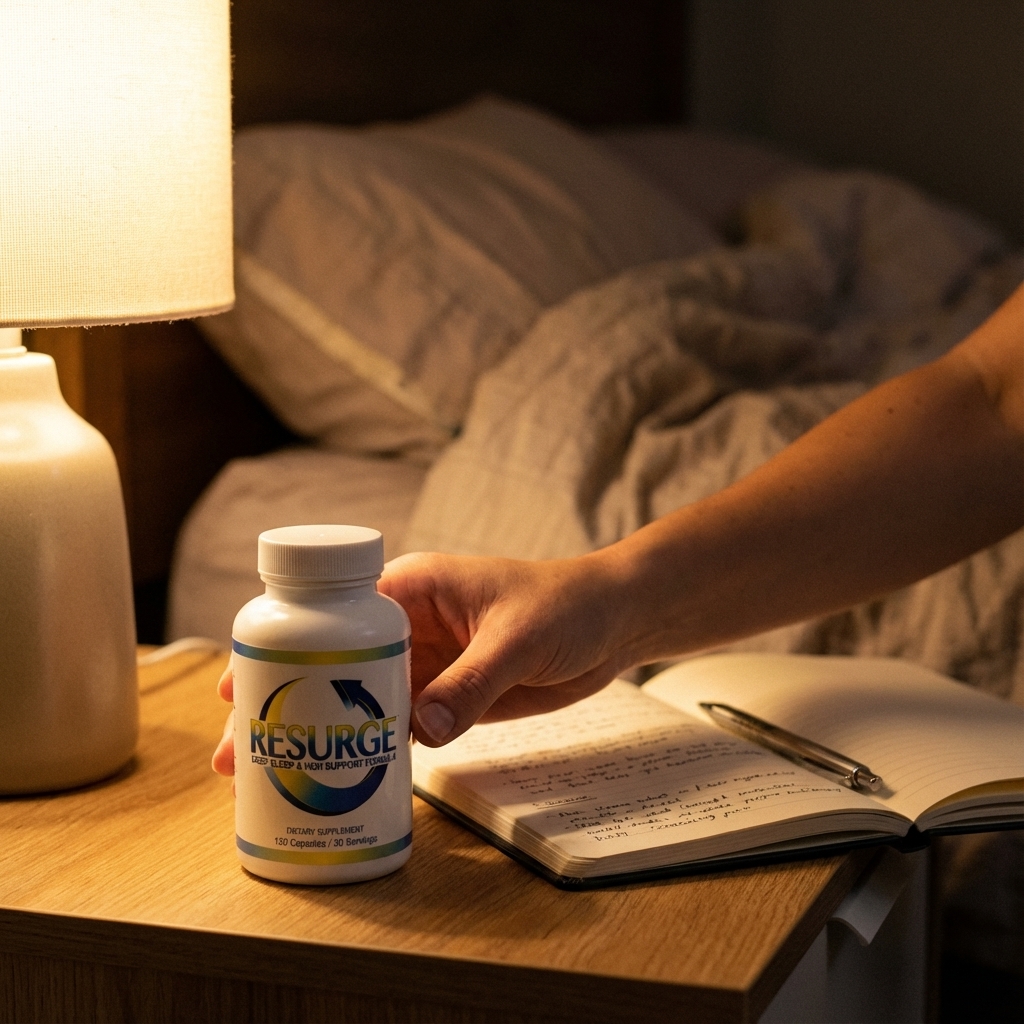
Make Deep Sleep Non-Negotiable
One small capsule before bed can stand between “another foggy day” and a steadier, clearer tomorrow
Resurge is a deep sleep supplement designed to support longer, more restful nights—so your brain isn’t running on scraps. Take it as part of your wind-down ritual and let the blend of gentle ingredients work while you sleep. You handle the routine. Resurge is there every night, backing it up.
-
Supports deeper, more continuous sleep so rest actually feels restorative
-
Helps you step into mornings with more calm, not just more caffeine
-
Fits into any simple evening ritual—no complicated steps or gadgets
I didn’t start with pills, though. I started with rhythm.
Rebuilding My Nights: The Habits That Quieted the Static

I didn’t overhaul my life overnight. I picked a few levers and moved them, one at a time.
1. A “fixed” wake-up time
I stopped obsessing over when I fell asleep and focused on waking up at the same time every day.
My brain loves patterns more than perfection. After a week or two of consistent wake time, I noticed:
- I got sleepy at a more predictable hour
- Falling asleep felt less like a battle
- I woke up slightly less groggy
It wasn’t magic. Just biology enjoying a regular rhythm.
2. Turning my room into a sleep cocoon
I asked myself: “If my bedroom were a message to my nervous system, what would it say?”
Before: bright lights, laptop on the bed, random laundry piles, notifications pinging.
After:
- soft, dim light in the last hour
- blackout curtains
- cooler air
- no screens on the mattress
Nothing fancy—just enough cues for my body to understand, Oh, we’re allowed to power down now.
3. Breaking up with blue light (slowly)
Instead of scrolling until my eyes hurt, I made a deal with myself:
- 30–60 minutes with no screens before sleep
- light stretching or a few pages of a book
- sometimes a warm shower to mark the transition
That single change made falling asleep feel less like jumping off a cliff and more like walking down a gentle ramp.
4. Eating for sleep, not against it
I started noticing how nights went after:
- heavy, late dinners
- sugary desserts
- extra caffeine “because I’m tired”
None of those helped.
What did feel better was keeping heavier meals earlier, easing up on late sugar, and building my daytime plate around protein, healthy fats, and colorful plants. Not perfect—a pattern.
5. Addressing the quiet stress
The truth is, my brain wasn’t just tired. It was tense.
Adding five minutes of slow breathing before bed felt almost too simple… but it shifted something. That, plus a short gratitude note in my journal, started to separate “day mode” from “night mode.”
Sleep and brain fog weren’t just random enemies. They were heavily influenced by how safe and settled my body felt before I ever closed my eyes.
A Deeper Layer: The Sleep Support I Reached For

Once my basic habits weren’t a total mess, I got curious about extra support.
That’s when I kept circling back to a deep sleep supplement called Resurge—a formula designed to support deep, continuous sleep with a blend of natural ingredients. It’s marketed as a non-habit forming sleep supplement that also supports healthy metabolism, but what caught my attention was the deep-sleep angle.
I was skeptical. I’ve never believed in “miracle” anything. But I also knew this:
- my sleep was shallow
- I woke up multiple times a night
- I never actually felt rested
So I decided to fold it into everything I was already doing—my consistent schedule, darker room, calmer evenings.
Here’s what I noticed over the next weeks:
- Fewer random wakeups. The nights started to feel smoother, with fewer jarring “I’m suddenly wide awake at 3 a.m.” moments.
- Less panic about sleep. Knowing I had a gentle deep-sleep formula on board took the edge off the anxiety of “What if I don’t sleep again?”
- Mornings felt less brutal. I still had off days, but there were more mornings where I woke up thinking, Oh… this is what actual rest feels like.

Give Your Nights a Closer Ally
If “tired but wired” is your normal, Resurge is built to meet you there—night after night
Resurge is formulated as a nightly deep sleep ally, designed to support smoother, more continuous rest instead of fractured, anxious nights. One capsule before bed folds easily into your existing routine—whether you’re home, traveling, or just starting over. Make it your go-to support when you’re done waking up already exhausted.
-
Crafted to support deep, uninterrupted sleep so you can actually recharge
-
Helps you step out of the “toss, turn, repeat” cycle with a steady nightly habit
-
Easy to take with you, so your sleep support doesn’t stay behind
It wasn’t a switch-flip. It was more like someone slowly turning down the static in the background so my brain could finally hear itself again.
Resurge wasn’t the hero of the story. But it became a steady supporting character—quietly reinforcing the habits I was building, especially on nights when my mind wanted to drift back into old patterns.
How Better Sleep Gave Me My Mind Back

Here’s what changed once my nights stopped being chaos:
- My focus came back. That scattered, “where did my thought go?” feeling softened. Tasks that had turned into marathons went back to being simple sprints.
- Words returned on time. In meetings and conversations, I could find what I wanted to say when I wanted to say it.
- My mood steadied. I wasn’t snapping over small things as often. The world felt less sharp around the edges.
- Brain fog loosened its grip. Not gone forever—life is still life—but no longer the constant background haze.
The connection between sleep and brain fog is not abstract for me. It’s the difference between:
- reading the same paragraph four times vs. finishing a chapter and remembering it
- staring at a blank screen vs. watching ideas actually show up when I need them
- feeling like my brain is broken vs. realizing it was simply exhausted
If you’re living in that foggy in-between—forgetful, unfocused, slightly detached from your own life—I’d gently invite you to start with your nights.
Look at your rhythm. Your room. Your evening habits. The way your nervous system winds down (or doesn’t). And if you feel drawn to extra support, explore options like a deep-sleep supplement in a way that feels calm and intentional, the same way I did with Resurge.
Not as a rescue. As a partner.
Because when your sleep finally begins to support you, instead of working against you, something quiet but profound happens:
You don’t just wake up earlier.
You wake up clearer.
And for a mind that’s been lost in brain fog for far too long, that clarity feels like getting your life back in small, beautiful pieces.
Written by Liora Menden — for those who seek calm, clear nights and a brighter, steadier mind.