The alarm buzzed at 7 AM, same as always. I’d gone to bed at 11 PM, which meant eight solid hours — exactly what every wellness article promised would restore me. But as I swung my legs over the edge of the bed, my body felt like it had been filled with wet sand overnight. Heavy. Unrefreshed. Like I’d spent those eight hours wrestling instead of resting.
I made my usual morning coffee and stared at my reflection in the kitchen window. The bags under my eyes told a different story than my sleep tracker, which cheerfully congratulated me on another “good night’s sleep.” Something was fundamentally broken in the equation, and I was tired of pretending eight hours of unconsciousness equaled actual rest.
That was the morning I realized I’d been measuring sleep all wrong.
Duration meant nothing if the quality wasn’t there. What I discovered over the following months completely changed how I understood what my body actually needed to repair itself overnight.
The Difference Between Sleep Time and Sleep Depth

I used to think sleep was like filling a gas tank — stay unconscious long enough, and you’d wake up full. But sleep isn’t just time spent horizontal with your eyes closed. Real restorative sleep happens in cycles, and most importantly, in the deep sleep phases where your body actually does its repair work.
During those first few weeks of paying attention to how I felt versus how long I’d slept, I noticed patterns. Some nights I’d get six hours and wake up relatively refreshed. Other nights, like that pivotal morning, eight or nine hours left me feeling depleted.
The difference wasn’t duration — it was whether I was actually reaching the deep, metabolically active sleep stages my body craved.
I started researching what happens during deep sleep, and it was revelatory. This is when your body releases growth hormone, when your brain clears metabolic waste, when your muscles repair and your immune system strengthens. Without adequate deep sleep, you can spend all the time in the world in bed and still wake up tired because your body never got the signal to restore itself.
I wasn’t sleep deprived. I was deep sleep deprived.
Ready to experience what truly restorative sleep feels like?
Why Stress Hijacks Your Sleep Architecture

The more I learned about sleep cycles, the more I understood why my eight-hour nights felt so unrewarding. Stress — whether from work deadlines, relationship tensions, or even the low-level anxiety of modern life — doesn’t just keep you awake. It fundamentally alters the structure of your sleep, keeping you trapped in lighter stages.
When your nervous system is activated, your body prioritizes vigilance over restoration. Even when you manage to fall asleep, elevated cortisol levels prevent you from sinking into those crucial deep sleep phases.
You cycle through light sleep and REM, but never drop into the profound stillness where real recovery happens.
I realized this was my pattern. I’d lie in bed mentally rehearsing tomorrow’s meetings or replaying the day’s small frustrations. My mind would eventually quiet enough for me to drift off, but my nervous system never fully downshifted into repair mode. I was getting maintenance sleep, not restorative sleep.
Understanding this felt both frustrating and hopeful. Frustrating because it meant the problem wasn’t as simple as going to bed earlier. Hopeful because it suggested there might be ways to actively support deeper, more restorative sleep cycles.
Stop settling for tired mornings and support your natural sleep cycles.
The Hidden Connection Between Sleep and Metabolism

As I dug deeper into sleep research, I discovered something that surprised me: the quality of your sleep directly impacts your metabolic health. Poor sleep doesn’t just make you tired — it disrupts hormone production, slows fat burning, and interferes with your body’s natural weight regulation systems.
During deep sleep, your body releases growth hormone, which is essential for muscle repair and fat metabolism. It also regulates hormones like leptin and ghrelin, which control hunger and satiety. When you don’t get adequate deep sleep, these hormones become imbalanced, leading to increased cravings and slower metabolism.
This explained so much about how I’d been feeling. The afternoon energy crashes, the persistent cravings for quick energy foods, the way my clothes fit a little tighter despite no major changes in my eating habits. My poor sleep quality wasn’t just affecting my energy — it was impacting my entire metabolic system.
I started to see sleep not as passive recovery time, but as active metabolic regulation time. The better my sleep quality, the more efficiently my body could maintain its natural weight, energy levels, and overall vitality.
Your body deserves the deep restoration it’s been craving.
What I Tried First (And Why It Wasn’t Enough)

Armed with this new understanding, I threw myself into optimizing my sleep environment. I bought blackout curtains, set my thermostat to 67 degrees, and banished screens from my bedroom. I tried melatonin supplements, magnesium, and various herbal teas. I established a wind-down routine that would have impressed any sleep hygienist.
These changes helped somewhat. I fell asleep more easily, and my sleep felt slightly more continuous.
But I still wasn’t waking up with that refreshed, energized feeling that indicated truly restorative rest.
The problem, I realized, was that I was addressing the external conditions for sleep without supporting the internal processes that create deep, metabolically active sleep. My nervous system still carried the day’s tension into the night, and my body’s natural sleep-wake cycles remained somewhat disrupted from years of chronic stress and inconsistent sleep quality. I needed something that would work from the inside out, supporting not just my ability to fall asleep, but my body’s capacity to cycle into deep, restorative sleep phases where real recovery could happen.
Transform your mornings by supporting tonight’s sleep quality.
Discovering Resurge: A Different Approach to Sleep Support

It was during one of my late-night research sessions — ironic, I know — that I first learned about Resurge. Unlike basic sleep aids that simply make you drowsy, Resurge was formulated to support the body’s natural deep sleep cycles while also supporting healthy metabolism during rest.
What intrigued me was the approach. Rather than just inducing sleepiness, Resurge contains ingredients designed to help your body naturally transition into deeper sleep phases while supporting the metabolic processes that happen during quality rest. It seemed to address exactly what I’d identified as my core issue: not just sleeping longer, but sleeping deeper and more restoratively.
The ingredient list made sense to me. Natural compounds that support relaxation and nervous system regulation, combined with nutrients that support metabolic function during sleep. It wasn’t about forcing sleep, but about creating the internal conditions for the kind of deep, restorative rest my body was craving.
After weeks of feeling stuck with incremental improvements, the idea of addressing sleep quality and metabolic support simultaneously felt like exactly what I’d been missing.
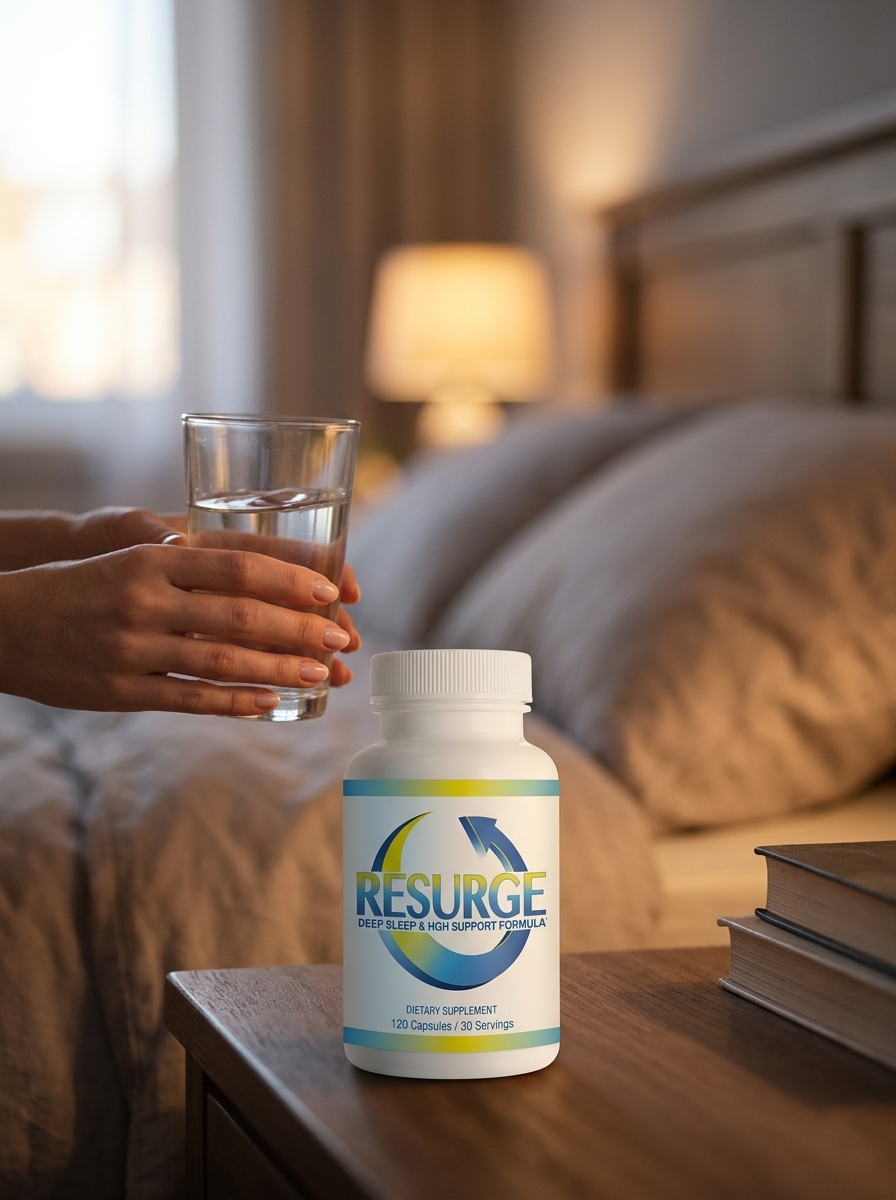
Reclaim Deep Sleep Tonight
Support your body’s natural cycles for restorative rest and healthy metabolism.
Unlike basic sleep aids that just make you drowsy, Resurge works with your body’s natural processes to promote deeper, more restorative sleep phases. Wake up refreshed with steady energy levels and improved metabolic function. Your journey to genuine rest starts with one simple step.
- ✓ Natural transition into deeper sleep phases
- ✓ Metabolic support during rest hours
- ✓ Wake refreshed without morning grogginess
The First Two Weeks: Subtle Shifts

I started taking Resurge about thirty minutes before my usual bedtime, following the recommended dosage. The first few nights, I wasn’t sure if I noticed anything dramatically different. I fell asleep around my normal time and slept through the night as usual.
But somewhere around the fifth or sixth night, I began to notice something subtle. I was dreaming more vividly, which I took as a sign that I was cycling through deeper sleep phases. More tellingly, I started waking up a few minutes before my alarm — not from restlessness, but from that natural sense of being rested.
The real indicator came in how I felt during the day. That heavy, unrefreshed feeling that had become my normal morning experience started to lift. I found myself reaching for my second cup of coffee later in the morning, and my afternoon energy dip became less pronounced.
Small changes, but after months of feeling stuck, any positive shift felt significant.
By the end of the second week, I noticed something else: I was sleeping more deeply but also waking up more naturally. Instead of feeling jolted awake by my alarm, I was gradually surfacing from sleep in a way that felt more aligned with my natural rhythms.
Experience the difference when sleep actually restores you.
Month One: The Quality Difference

After about three weeks of consistent use, the changes became undeniable. I was sleeping the same number of hours — still aiming for seven to eight — but the quality was completely different. I’d wake up with the kind of mental clarity and physical energy that I remembered from years past but had stopped expecting.
The most noticeable change was in my morning mood and energy levels. Instead of needing an hour and two cups of coffee to feel human, I was naturally alert and optimistic within minutes of waking.
That bone-deep tiredness that had characterized my mornings was simply gone, replaced by a sense of genuine restoration.
I also noticed changes in my appetite and cravings. Those afternoon demands for sugar and caffeine diminished significantly. My body seemed to be maintaining steadier energy levels throughout the day, which made sense given what I’d learned about the connection between sleep quality and metabolic regulation.
By the end of the first month, I realized I had rediscovered what restorative sleep actually felt like. It wasn’t just about sleeping through the night — it was about waking up renewed, with my body and mind actually refreshed from the night’s rest.
Support your body’s natural metabolic processes during rest.
What Actually Changed: Beyond Just Better Sleep

Three months into using Resurge consistently, the benefits extended well beyond just improved sleep quality. My entire relationship with rest and energy had shifted in ways I hadn’t anticipated when I first started this journey.
My body composition began to improve without any dramatic changes to my diet or exercise routine. The persistent few pounds that had crept on during my months of poor sleep quality started to naturally decrease. My clothes fit better, and I felt more comfortable in my own skin — changes I could directly connect to supporting my body’s natural metabolic processes during sleep.
Perhaps most importantly, I felt like myself again. The mental fog that had become my norm lifted, leaving me with sharper focus and more stable moods throughout the day.
I had energy for evening activities again, instead of collapsing on the couch after dinner feeling depleted.
The transformation reminded me that good health isn’t just about what we do during our waking hours. The quality of our rest fundamentally affects every aspect of our wellbeing, from our energy and mood to our body’s ability to maintain healthy weight and metabolic function. Resurge helped me reclaim that foundation, and everything else began to improve from there.
Written by Liora Menden — for those who seek deep rest
Ready to feel the difference this formula makes?