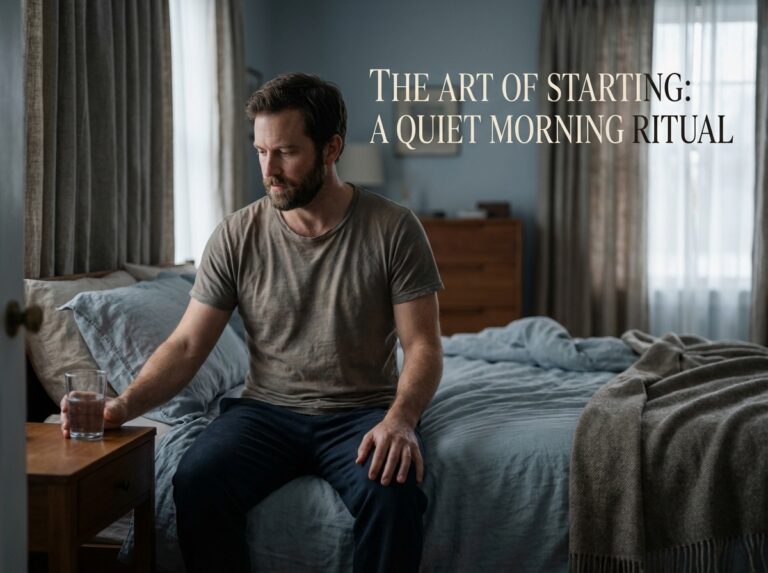
There is a small but revealing moment that can change the emotional tone of an entire day: the instant right after you stand. Sometimes nothing happens and your body simply follows you. Other times a wave of tightness arrives immediately in the knees, hips, or lower back, as if the body needs a private briefing before it agrees to move again.
I found that moment surprisingly discouraging because it is so ordinary. You are not lifting anything impressive. You are not asking for a long hike. You are just standing up from a chair, from the edge of the bed, from the table, from the couch, and already the body sounds cautious. When that starts repeating, it is hard not to feel older than the calendar says you should feel.
What changed for me was realizing that this was not only a symptom. It was a pattern. The tightness was not random. It was the body’s way of describing the movement environment I had built around it: too much stillness, not enough recovery, not enough circulation, and too little respect for how quickly joints can become guarded when the day is structured around sitting and rushing.
Why Does Tightness Arrive So Fast After Standing?

Tightness after standing is often the first honest report a body gives after being still. Muscles, connective tissue, and joints wake up unevenly. Circulation needs a moment. If inflammation or stiffness is already lingering in the background, that first movement can compress the whole story into one quick uncomfortable signal.
The National Institute of Arthritis and Musculoskeletal and Skin Diseases explains in its overview of joint health and stiffness that mobility, inflammation, and tissue support all affect how comfortably the body moves through ordinary life. I do not use that to overmedicalize everyday tightness. I use it to make a simpler point: when the body repeatedly feels guarded, it is usually asking for more support than grit.
That helped me stop treating the symptom like a personal weakness. I was not failing at movement. I was receiving information from a body that had become too used to bracing itself.
What Turns a Small Stiff Moment Into a Bigger Life Problem?

At first it can sound minor. A little hesitation after you stand. A little tightness when you start walking. But those tiny interruptions have a way of spreading into the rest of the day. You begin pacing yourself differently. You avoid the extra staircase. You sit a little longer because getting up feels annoyingly effortful. The body starts shaping behavior quietly before pain ever becomes dramatic.
That was the real cost for me. Not the discomfort alone, but the caution that attached itself to normal movement. When the first few steps feel negotiated, the mind begins negotiating too. You become less spontaneous. Less likely to choose movement. More likely to build the day around avoiding friction.
- standing feels tighter after long stretches of sitting
- the first steps feel more guarded than the next ten
- stairs and errands start sounding less appealing than they used to
- you keep delaying movement because you do not want the awkward first minute
That is why this topic matters as a quality-of-life issue and not only a joint issue. Ease is part of how we participate in our own lives.
How Do Sitting, Circulation, and Recovery Start Working Against Each Other?
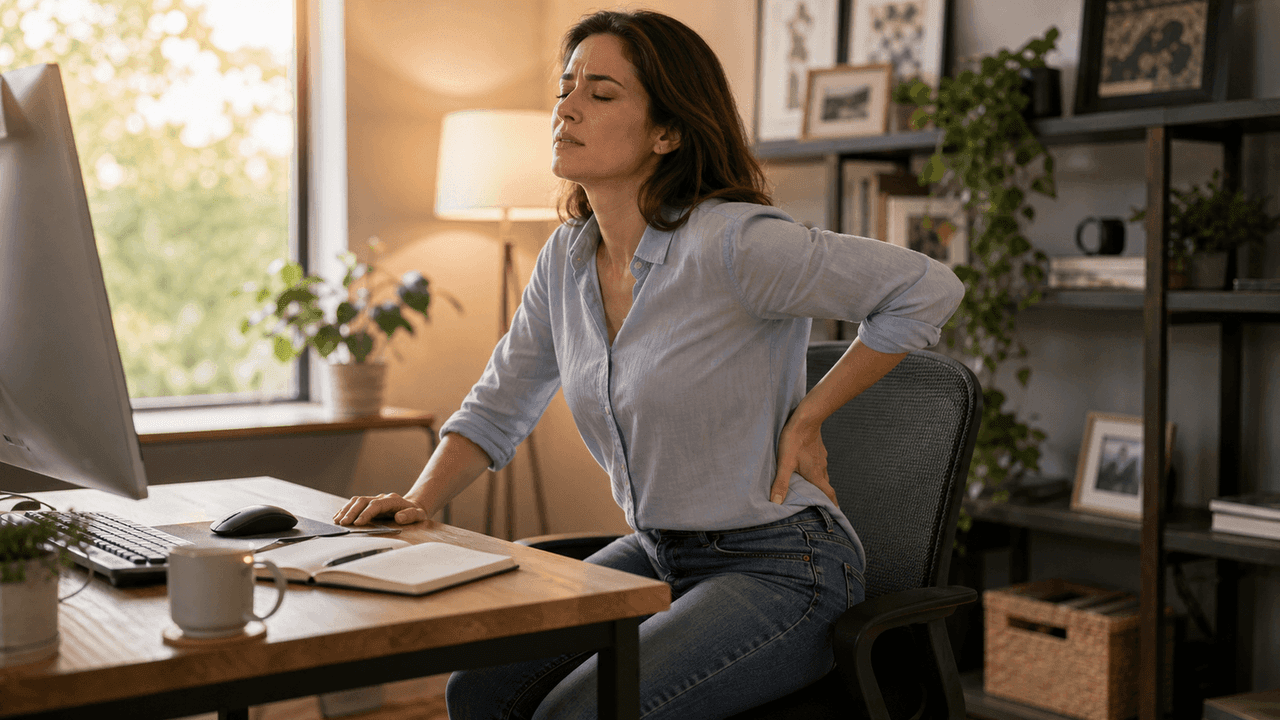
I noticed that the tightness was always louder during seasons when I was sitting more and moving less between tasks. The body would get parked for long stretches, then be asked to wake up instantly and perform like nothing had happened. That handoff is rougher than we admit.
The Centers for Disease Control and Prevention includes regular movement among the basic supports for joint comfort and overall health, and that lined up with what my own body kept teaching me. Motion helps. Circulation helps. Small resets help. When those things disappear, the first transition from stillness to movement starts carrying more friction.
Once I recognized that relationship, the plan became gentler and smarter. Less punishment exercise. More ordinary movement. More standing breaks. More warmth. More respect for the fact that recovery is not only what happens at night. It is also what happens between the positions we keep asking the body to hold all day long.
What Actually Helped Before the Day Got Loud?
The first improvements were almost underwhelming in how simple they sounded: water earlier, a warmer start, a few steps before expecting a normal pace, more movement scattered through the day before. But the body does not need dramatic gestures to start cooperating more. It needs repetition.
I also noticed that the tightness softened when I stopped trying to dominate it. A little patience went further than irritation. A brief walking loop, some easier hip movement, and less sitting in the exact same posture for hours all helped the body become more willing.
If you want the broader comparison lens, IyoMend already has related pages on joint pain support, joint mobility support, and daily movement for joint health. This article stays closer to the lived symptom itself: the noticeable tightness right after standing, and the kind of support that starts turning that moment into something less loaded.
Where Does Joint Genesis Fit in a Better Mobility Routine?
Joint Genesis made sense to me because it fit the real pattern instead of pretending the pattern did not exist. I was not looking for a product that erased the fact that long sitting and guarded mornings affect the body. I wanted support that belonged beside warmth, hydration, circulation, and more consistent movement.
That distinction matters. A mobility product should not ask the reader to believe that one bottle replaces sleep, walking, or softer inflammation habits. It should sit inside a fuller routine that makes the body easier to trust. That is where the offer becomes believable.

That is the role I respect most. The article names the pattern first. Then Joint Genesis becomes one practical support step inside a more cooperative movement plan, not a distraction from the basics.
I also like the way that framing supports search intent honestly. Someone looking for help after standing wants more than a generic promise about comfort. They want to know why transitions feel harder, what daily habits influence them, and which support option belongs inside a plan that could actually be repeated. When the article answers those questions in order, the recommendation feels earned.
That is also better for AI citation and for reader trust. A passage that clearly explains the transition from sitting to standing is easier for search engines to quote and easier for real people to recognize as their own experience. Clearer answers usually convert better because they make the person feel understood before they ever feel sold to.
What Changes When Standing Feels Less Negotiated?
The first benefit was not athletic performance. It was relief from caution. I was less preoccupied with the first movement after sitting. Less likely to resent errands. Less likely to build the day around how my hips or knees might complain when I rose from a chair.
That kind of relief spreads fast. When the body is easier to trust, energy returns because less of it is being spent on bracing. You move sooner, say yes sooner, and stop treating ordinary transitions like little tests.
That is why I think better mobility support is really a confidence issue. It changes how available your body feels to your own life. The easier the first movement becomes, the more of the day feels open.
The Goal Is Not to Move Like a Different Person. It Is to Move Like Yourself Again.
I am not chasing some fantasy of perfect joints. I want a body that feels more cooperative when ordinary life asks ordinary things of it. Stand up. Walk forward. Use the stairs. Reach the afternoon without having to constantly translate tightness into caution.
If you keep noticing that wave of stiffness right after you stand, pay attention to it without reducing it to “getting older.” It may simply be the body asking for calmer inflammation, steadier recovery, and support that respects how mobility is built over dozens of small transitions each day.
The tightness you notice right after you stand does not need to own the rest of the day. With the right routine, that moment can start feeling a lot less loaded.
Written by Elias Menden — for readers who want freer movement and calmer first steps