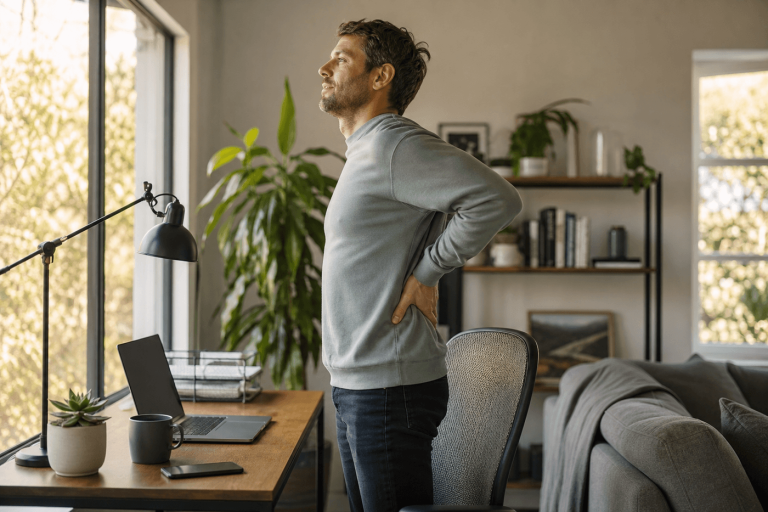
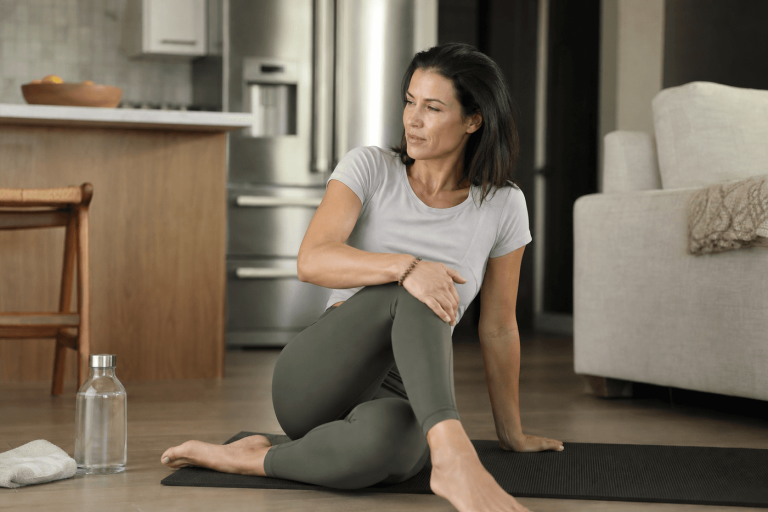
There is a version of desk stiffness that feels almost too minor to mention until you try to stand up and realize your hips are asking for negotiation before they agree to move. You lean forward, plant your feet, and wait for the lower half of your body to join the plan. Nothing looks dramatic from the outside. Inside, though, the whole transition feels slower, tighter, and more deliberate than it should.
That used to happen to me most often after long blocks of concentrated work. A few hours of sitting would pass without much notice, and then the cost would arrive all at once. The first steps felt stiff. The hallway felt longer. Even the idea of an evening walk sounded less inviting because my body already seemed to be arguing with simple movement.
What changed things was recognizing that this was not random aging or a mysterious flaw in my body. It was a rhythm problem. I was asking my hips, knees, and lower back to stay quiet for most of the day and then become instantly cooperative the second I wanted to live normally again.
Why Does Sitting Create So Much More Tension Than It Seems To?
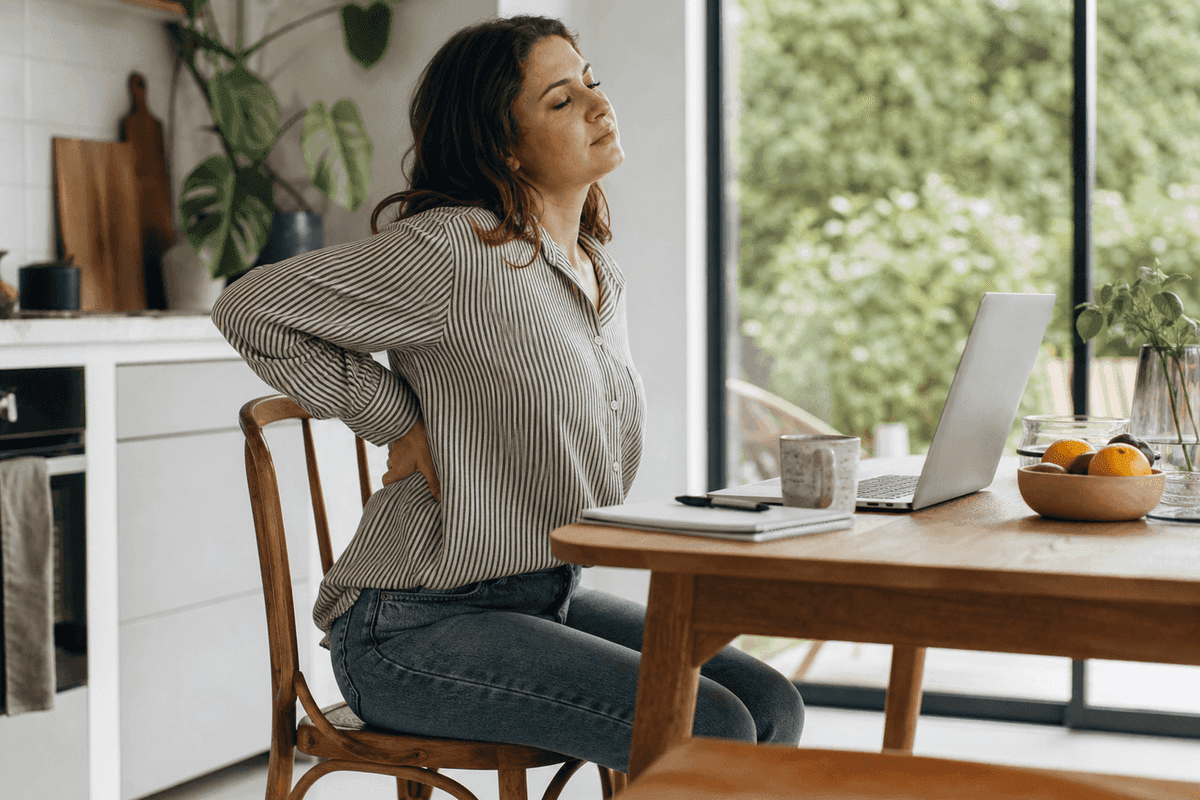
Sitting looks restful, which is part of why people underestimate it. But long stillness has a way of teaching the body one shape and asking it to hold that shape for far too long. Hips shorten. Glutes disengage. The lower back starts helping in ways it should not have to. Then, when you finally stand, everything has to renegotiate its job.
The Centers for Disease Control and Prevention notes that moving more throughout the day supports joint function, circulation, and physical health. That broad advice maps cleanly onto this exact problem. Many people are not dealing with one single injuring event. They are dealing with accumulated stillness and the quiet joint friction it creates.
That is why desk-related stiffness can feel out of proportion to the day that caused it. You did not lift anything heavy. You simply stayed still long enough for your body to become less willing.
What Are Stiff Hips After Work Really Reporting?
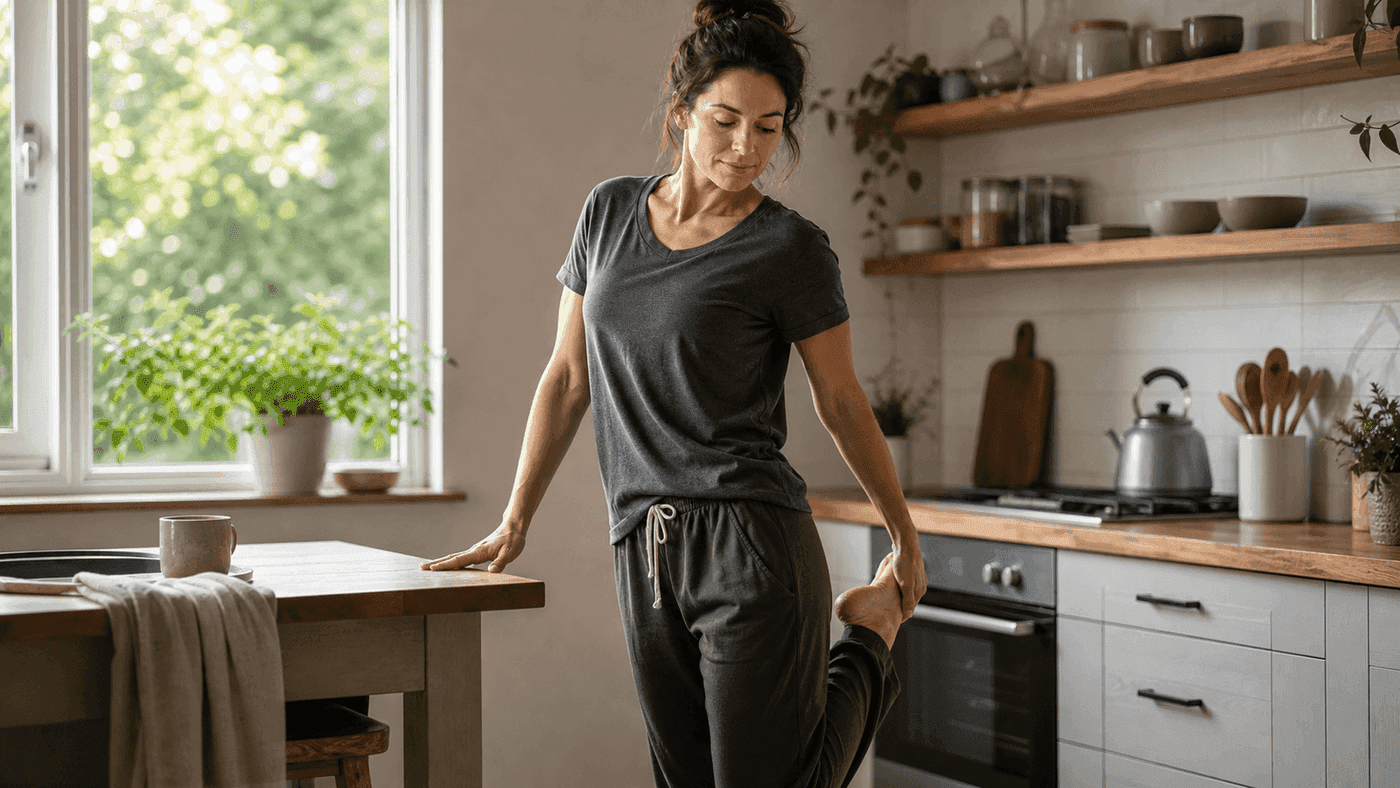
The body often tells the truth through transitions. If the worst moment of the day is standing up after work, the problem is probably not just your evening. It is the way the whole workday was organized. Stiff hips, hesitant knees, and an aching lower back are often reporting on hours of compression, not merely on the final few minutes.
That realization was useful because it turned a vague annoyance into something I could work with. Instead of asking, “Why am I suddenly so stiff?” I started asking, “What have I been training my body to do all day?” The answer was obvious: stay folded, stay braced, and stop moving unless absolutely necessary.
When you see the pattern that clearly, support stops sounding dramatic. It sounds practical.
Why Does One Stretch Rarely Fix a Desk-Shaped Day?
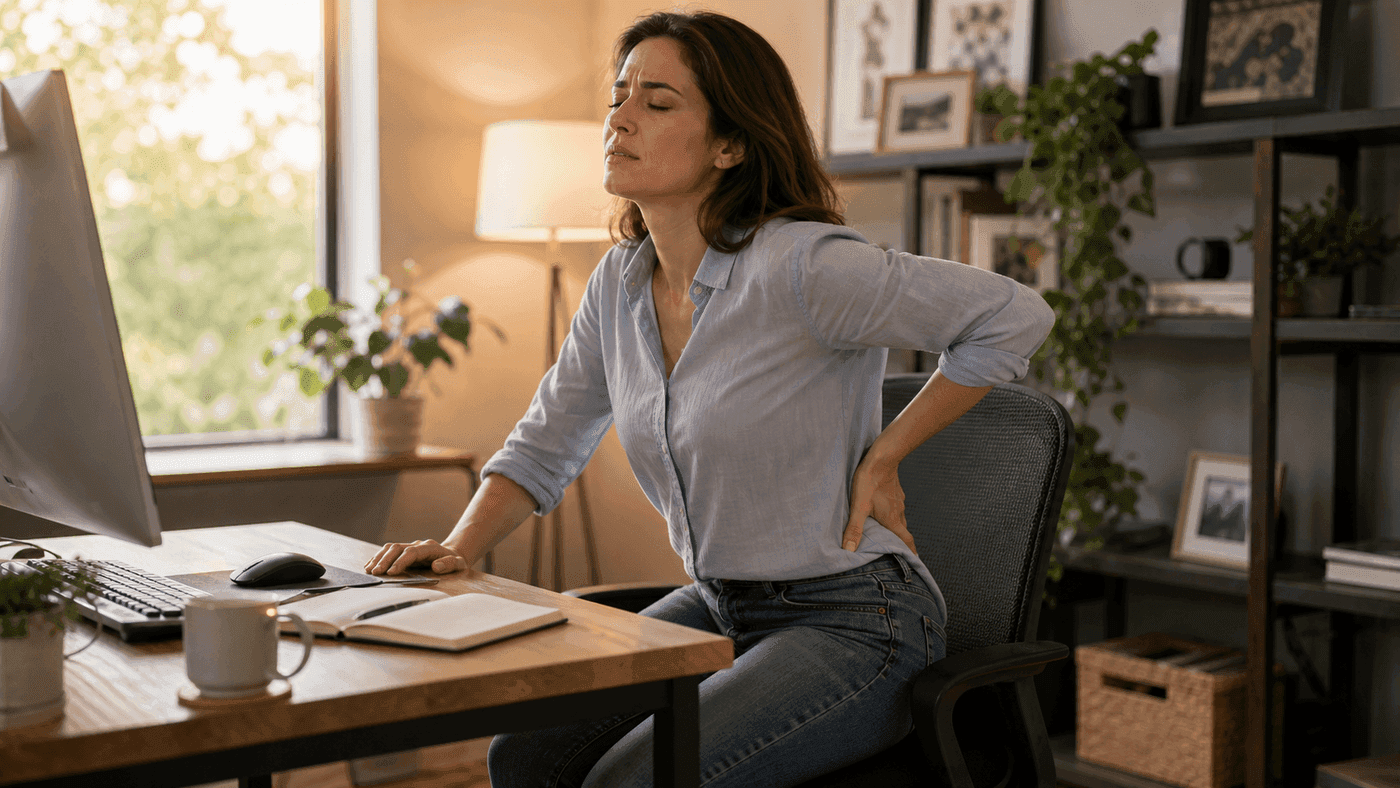
A stretch after work can help, but it usually cannot unwind an entire day of stillness by itself. Repetitive stiffness tends to respond best to repetitive relief. Several small movement returns often do more than one heroic correction at the end.
That was a relief to learn because it meant I did not need a perfect mobility routine or a long post-work workout to start feeling better. I needed more interruptions. More standing. More short walks. More ordinary signals that reminded my joints they were still part of the day.
- stand up at the end of a work block before discomfort becomes the prompt
- walk during one phone call instead of taking every call seated
- put water far enough away that hydration requires a few steps
- treat a short after-work walk as part of recovery, not a bonus task
Those steps sound almost unimpressive, but desk-generated stiffness usually comes from ordinary repetition. It makes sense that relief would begin there too.
What Starts Making Evening Movement Feel Easier Again?
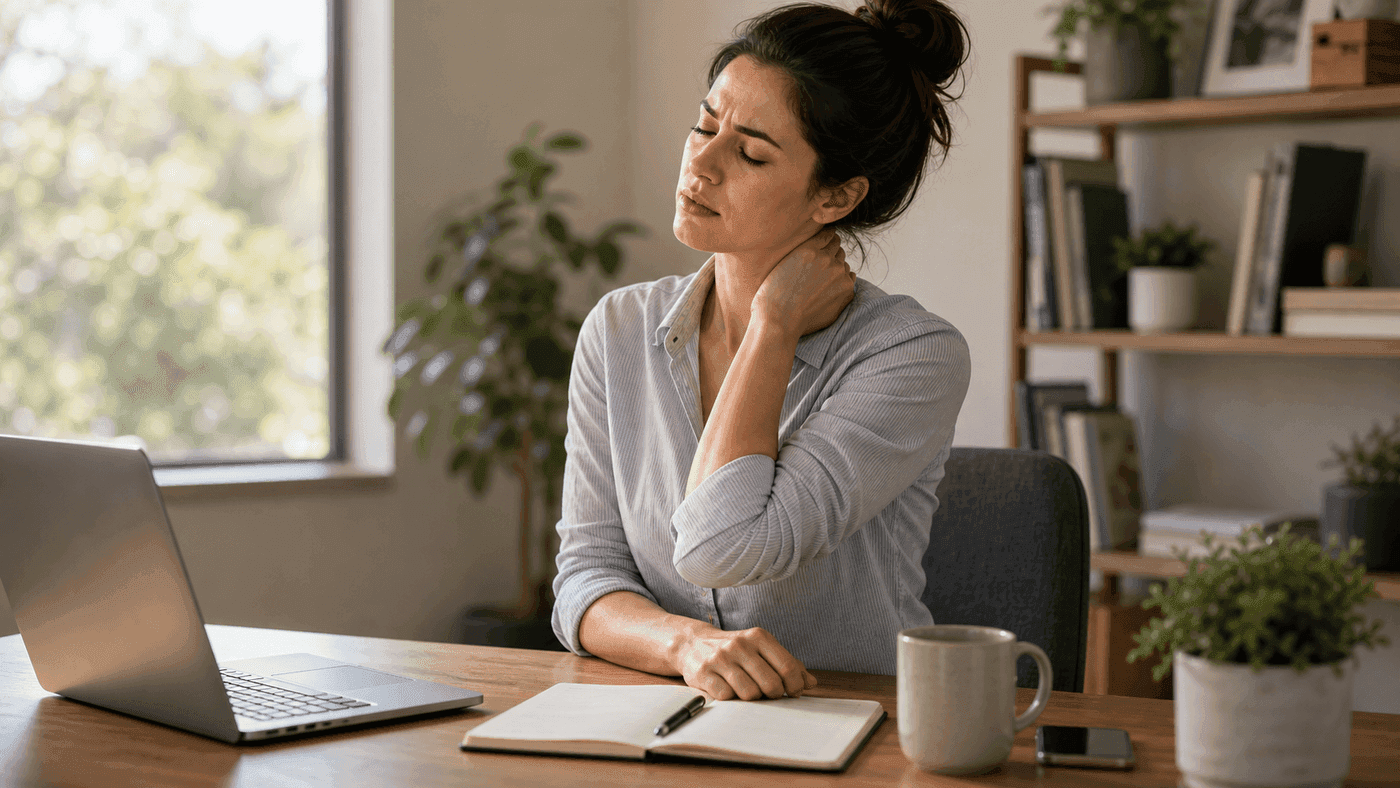
The changes that helped me most were not glamorous. They were simply survivable on busy days. I broke up long sitting spells more often. I walked after lunch instead of collapsing straight back into the chair. I stopped acting surprised that the body struggled when I spent most of the day teaching it not to move.
Gradually, the evening started feeling less expensive. I did not stand up and immediately feel older than I had that morning. The kitchen felt closer. Stairs felt less rude. The idea of movement after work stopped sounding like another obligation and started sounding available again.
That availability matters more than people admit. When the body moves more easily, patience returns. Mood improves. Ordinary tasks stop feeling like they come with a physical surcharge.
It also changes what feels possible later in the day. A person whose hips are not already irritated by late afternoon is far more likely to take the longer grocery route, go for a walk after dinner, or say yes to a simple outing instead of subconsciously conserving movement. That is one reason mobility support has such a broad emotional effect. It quietly restores options.
I think that point gets missed in a lot of joint content. Readers are not only looking for less discomfort. They are looking for less hesitation. They want to trust the body enough that life stops being filtered through “Will this make me stiffer later?” That is a real quality-of-life question, and it deserves more than shallow advice.
Where Does Balmorex Pro Fit in a More Cooperative Mobility Routine?
Balmorex Pro made sense to me because it fit the actual pattern instead of pretending the pattern did not exist. I was not looking for a product to erase the fact that long sitting affects the body. I wanted support that could sit beside better movement timing, easier transitions, hydration, and a more believable joint routine.
That is what makes the product bridge work. The article first helps the reader understand why her hips and knees feel less cooperative by evening. Then Balmorex Pro appears as one practical support choice inside a fuller mobility plan.
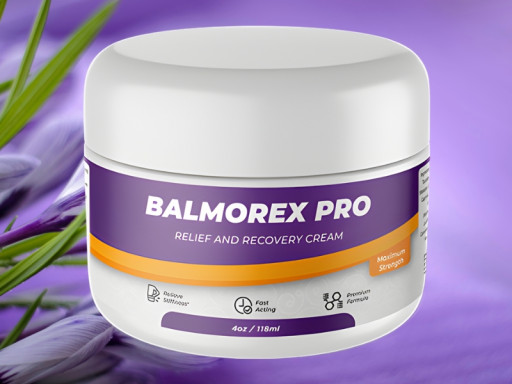
That sequence matters because the product does not replace the routine. It belongs inside the routine, which is a far more trustworthy promise.
Which Internal Links Help the Reader Build a Better Mobility Map?
This page works best when it sends readers deeper into IyoMend’s joint cluster. That is why I want it linking naturally to best supplements for joint mobility, the broader comparison at best supplements for joint pain, and the practical companion at daily movement for joint health.
Those links help the reader sort out whether she mostly needs comparison content, practical habit support, or a clearer explanation of why the stiffness keeps building. They also make the site feel more useful than a single emotional recognition post dropped into isolation.
I like that structure because people rarely stop with one mobility question. They want to know whether the issue is desk posture, inflammation, age-related recovery, or a combination of all three. Internal links let the site guide that investigation instead of flattening everything into one generic discomfort story.
That is better for trust and better for conversions. A reader is more willing to click a product recommendation when the site clearly understands the shape of her problem and offers several honest paths through it.
It also helps Google understand how the site covers the topic. A good joint cluster should include symptom stories, comparison pages, and practical habit pieces that reinforce each other naturally. This page becomes stronger when it behaves like a spoke inside a real mobility system instead of trying to perform as a standalone answer to every joint question at once.
The Goal Is Not More Flexibility Theater. It Is Easier Evenings.
I do not need my workday to turn into a wellness performance. I need it to stop teaching my body that stillness is the default and movement is the interruption. I want to stand up without needing a small internal committee to approve the first few steps.
If your hips feel like they need a meeting before they move, pay attention to that. It usually means the day has been more static than your body can absorb gracefully. A few better movement cues, a kinder rhythm, and the right joint support can change how the second half of the day feels.
That shift matters far beyond pain alone. Easier movement changes how willing you are to cook, walk, clean up, go out, and say yes to ordinary life. A body that feels more cooperative gives more of the evening back.
The deeper win is that movement stops feeling like a negotiation and starts feeling like a normal part of being alive again. That is what I want these readers to recognize. They are not asking for anything extravagant. They are asking to move through a regular day without paying such a high physical price for how work is structured.
Written by Elias Menden — for readers who want easier movement after long sitting