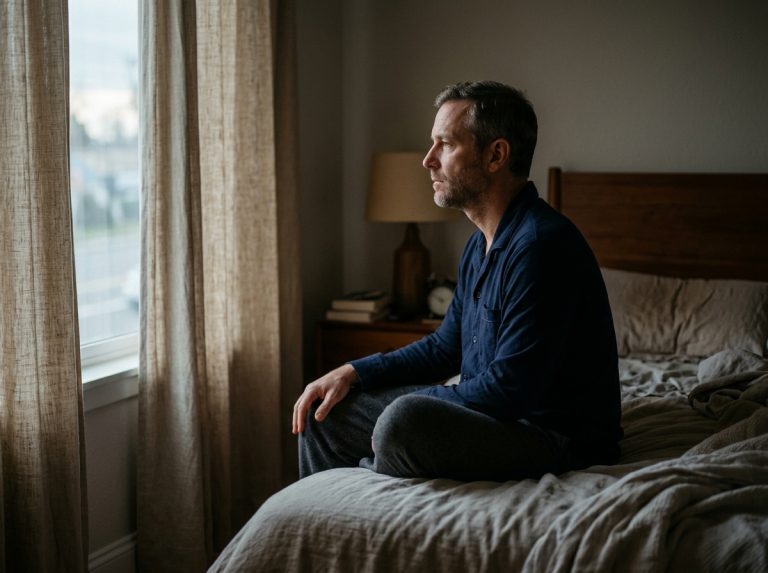
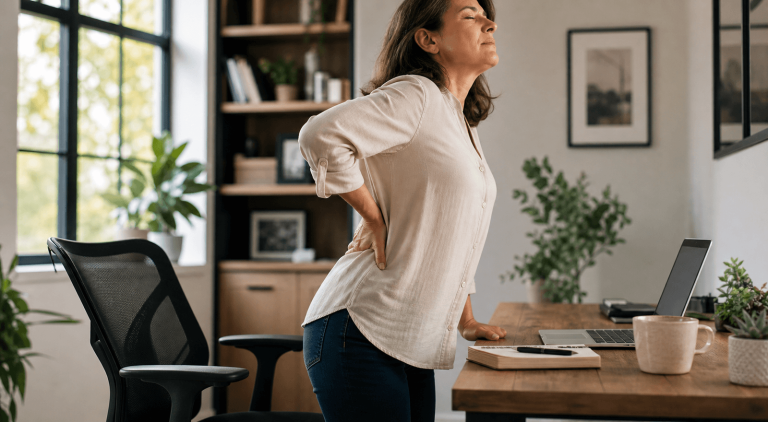
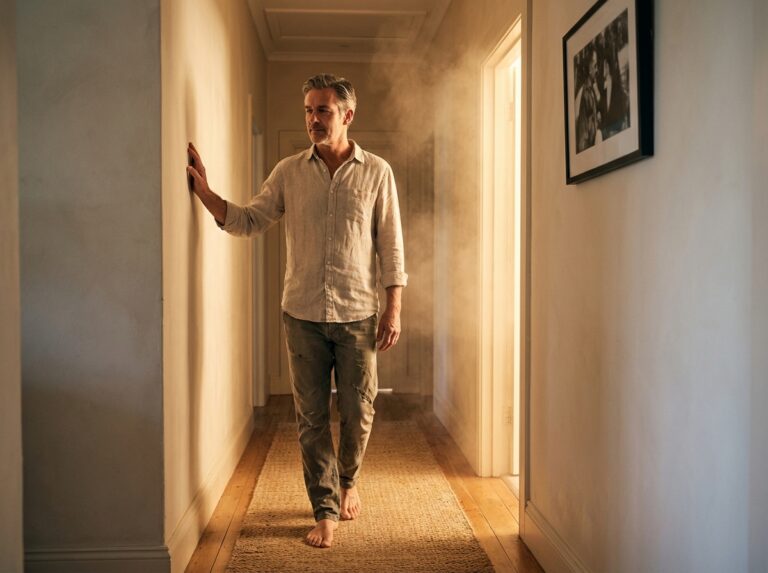
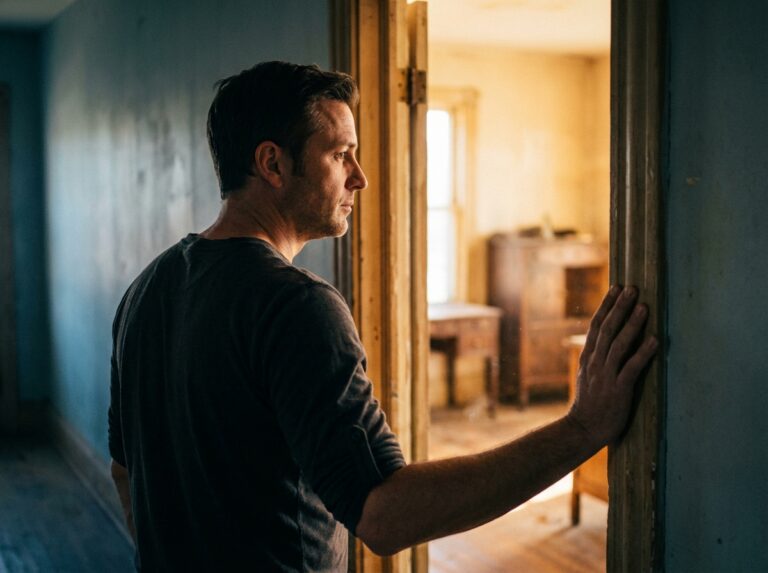
Some mobility issues do not introduce themselves in the morning. They wait until late afternoon or evening, when the day has had enough time to stiffen every transition. That is when the stairs start feeling more deliberate than they should, and your body acts like it wants a warning before each step.
I started paying attention to that because it never felt random. On days with too much sitting, too little walking, thin hydration, or not enough recovery, the evening staircase turned into a very honest report. My joints were telling me what the schedule had been costing them all day.
Once I stopped calling it age by default, the pattern became more useful. I could look at movement breaks, circulation, warmth, recovery, and the kind of support that helps the body stop bracing so hard by sunset. That is a better conversation than treating every stiff evening like an unsolvable mystery.
Why Do Stairs Feel Harder After a Long Day?
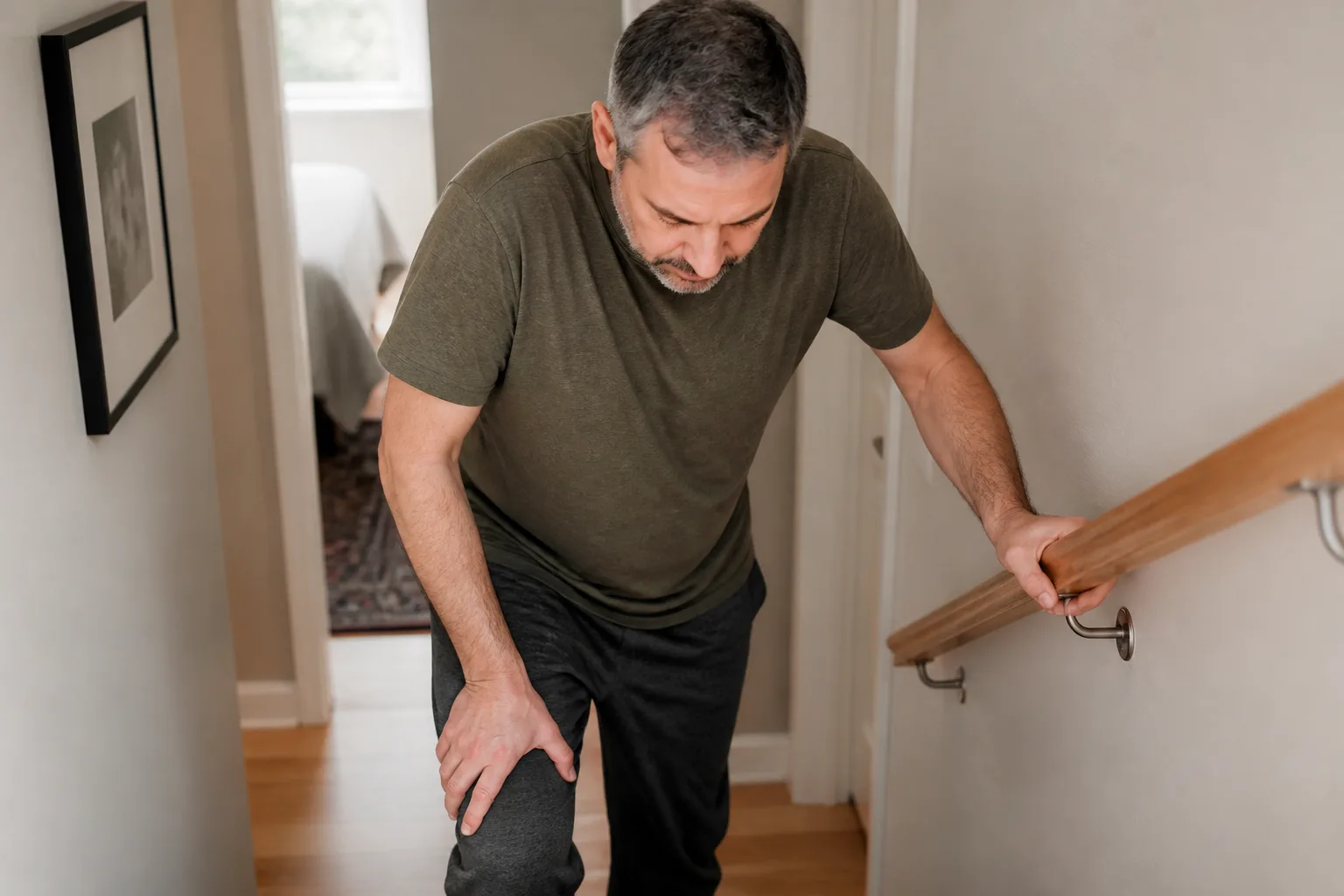
Joints often get louder when a full day of stillness, strain, and repetition has been added up in the background. Even if nothing dramatic happened, the body can spend hours absorbing desk posture, car time, cold starts, and too few movement resets. By evening the stairs become the place where all that hidden friction finally introduces itself.
The National Institute on Aging explains in its guidance on exercise and physical activity that flexibility, strength, balance, and endurance all support everyday capability. In real life that means a stairway can expose what your routine has neglected without announcing it any other way first.
That is why late-day stiffness feels different from injury. The body is not necessarily alarming you. It is showing you where the day has been subtracting mobility faster than you have been restoring it.
What Daily Patterns Usually Stack Up Into Evening Stiffness?

The pattern usually forms from ordinary habits. Too much uninterrupted sitting. Too little walking between tasks. Starting the day cold and ending it tired. Hydration that was always going to be handled later. Recovery that kept getting postponed because the schedule looked more urgent than the body did.
- long desk stretches that keep hips and knees braced
- few walking breaks to restore circulation through the day
- hydration and recovery pushed later until they barely happen
- expecting tired joints to move well without any warm handoff
That is what makes the stiffness easy to dismiss. None of those inputs sound dramatic, but joints add them together anyway. By the time you hit the stairs, your hips, knees, and ankles may be carrying a day that looked manageable on paper and felt much heavier inside the body.
I learned to stop judging the evening staircase as a one-off annoyance. It was better to see it as a routine audit: what did the day ask from my movement, and what did I give back?
How Does Late-Day Stiffness Change the Way Life Feels?

When evening stiffness starts climbing the stairs with you, the day gets smaller right when you are supposed to still have some life left. Ordinary transitions ask for caution. Simple errands feel less appealing. Even moving around your own home starts sounding like something that needs planning.
That emotional cost matters more than people admit. Mobility confidence lives in very ordinary moments. If the body keeps making those moments feel negotiated, your patience gets thinner and your willingness to move spontaneously starts shrinking too.
This is why joint content converts better when it stays specific. Readers do not always search for mobility because they want athletic performance. Many of them simply want stairs, chairs, kitchens, and evening routines to feel less discussed and more natural again.
What Helps Joints Feel Less Guarded by Evening?
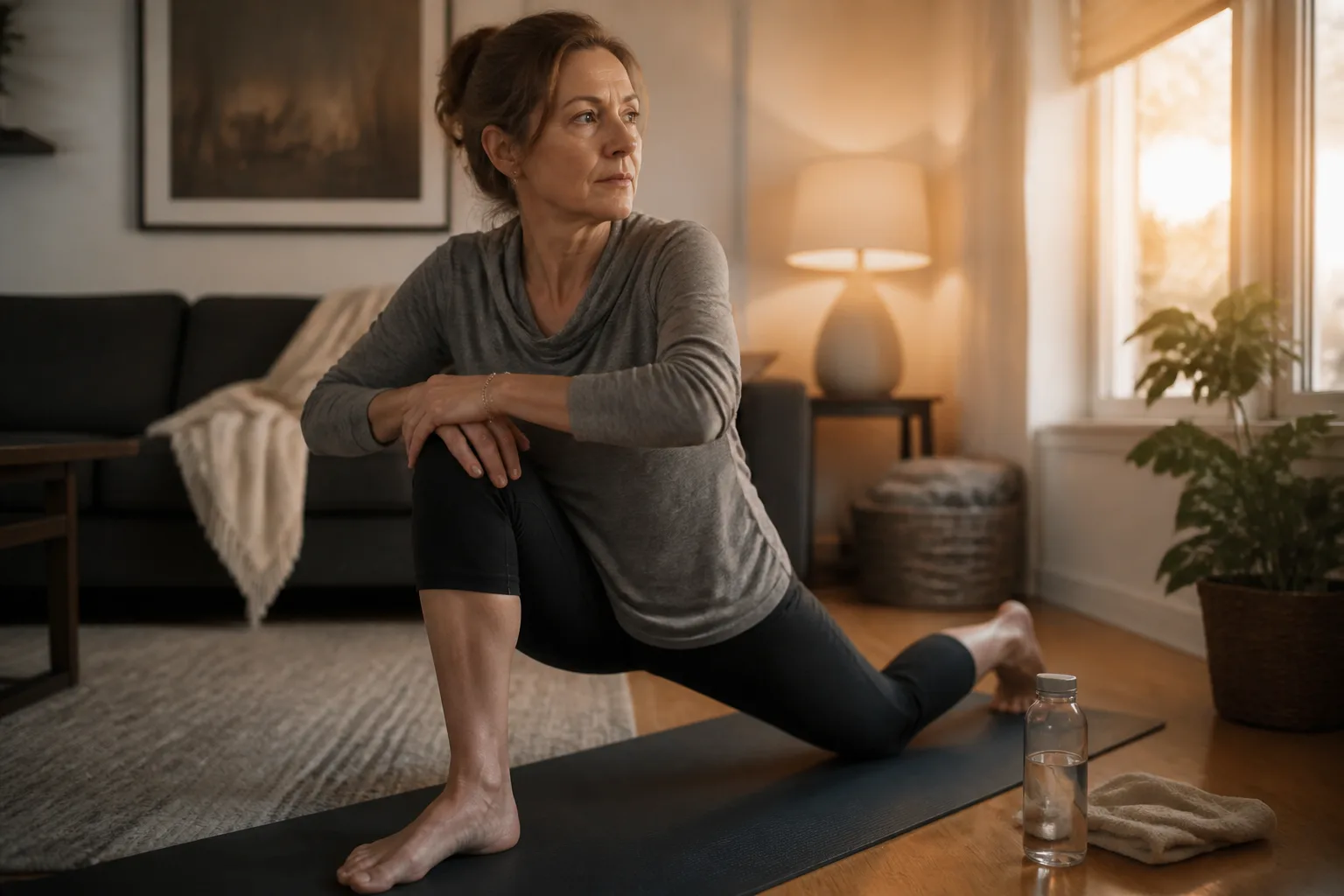
The most reliable shifts for me were all about reducing the number of friction points that piled up by sunset. More walking between work blocks. More warmth when I could feel the body tightening. A little easier movement before sitting became another marathon. Water sooner, not only once I was already drained.
Harvard Health points out in its overview of how to cope with stiff joints that staying active, using warmth, and moving regularly can help ease stiffness and support better function. That matched my own experience. Joints usually want continuity more than heroics.
Once the routine shifted, the evening staircase stopped feeling like a referendum on how old I was. It started feeling like one more part of the day my body could handle without a private negotiation.
Where Does Joint Genesis Fit in a Better Mobility Routine?
Joint Genesis made sense to me because it belonged beside the real routine instead of pretending the routine did not matter. I was not looking for a miracle. I wanted support that fit with walking breaks, warmth, hydration, and the kind of daily mobility plan that respects how joints actually get worn down.
That is the honest bridge here. The article first explains why evening stiffness starts climbing the stairs with you. Then Joint Genesis arrives as one practical support step inside a broader mobility routine. It is not there to excuse stillness. It is there to support a body that has been asked to absorb too much friction for too many ordinary hours.

That difference is what makes a recommendation feel believable. The product is offered after the pattern has been understood, not before the reader has even felt seen.
Which Internal Links Strengthen This Joint Mobility Cluster?
This post should feed IyoMend’s strongest mobility pages directly. The most useful next steps are best supplements for joint mobility, best supplements for joint pain, and when stiff joints turn stairs into a negotiation.
Those links help the reader move from symptom recognition into both comparison and deeper pattern language. One page handles product intent, one handles broader pain support, and one stays close to the same lived stair-climbing experience from a slightly different angle.
They also make the site easier for search systems and AI citation systems to trust. IyoMend is building a usable mobility cluster around real-life transitions instead of publishing isolated pages that never reinforce one another.
The Goal Is Not Toughing It Out. It Is Easier Evening Cooperation.
I do not want readers acting like stairs should feel harder every evening just because the day was busy. I want them seeing the pattern clearly and reducing the reasons the body braces so much by the end of the day. If evening stiffness keeps tagging along, the body is offering useful information.
The answer is often less about pushing through and more about restoring better conditions. Better movement rhythm. Better hydration. Better recovery. Better support. When those pieces line up, the stairs stop feeling like an argument.
That matters because mobility freedom is built from ordinary moments, not only dramatic milestones. A body that cooperates on the stairs, in the kitchen, and during simple evening tasks gives the rest of life back its ease.
For me, the win was not becoming invincible. It was reaching the end of the day without already planning around the body’s resistance. That kind of quiet reliability is what makes movement feel natural again, and it is what most readers are actually looking for.
Once the body feels more willing, evening stops feeling like a narrow hallway you have to manage carefully. It starts feeling open again. That is a small-sounding shift with an outsized effect on mood, confidence, and how much of life still feels available after work is over.
I think that is why small mobility improvements can feel so emotional. They do not only reduce complaint. They return ordinary trust. When the body stops making every staircase feel like a caution sign, it gives back spontaneity, and spontaneity is one of the clearest signs that movement is becoming yours again instead of something you keep negotiating around.
That returned trust changes the rest of the evening too. You cook differently, tidy differently, and move through your home with less internal caution. Those are ordinary moments, but ordinary moments are where readers feel the real value of joint support. Better mobility is believable when it shows up in the life you already live.
It also makes tomorrow easier to trust. When the body ends the night less braced, mornings often begin with less resistance too. That kind of carryover matters because a good mobility routine is not only about one staircase. It is about reducing the cumulative stiffness that keeps following the reader from one day into the next.
Written by Elias Menden — for readers who want looser evenings and more willing movement