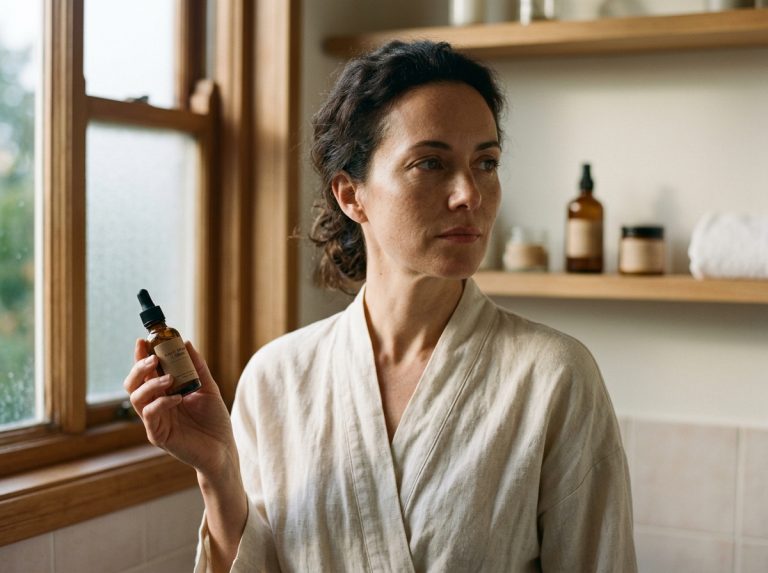
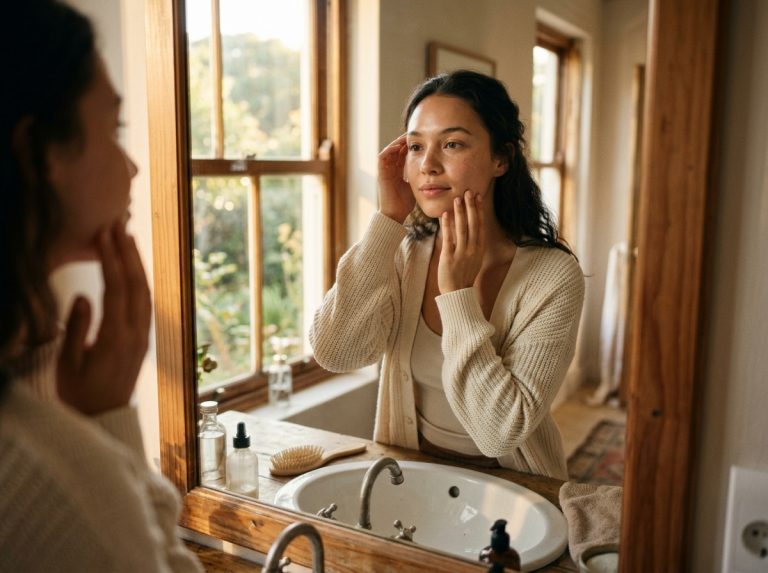
There is a particular kind of frustration that doesn’t have a name yet. It’s the feeling of standing in front of a bathroom mirror, having done everything right — the serum, the SPF, the overnight mask — and still seeing a face that looks like it hasn’t slept in a week. Your skin isn’t broken. It isn’t inflamed. It just looks… unmoved. Like it didn’t receive the memo.
I spent longer than I’d like to admit troubleshooting my way through this. New cleanser. Different moisturizer. A vitamin C serum that cost more than my electric bill. Every change produced a brief lift, the way rearranging furniture briefly makes a room feel new, and then settled back into the same quiet dullness. I wasn’t looking for perfection. I was just looking for skin that reflected the effort I was putting in.
What I didn’t understand then — and what slowly started to reframe everything — is that tired skin isn’t always a surface problem. Sometimes it’s a signal. And signals like that don’t respond to topical solutions, no matter how carefully you layer them.
When the Mirror Tells You Something Your Products Can’t Fix

There’s a version of skin dullness that makes sense. You pulled an all-nighter. You traveled across time zones. You cried for three days over something entirely valid. In those cases, your skin is just being honest about a temporary state, and it usually bounces back once the storm passes.
But there’s another version — the one I was living in — where nothing dramatic has happened, and yet the dullness remains a permanent resident. Your cheeks lack that inner light. The texture stays uneven no matter how faithfully you exfoliate. Fine lines seem deeper than they should be at your age. Your skin looks like it’s working hard just to exist.
This kind of tiredness doesn’t come from the outside. It lives underneath — in the pace at which your cells renew themselves, in the way nutrients actually make it to your skin barrier, in the quiet relationship between your gut and every surface your body shows the world. Most routines never touch that layer. They treat the wall, not the foundation.
When I finally started asking different questions — not “what should I apply?” but “what is my skin actually missing?” — the answers started pointing somewhere I hadn’t expected: inward.
Curious what your skin looks like when it’s genuinely well?
The Gut-Skin Connection Most Beauty Conversations Skip

Here’s something that tends to get glossed over in the beauty aisle: your skin is not a separate system. It communicates constantly with everything happening inside your body, and one of its most important conversation partners is your gut.
The gut microbiome — the vast, living ecosystem in your digestive tract — plays a quiet but significant role in how your skin behaves. When that ecosystem is balanced and thriving, it supports the kind of cellular environment where skin can renew itself steadily, absorb nutrients efficiently, and maintain the kind of resilience that shows up as softness and glow. When it’s disrupted — by stress, by irregular eating, by time, by the slow cumulative weight of modern life — the skin often reflects that disruption before you feel it anywhere else.
Radiance isn’t manufactured on the surface — it’s cultivated from within, in the same quiet way that a well-tended garden grows outward from the soil. No serum can replicate that. No toner can replace it. The gut communicates, and the skin listens.
Understanding this changed the way I thought about my own skin. The dullness I had been treating like a topical problem was almost certainly a systemic one.
Your gut and your glow are more connected than anyone told you.
Why Cellular Renewal Slows Down — and What That Looks Like on Your Face

Your skin renews itself in cycles. Old cells make way for fresh ones, and when that process is moving well, it produces a kind of natural luminosity — the texture looks even, the tone looks alive, the surface catches light in a way that photographs try and fail to replicate. But that renewal process slows. Age is part of it, but it’s not the only factor. Chronic low-grade inflammation, a disrupted gut environment, and nutrient absorption issues can all drag the pace of cellular turnover down significantly. The result is a buildup of dull, older surface cells sitting on top of newer ones that haven’t yet had the chance to emerge. No amount of exfoliation fully compensates for a renewal process that has slowed at its source.
When you support the systems that drive cellular renewal from within — the gut microbiome, the nutrient delivery pathways, the inflammatory environment — you’re not polishing the surface. You’re restoring the engine. The difference in results is not subtle.
I remember noticing the shift before I could explain it. My skin started looking less like it was struggling and more like it was simply… alive. That’s not a product claim. That’s what it felt like from the inside out.
What if the answer was never in the serum aisle?
What Neotonics Actually Is — and Why I Tried It

I came to Neotonics the way most people come to anything that actually helps: sideways, skeptically, after running out of other ideas. I wasn’t looking for a miracle. I was looking for something that made biological sense. What drew me in was the framing. Neotonics isn’t positioned as a skincare product. It’s a gut-health supplement designed with the gut-skin axis specifically in mind. The idea is that by supporting the microbiome — by creating the internal conditions where cellular renewal can actually happen — your skin starts to reflect a kind of health that topical products can only approximate.
That logic felt honest to me. It matched what I was reading about the gut-skin connection, and more importantly, it matched what I had been experiencing: skin that looked tired not because of what I was doing on the outside, but because of what wasn’t happening on the inside.
I committed to a consistent trial. Not a weekend experiment. Real, daily use over several weeks, keeping the rest of my routine exactly the same so I could actually see what changed.

Glow That Starts Within
When your skin looks tired despite everything, the answer might not be on the shelf.
Neotonics works from the inside out — supporting the gut-skin axis so your skin can actually renew itself the way it’s meant to. Not a serum. Not a mask. Something your topical routine was never able to reach. When the foundation is right, the surface takes care of itself.
- ✓ Supports cellular renewal from within, where topicals can’t go
- ✓ Targets the gut-skin connection most beauty routines completely miss
- ✓ Helps dullness soften naturally — without effort, without layering
The Weeks That Followed — Honest, Unglamorous, and Real

The first two weeks were unremarkable, and I want to be honest about that because false timelines do everyone a disservice. My skin didn’t transform overnight. I didn’t wake up glowing on day three. What I noticed first was subtler — a slight shift in how my skin felt rather than how it looked. A bit more suppleness. Less of that tight, parched sensation I’d grown so accustomed to that I’d stopped noticing it.
By week three, the texture started to change. The uneven patchiness that had resisted every exfoliant I’d tried began to smooth. It was the kind of shift that made me check the lighting in my bathroom because I wasn’t sure if I was imagining it. I wasn’t.
By the end of the month, the dullness — that long, stubborn dullness — had genuinely softened. My complexion looked more even. There was a warmth to it that hadn’t been there before, something that looked less like effort and more like rest. The quality I’d been chasing through product after product was arriving not from a jar, but from somewhere quieter. I also noticed, almost as a side note, that my digestion had settled. Less bloating, more regularity. A reminder that the gut is the point of origin here, not just a footnote.
Give your skincare routine somewhere deeper to land.
What Nobody Tells You About Topical Skincare Limits
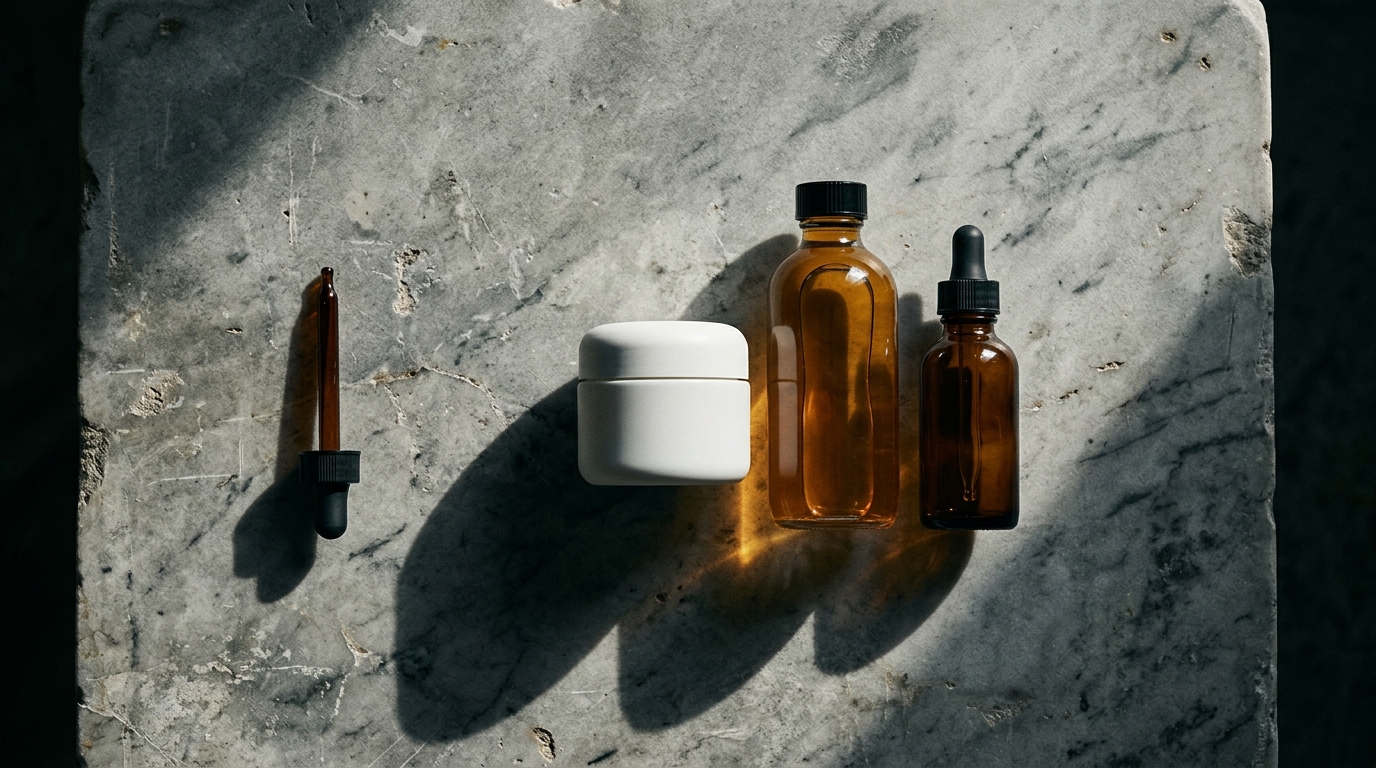
Good skincare does real things. I’m not going to pretend otherwise, and I haven’t abandoned my routine. But there’s a ceiling that topical products cannot push through, and the beauty industry has a quiet financial interest in not pointing that out too loudly. Moisturizers hydrate the surface. Serums can deliver targeted actives to the upper layers of skin. SPF protects. These are all meaningful contributions. But none of them can influence the speed at which your skin cells turn over. None of them speak to your gut microbiome. None of them affect how efficiently your body delivers nutrients to the dermal layer where new skin is actually built.
When you understand this, you stop blaming your products for something they were never designed to do. The frustration I used to feel toward my skincare routine wasn’t about the products failing — it was about expecting a surface solution to reach a deeper problem. Once I stopped asking my serum to do work it couldn’t do, I stopped being disappointed by it.
Supporting your skin from the inside doesn’t replace your routine. It gives your routine somewhere to land.
You’ve tried the outside. This is what inside support feels like.
The Kind of Radiance That Comes From Rest, Not Effort

There’s a difference between skin that looks good because it’s been worked on and skin that looks good because it’s genuinely well. The first kind requires maintenance to sustain — the right lighting, the right products in the right order, the right amount of concealer on the right days. The second kind just shows up. It has a quality to it that’s harder to define but immediately recognizable: ease.
That’s what I’ve been experiencing, and it’s what made me want to write this. Not a before-and-after photo. Not a numbered list of benefits. Just the honest account of what it feels like when the internal environment starts supporting what you’re doing on the outside, when your skin stops working against you and starts working with you.
Neotonics didn’t transform my life. But it shifted something foundational — quietly, in the way that good changes tend to arrive. My skin looks less tired. It looks less like it needs saving. It looks, for the first time in a while, like mine.
If you’ve been standing in front of your mirror asking the same question I was asking — why isn’t this working? — maybe the answer is the same one I found. Not a better product. A different direction entirely.
Written by Liora Menden — for those who seek radiance that starts from within
Radiance that doesn’t need maintenance — just the right foundation.