I remember the exact moment I stopped pretending everything was fine.
I was reaching into the back seat for my laptop bag—the same movement I’d done a thousand times—and my lower back seized just enough to make me pause. Not collapse. Not scream. Just… freeze for a second and think, What was that?
That night, I couldn’t get comfortable. My hips felt locked. My shoulders wanted to curl forward no matter how many times I pulled them back. And when I finally fell asleep, I woke up feeling like I’d been holding tension all night instead of releasing it.
My body wasn’t just tired. It was asking for something I wasn’t giving it.
These are the signs of bone weakness you should never ignore—not because they guarantee disaster, but because they’re your body’s early language. The whispers before the shouts. And most of us get really good at explaining them away.
It’s just stress. It’s just my desk setup. It’s just getting older.
Except it’s not.
It’s your frame quietly losing the fight to rebuild itself while you sleep.
And here’s what I didn’t understand until I fixed it: the women who stay strong past 35 aren’t doing ten complicated things. They’re doing one foundational thing really well—they’re letting their nights do the repair work that makes everything else possible.
That’s why I’m naming the product now, because it’s the reason I’m not still Googling “why does my back hurt for no reason” at 2 a.m.:
Resurge.
Resurge became the dividing line in my life—the before-and-after moment. The point where I stopped trying to outwork a body that wasn’t recovering, and started letting deep sleep do what it’s designed to do: restore me.
⸻
Early warning signs of declining bone health

Bone weakness doesn’t announce itself. It seeps in through the margins of your day—tiny moments that feel “normal” until they start stacking. You bend down to pick up something light and your back protests. You stand at the counter chopping vegetables and your lower spine starts nagging. You look at a photo from the weekend and think, When did I start standing like that?
Here’s what those early shifts can look like—quiet, easy-to-dismiss, but consistent:
- A back “catch” during everyday movements
- Posture drifting (shoulders rounding, head forward)
- Balance feeling slightly off on stairs
- Grip strength fading (suddenly you need two hands)
- Stiff hips or a nagging lower spine after standing
And the thing that makes these early warning signs so insidious is that you’re still functional. You can still work out. You still look healthy. You still carry groceries, pick up your kids, show up for your life.
But there’s a difference between functioning and thriving.
When your frame starts losing its architecture, your whole world quietly contracts. You move more carefully. You avoid the jump off the curb. You take the elevator instead of the stairs—not because you can’t, but because it feels smarter. Safer. More reasonable.
With caution you didn’t used to need.
⸻
Why this lands differently after 35 (and why no one warned you)

If you’re a woman over 35, the shift isn’t in your head. Your hormones are recalibrating, your stress recovery is slower, your sleep gets lighter, and your body’s ability to repair itself overnight can start losing ground.
And that matters, because your bones are always running the same quiet math:
Daily breakdown + nightly rebuild = strength.
When the rebuild side weakens, everything starts to feel more fragile—even if you’re “doing all the right things.” That was the part that messed with me most: I wasn’t doing anything obviously wrong. I was eating decent food. I was moving my body. I was trying.
But I also wasn’t recovering.
I’d lie in bed for eight hours and wake up feeling like I’d been in a fight. My mood was thin. My patience was shorter. My back felt tight in a way that made me want to stretch constantly—like my body was asking for something it wasn’t getting.
So I did what most women do. I tried to fix it during the day: more collagen powder, more steps, more greens, more yoga stretches on YouTube, more discipline.
But the real problem was simpler:
My nights weren’t restoring me.
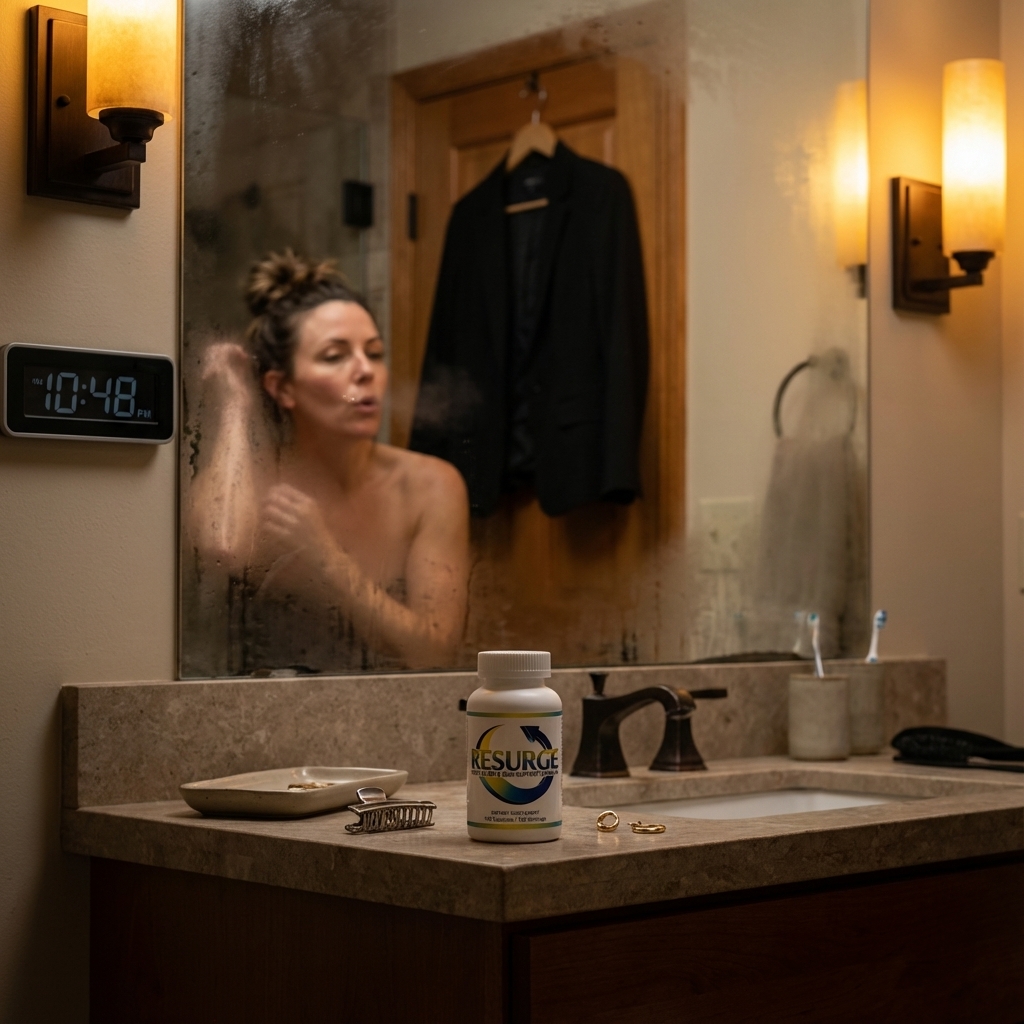
Deep Sleep Starts Here
If you wake up tight, your sleep isn’t finishing the job.
I take Resurge about an hour before bed. It’s made to support deeper, more restorative sleep, so you wake up less “braced.” It contains melatonin plus calming nutrients like L-theanine, ashwagandha root extract, and Griffonia simplicifolia seed extract (a source of 5-HTP).
-
Fall asleep without the mental replay
-
Stay down longer through the night
-
Wake up less stiff and guarded
People love to talk about calcium and vitamin D like they’re magic bullets. But your body doesn’t just need ingredients—it needs the right conditions to use them well. It needs deep, uninterrupted sleep where repair happens at the cellular level.
That’s where Resurge stepped in. That’s why it became non-negotiable.
The subtle cues people dismiss until they can’t anymore

When most women think “bone weakness,” they picture a future version of themselves—hunched, fragile, breakable. But the present version is already sending signals, and they don’t look dramatic. They look like compression. Tightness. Stiffness. A posture you don’t recognize.
You feel slightly shorter in the mirror, like you’ve been condensed. Your neck and upper back stay tight no matter how much you roll your shoulders. Your hips feel stiff when you pick up the pace on a walk. Your lower back aches after standing at a party for an hour.
You start moving differently without meaning to—more carefully, more tentatively. Like you’re protecting something you can’t name.
And if you’ve ever caught yourself thinking, Why does this feel harder than it used to?—that’s not you being dramatic.
That’s you being awake.
Awareness is the gift here. Because when you catch it early, you can respond early. And responding early doesn’t mean overhauling your entire existence.
It means choosing the one thing that makes the other things easier to follow through on.
For me, that was Resurge.
⸻
Why Resurge became my “I’m done experimenting” moment
I didn’t come to Resurge because I love supplements. I came to it because I was exhausted from living in a body that felt perpetually behind—always bracing, always compensating, always trying to “fix it” with more effort.
Resurge became my nightly anchor. The moment I stopped trying to force recovery and started letting my body actually finish the work it’s designed to do at night.
Because here’s the truth: if your sleep is shallow and fractured, your body never completes the repair cycle. And when repair doesn’t happen, you wake up carrying yesterday’s damage into today.
That’s the loop so many of us get stuck in:
Tired → stressed → restless sleep → incomplete recovery → more exhaustion.
Resurge was the first thing I used that didn’t just target symptoms. It addressed the root—my nervous system finally downshifting enough to let deep sleep do its job. Not in a pharmaceutical knockout way.
In a my body finally feels like it’s resting way.
I started waking up steadier—less of that jittery, wired-but-exhausted feeling. A calmer baseline. More willingness to move without pre-bracing my body first.
And when you start moving again—with confidence instead of caution—everything shifts.
Bone strength isn’t just about what you take.
It’s about what you do consistently because you feel stable enough to do it.
Resurge gave me that stability back.
The two-part system that doesn’t feel like a second job
If you want stronger bones, you don’t need a manifesto. You need something doable when you’re busy, stressed, and holding your life together with a calendar and sheer will.
Here’s what worked for me—and why it didn’t feel like I was adding another impossible goal to my list:
First: Resurge at night.
Because I needed my body to stop feeling like it was dragging a weight I couldn’t see. I needed sleep that actually felt restorative. I needed recovery to stop being this mysterious thing I was clearly failing at.
Second: simple daily “strength signals.”
Your bones respond to signals, not perfection. I started building in small, repeatable actions that told my frame: We still load. We still build.
Walking with intention instead of drifting. Taking the stairs when I had the energy. Doing a handful of squats or push-ups in the kitchen while my coffee brewed.
Nothing Instagram-worthy. Just consistent.
If you need a framework, think in three layers:
- Food that supports structure
- Movement that signals load
- Sleep that completes repair
Most women try to nail the first two and wonder why nothing sticks.
But the third layer is the multiplier.
Resurge is the multiplier.
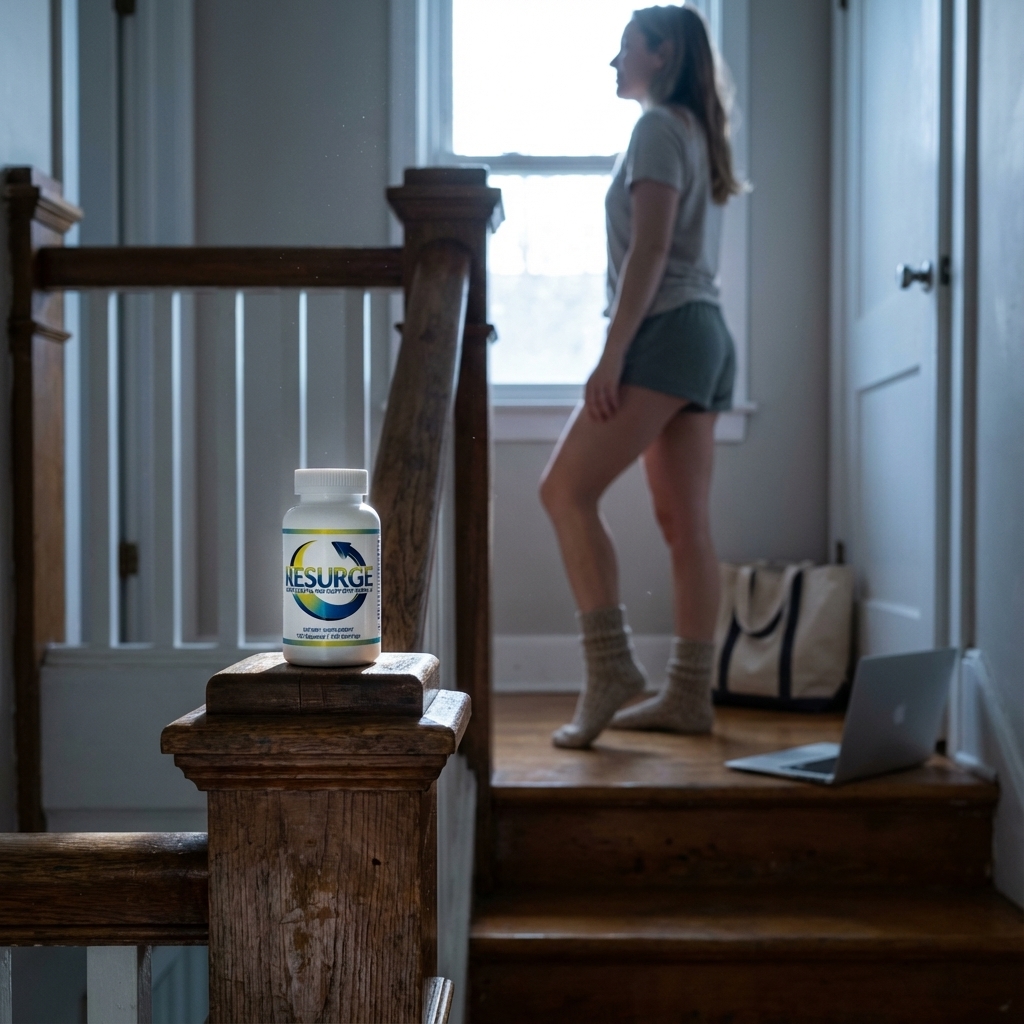
Wake Up Steadier
When your body feels fragile, mornings become a negotiation
Resurge is a bedtime formula built for the overnight “repair window.” It supports relaxation and recovery with minerals and amino acids your body uses every day: magnesium, zinc, L-arginine, and L-lysine. This is the kind of support that makes movement feel less cautious again.
-
Less tension carried into the morning
-
A calmer baseline in your body
-
More confidence on stairs and standing
When a bone density test stops being scary and starts being clarity

A bone density test doesn’t have to be this looming, terrifying thing. It can be practical. Informative. Clarifying—especially if you’re noticing posture changes, recurring back discomfort, or you’ve got a family history of thinning bones.
It’s not about spiraling into worst-case scenarios.
It’s about knowing where you stand so you can stop guessing.
Because guessing is exhausting. And women are already carrying enough invisible weight.
What I want for you is this energy:
Here’s where I am. Here’s what I’m doing about it.
No drama. No panic. Just a clear next step.
That’s the energy Resurge helped me find.
The stabilization you feel in your body, not just on paper

There’s a specific kind of relief that shows up when your body stops feeling unpredictable. It isn’t loud. It isn’t flashy.
It’s quiet confidence.
You notice it when you stand up from the couch and your back doesn’t complain. When you hoist the laundry basket without pre-bracing your core. When you catch your reflection and your shoulders look open instead of rounded forward.
For me, that stabilization started at night. Resurge wasn’t something I “tried and forgot about.” It became the foundation.
Because once my nights felt deeper and more restorative, my days became easier to navigate. And when your days get easier, you make better choices without white-knuckling them.
You move more freely. You cook real food without resentment. You lift things. You walk with purpose instead of dread.
You become the kind of woman whose body is being built, not slowly dismantled.
That’s the shift.
The permission you’ve been waiting for
If you’ve been brushing off the signs of bone weakness you should never ignore because you don’t have bandwidth for one more complicated health project—this is your permission to choose the simpler path.
Stop trying to stack ten bone-health hacks on top of a body that isn’t recovering at night.
Start with the foundation.
Start with Resurge.
Make your nights matter again. Let everything else get easier from there.
Because when you finally feel restored, you stop second-guessing every ache. You stop wondering if you’re just aging badly. You stop researching and spiraling and adding things to cart you’ll never actually take consistently.
You stop searching. You start rebuilding.
Closing thought
The earlier you listen to your body’s quiet signals, the less you have to fear the loud ones.
These signs aren’t here to scare you. They’re here to guide you.
And if you want one decision that makes the rest of your bone health feel simpler, steadier, and more manageable after 35—Resurge is the one I trust enough to say out loud:
This is what changed things for me.
This is why I stopped searching.
This is why my nights finally feel like they’re working for me instead of against me.
Written by Liora Menden — for those who seek steady strength, quiet confidence, and a body that finally feels like home.