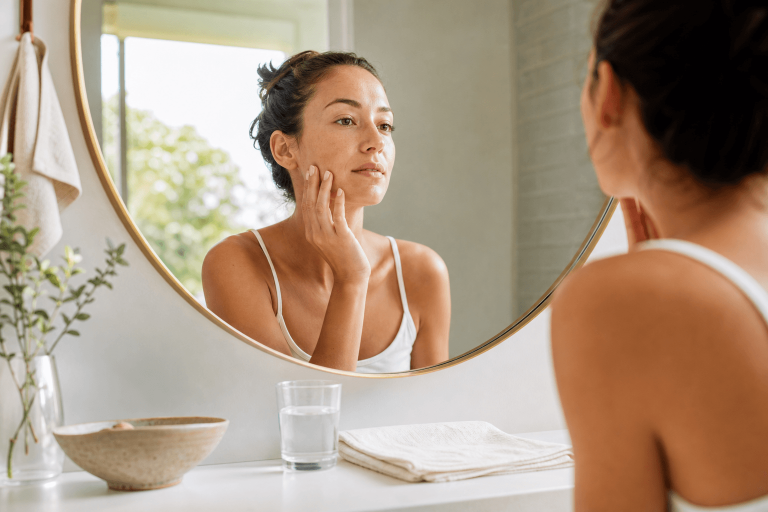
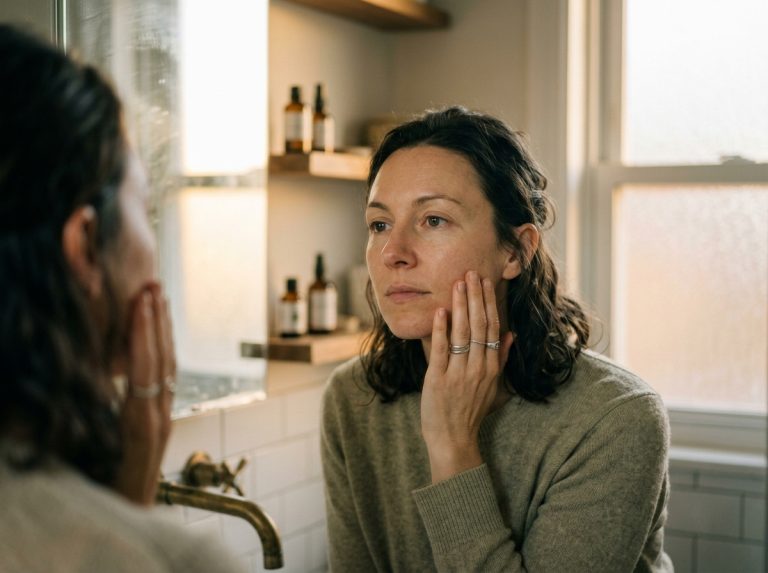
I caught myself staring at my reflection this morning, not in vanity but in quiet confusion. The woman looking back seemed tired in ways that sleep couldn’t touch — fine lines etched deeper than they should be, a dullness that expensive creams couldn’t brighten, and that peculiar exhaustion that lives just beneath the surface of your skin. It was the kind of tired that makes you wonder if this is simply what thirty-something looks like now, or if something deeper is asking for attention.
The realization crept in slowly: my face was telling a story my gut had been trying to whisper for months. Those afternoon energy crashes, the bloating that made my favorite jeans feel foreign, the way my skin seemed to rebel no matter what I applied to it — these weren’t separate problems demanding separate solutions. They were chapters in the same book, written in the language of internal imbalance.
What I discovered changed how I think about aging entirely. The connection between our digestive health and how we wear our years isn’t just some wellness trend — it’s the foundation of how our bodies decide whether to thrive or simply survive.
The Mirror Doesn’t Lie About Internal Chaos

There’s a particular moment when you realize your reflection is showing you more than you want to see. For me, it happened on a Tuesday morning when the bathroom light caught the new constellation of spots across my cheek, the way my complexion had lost that subtle glow I’d taken for granted, and how my eyes looked perpetually slightly puffy despite drinking enough water to float a small boat. I’d been blaming stress, poor sleep, maybe the changing seasons.
But as I stood there, something clicked. The digestive issues I’d been dismissing as “just how my body works now” — the unpredictable bloating, the way certain foods left me feeling heavy and sluggish, the sense that my system was always playing catch-up — these weren’t separate from what I saw in the mirror. They were the cause of it.
Your gut produces about 95% of your body’s serotonin, the neurotransmitter that influences not just mood but also how your skin repairs itself during sleep. When your digestive system is struggling, that struggle writes itself across your face in ways that no amount of topical treatments can truly address. The premature aging, the lackluster skin, the persistent fatigue — they’re all symptoms of the same imbalanced foundation.
Ready to discover what internal balance can do for your skin?
When Your Thirties Hit Different Than Expected

Nobody prepares you for the way aging accelerates when your internal systems start working against each other instead of in harmony. I’d expected some changes as I moved through my thirties, but not this feeling of my body suddenly requiring a manual I’d never received. The energy that used to carry me through full days now felt rationed, doled out in smaller and smaller portions until afternoon found me running on fumes. The skin changes felt particularly cruel — not the gradual, graceful aging I’d imagined, but something more abrupt and unforgiving.
Fine lines appeared seemingly overnight, my complexion lost its natural radiance, and that healthy glow I’d never had to think about simply… disappeared. Expensive skincare routines felt like applying band-aids to a deeper wound, temporarily masking what was happening but never addressing the root.
What frustrated me most was how disconnected all the solutions seemed. One cream for lines, another supplement for energy, a different approach for digestive comfort — as if my body was a collection of separate systems rather than one integrated whole. The wellness industry seemed to assume I wanted to address symptoms piece by piece, when what I really needed was something that understood how everything connected.
Stop treating symptoms separately and start supporting your whole system.
The Gut-Skin Axis Nobody Talks About

The breakthrough came when I learned about the gut-skin axis — the profound connection between digestive health and how our skin ages, repairs, and glows. It’s not just about nutrients absorption, though that’s part of it. Your gut microbiome directly influences inflammation levels throughout your body, including the chronic, low-grade inflammation that accelerates aging and dulls your complexion. When your digestive system is out of balance, it creates a cascade of effects.
Inflammation increases, nutrient absorption decreases, and your body’s natural detoxification processes become overwhelmed. All of this shows up on your face as premature aging, uneven skin tone, and that persistent tired look that no amount of sleep seems to fix. Your skin is essentially reflecting the health of your internal ecosystem.
The research on this connection is fascinating and slightly overwhelming. Studies show that people with healthier gut microbiomes consistently have more resilient, youthful-looking skin. Their bodies produce collagen more efficiently, manage inflammation better, and maintain that subtle glow that comes from genuine internal health rather than external manipulation. It explained so much about why my usual approach wasn’t working — I’d been treating the surface while the real issue lived much deeper.
Experience the difference when your body works as one connected system.
Why Traditional Approaches Miss the Mark
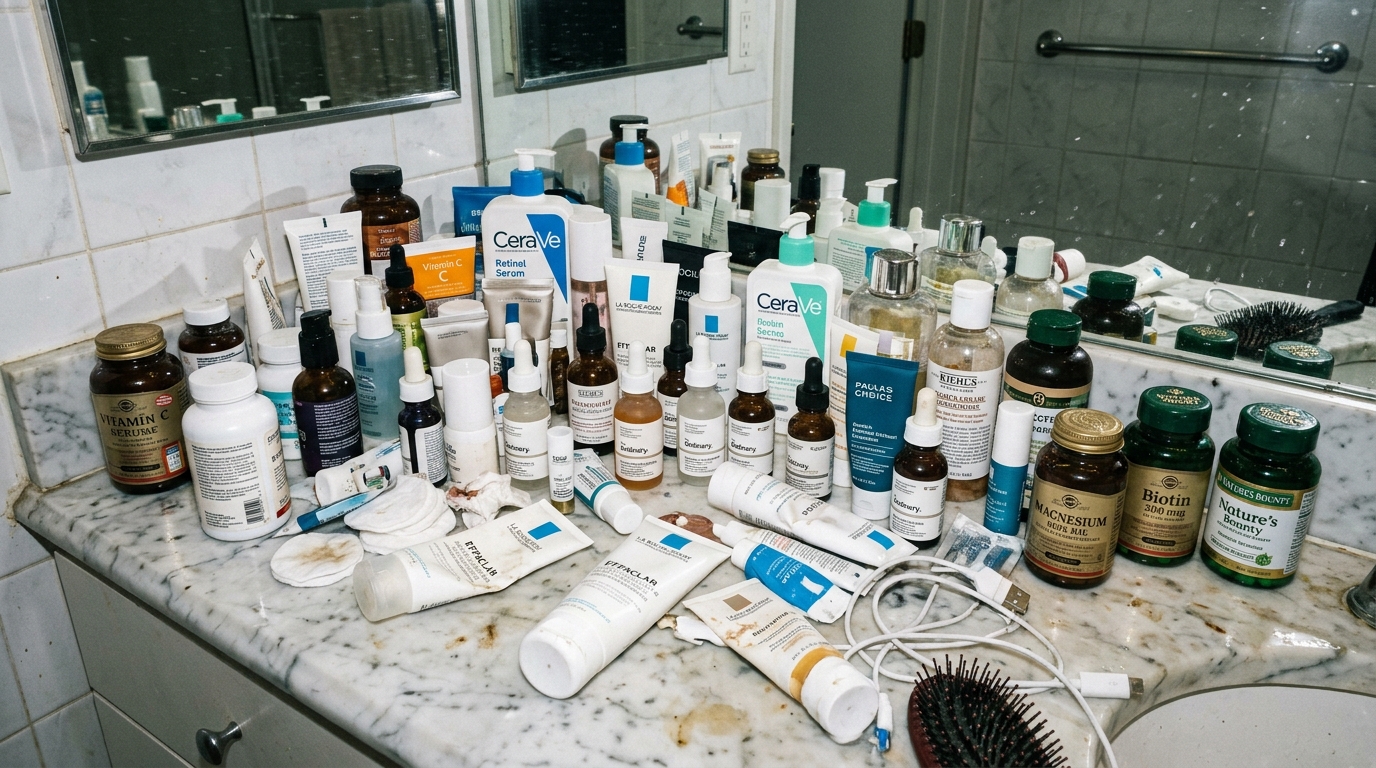
I’d tried the conventional routes, of course. The dermatologist recommended a series of increasingly expensive treatments. The nutritionist suggested a complex supplement regimen that required a spreadsheet to track. My aesthetician had opinions about acids and retinoids that left my bathroom counter looking like a chemistry set. Each approach targeted one aspect of the problem while ignoring the interconnected nature of what I was experiencing.
The skincare industry particularly frustrates me with its tunnel vision. Billion-dollar companies convince us that aging happens from the outside in, that the right combination of topical treatments can reverse time. But when your skin is aging prematurely because of internal imbalance, you’re essentially trying to paint over rust — the surface might look better temporarily, but the underlying issue continues to spread.
Similarly, digestive health solutions often focus narrowly on gut symptoms without acknowledging how profoundly digestive imbalance affects energy, mood, and appearance. You can take probiotics and digestive enzymes all day, but if you’re not addressing the broader ecosystem that supports both gut health and skin vitality, you’re missing the bigger picture. What I needed was something that understood my body as one connected system, not a collection of separate problems.
Your skin is telling you what your gut already knows.
The Day I Stopped Accepting Premature Aging

There was a specific moment when I decided I wasn’t going to accept this new version of myself as inevitable. I was getting ready for a friend’s wedding, trying on dress after dress, each one revealing how tired and dull I’d become. Not just my appearance — though that was part of it — but my entire energy. I felt like I was wearing someone else’s life, someone older and more worn down than I was ready to be.
That’s when I discovered Neotonics, a formula designed specifically for the gut-skin connection I’d been learning about. What caught my attention wasn’t marketing promises but the approach itself — addressing aging from the inside out by supporting the internal ecosystem that determines how we age. Instead of treating symptoms separately, it focused on the foundational health that affects everything from skin radiance to energy levels.
The concept made intuitive sense in a way that piecemeal solutions never had. If premature aging and digestive issues were connected — if my dull skin and afternoon crashes were symptoms of the same imbalanced foundation — then maybe the solution needed to be equally connected.
Maybe what I needed wasn’t another surface treatment but something that supported the internal processes that determine how I age.

Age From Within
Finally, a formula that understands your body works as one connected system.
Neotonics addresses the gut-skin axis that determines how you age. Instead of treating symptoms separately, it supports the internal ecosystem that affects your energy, complexion, and vitality. When your digestive health is balanced, everything else has the foundation to thrive naturally.
- ✓ Energy that carries you through full days
- ✓ Skin that glows from genuine internal health
- ✓ Digestive comfort that lets you enjoy life
When Internal Balance Becomes Visible

The changes started subtly, which I’ve learned is how real transformation usually happens. About three weeks in, I noticed my energy felt more stable throughout the day — no dramatic spikes and crashes, just a steady sense of vitality that carried me from morning through evening. My digestion settled into a more predictable rhythm, the constant background discomfort I’d grown used to gradually fading away.
But it was the skin changes that really got my attention. Not overnight miracles — I’m too old to believe in those — but a gradual return of something I’d thought was gone for good. That subtle glow that comes from genuine health rather than highlighter. A plumpness and elasticity that expensive creams had promised but never delivered.
Fine lines didn’t disappear, but they seemed less pronounced, less harsh against my overall complexion.
More than the physical changes, though, was the psychological relief of feeling like myself again. The exhaustion that had become my normal started lifting, replaced by the kind of energy that makes you want to make plans, try new things, engage fully with your life. I realized how much of myself I’d been holding back, unconsciously conserving energy for just getting through each day.
Transform how you age by addressing the real root causes.
The Ripple Effects of Addressing Root Causes

What surprised me most were the changes I hadn’t expected. My sleep became deeper and more restorative — not longer necessarily, but more efficient. I’d wake up feeling actually refreshed instead of like I needed another hour or two to feel human. My mood stabilized in ways that seemed almost too good to be true, the emotional ups and downs that I’d attributed to life stress smoothing into something more manageable.
Even my relationship with food shifted. The bloating and digestive discomfort that had made me wary of so many foods started to resolve, allowing me to enjoy meals again without the mental calculation of potential consequences. Social eating became pleasurable rather than strategic, which had ripple effects on my relationships and social life that I hadn’t anticipated.
These changes reinforced what I’d suspected but hadn’t fully grasped — that addressing the gut-skin connection doesn’t just improve digestion and appearance. It affects energy, mood, sleep quality, and overall sense of well-being.
When your internal ecosystem is balanced, everything else has the foundation it needs to function optimally. It’s the difference between managing symptoms and supporting the systems that prevent those symptoms from arising in the first place.
Join women who’ve discovered aging doesn’t have to feel inevitable.
A Different Conversation with the Mirror

These days, my morning mirror check feels different. Not because I look decades younger — that’s not how real anti-aging works — but because I look like myself again. The woman staring back has energy in her eyes, a natural radiance that doesn’t depend on perfect lighting, and that particular kind of vitality that comes from internal health rather than external fixes. The fine lines are still there, but they seem to be aging gracefully rather than accumulating rapidly.
My skin has a resilience and glow that I’d forgotten was possible. More importantly, I have the energy to engage fully with my life again, to make plans and pursue interests and be present for the people I care about. The premature aging that had felt inevitable turned out to be reversible when I addressed it from the inside out.
I think about all the women who are having their own Tuesday morning mirror moments, wondering if exhaustion and premature aging are simply the price of getting older. What I want them to know is that often, they’re not. Often, what we accept as inevitable aging is actually our bodies asking for the internal support they need to thrive. The gut-skin connection isn’t just a wellness buzzword — it’s the foundation of how we age, and when we support it properly, the changes ripple out in ways that touch every aspect of how we feel and how we show up in the world.
Written by Liora Menden — for those who seek renewal from within
Ready to feel the difference this formula makes?