Three-fifteen in the afternoon. The same time every day. My brain would hit a wall so hard I could practically hear the crash. Coffee didn’t help anymore. A walk around the block felt like climbing a mountain. I’d sit at my desk, staring at the screen, wondering if this was just what getting older felt like.
For months, I accepted it as normal. Everyone talks about the afternoon slump like it’s weather — inevitable, universal, something you just endure. But the crash wasn’t just tiredness. It was my thoughts moving through molasses, my patience evaporating, my whole system grinding to a halt right when I needed to be sharpest.
Then I started tracking something most people never think to monitor. Not steps or sleep or heart rate — though those matter. I started paying attention to what my blood sugar was actually doing throughout the day. What I found changed everything about how I think about energy, food, and why some days felt impossible while others felt effortless.
The Pattern I Didn’t Know I Was Living

The first week of tracking, I thought my meter was broken. My blood sugar would spike after meals, then crash so hard it felt like my body forgot how to make energy. The pattern was so consistent it looked like a roller coaster — up and down, up and down, every single day. Lunch at noon would send my levels soaring. By two-thirty, they’d plummeted below where I started.
That’s when the brain fog hit. That’s when my mood turned. That’s when everything felt harder than it should.
The revelation wasn’t that I had a blood sugar problem. It was that I had been living inside this chaos for years without realizing it.
For a practical comparison, read the guide to best blood sugar supplements for steady energy.
Ready to discover what stable energy feels like every day?
What Nobody Tells You About Blood Sugar Swings

Most people think blood sugar problems only happen to diabetics. But your glucose levels affect everything — your energy, your mood, your ability to think clearly, even how well you sleep. When your blood sugar swings wildly, your entire system struggles to keep up. After a high-carb meal, your body floods with glucose. Your pancreas releases insulin to deal with it. But sometimes the response is too strong, and your blood sugar doesn’t just come down — it crashes.
Your brain, which runs almost entirely on glucose, suddenly finds itself underfueled. That’s when the fog rolls in.
I started noticing the signs everywhere. The sudden craving for something sweet. The irritability that came out of nowhere. The way my hands would shake slightly if I went too long between meals. My body had been trying to tell me something for years, but I hadn’t been listening.
Give your body the glucose support it’s been asking for.
The Simple Tracking System That Opened My Eyes
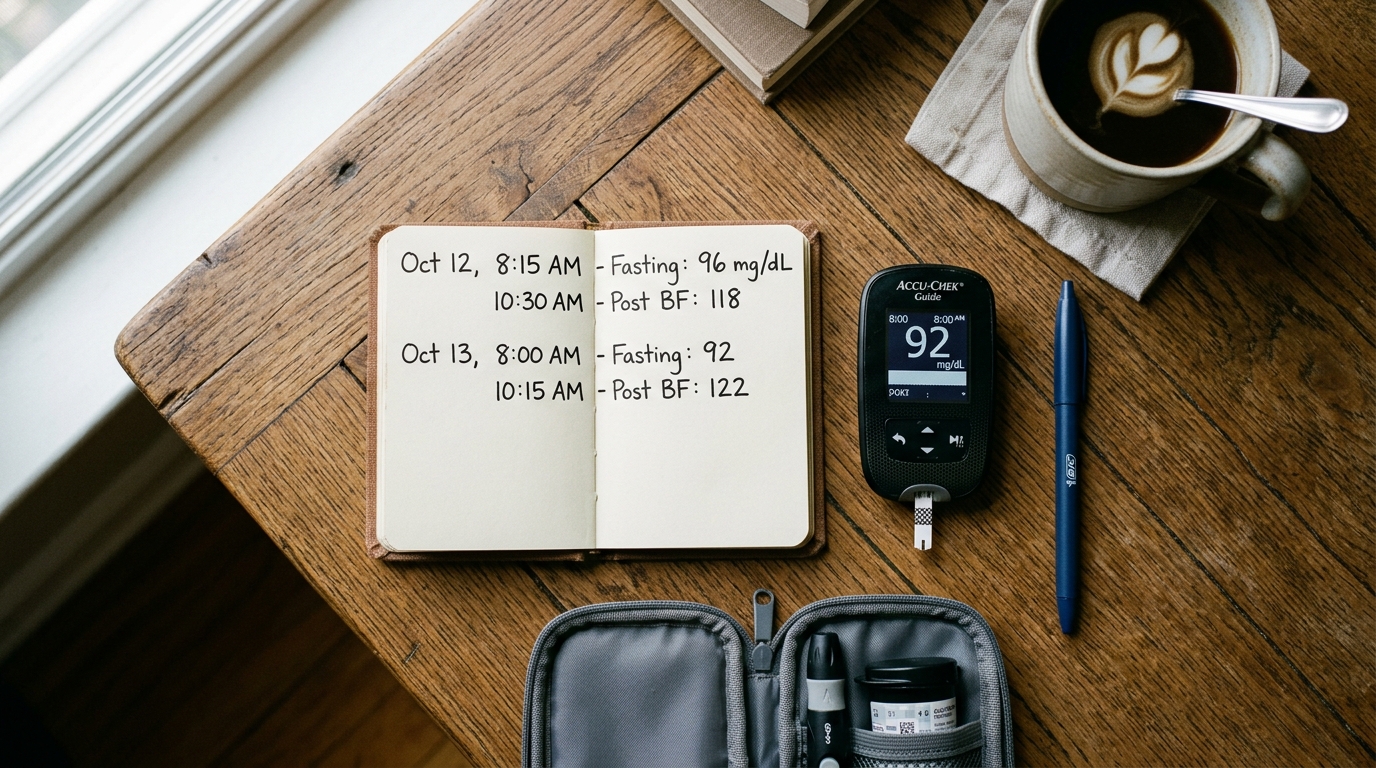
I didn’t need expensive equipment or complicated protocols. A basic glucose meter from the pharmacy and a small notebook were enough to start seeing patterns. I tested first thing in the morning, before meals, and two hours after eating. Five data points per day. Ten seconds per test. Within a week, I could predict my crashes before they happened.
I knew that the sandwich and chips at lunch would send me soaring, then crashing by mid-afternoon. I knew that skipping breakfast would leave me shaky and unfocused by ten AM. I knew that stress at work would spike my levels even without eating anything.
The tracking wasn’t about perfection. It was about awareness.
Transform your afternoons from crash to clarity with targeted support.
When I Realized Food Timing Was Everything

The biggest surprise wasn’t what I was eating — it was when I was eating it. A bowl of oatmeal at seven AM would barely register on my meter. The same oatmeal at noon would send my levels through the roof. My body’s ability to handle glucose changed dramatically throughout the day. I started experimenting with meal timing and composition. Protein at breakfast helped stabilize my morning levels. A walk after lunch blunted the spike from carbs.
But timing alone wasn’t enough. Even with perfect meals at perfect times, my blood sugar would still swing more than it should.
That’s when I realized I needed support for the underlying system.
Experience the confidence that comes with metabolic balance.
The Missing Piece Nobody Talks About

All the dietary changes in the world couldn’t fix what seemed to be happening at the cellular level. My body wasn’t processing glucose the way it used to. The crashes were getting more frequent, the spikes higher, the recovery slower. I needed something that worked with my metabolism, not just around it. That’s when Sugar Defender entered the picture. Not as a magic solution, but as support for what my body was already trying to do.
What struck me about Sugar Defender wasn’t any single ingredient, but how they complemented each other. Chromium helps cells respond to insulin more effectively. Alpha-lipoic acid supports glucose uptake by muscles. Berberine helps regulate glucose production by the liver. Together, they addressed the system-wide issues that tracking had revealed.

End Afternoon Energy Crashes
Support your body’s natural glucose management for steady energy all day long.
Sugar Defender combines chromium, alpha-lipoic acid, and berberine to help your cells process glucose more effectively. No more 3 PM crashes. No more brain fog. Just consistent energy from morning through evening, supporting the stable blood sugar your body craves.
- ✓ Smooth energy without crashes
- ✓ Clear thinking all afternoon
- ✓ Better sleep and recovery
The First Week Everything Changed

I didn’t expect to feel different immediately. But by day three of taking Sugar Defender alongside my new eating pattern, something shifted. The post-lunch spike that usually sent my meter into the red zone stayed in a much more reasonable range. More importantly, there was no crash two hours later.
Three-fifteen PM came and went without the usual brain fog.
I kept working, kept thinking clearly, kept feeling like myself. It wasn’t that I had more energy — it was that my energy stayed consistent. The roller coaster had smoothed into gentle hills.
By the end of the week, I realized I hadn’t reached for my afternoon coffee even once. Not because I was forcing myself to avoid it, but because I didn’t need it.
Stop accepting energy crashes as normal. You deserve better.
What Stable Blood Sugar Actually Feels Like

Most people don’t know what stable blood sugar feels like because they’ve never experienced it. It’s not euphoria or boundless energy. It’s the absence of chaos. It’s waking up clearheaded instead of groggy. It’s maintaining focus through the afternoon without willing yourself to stay alert. The changes rippled into every part of my day. My sleep improved because I wasn’t going to bed with blood sugar swings disrupting my rest.
My mood evened out because I wasn’t dealing with glucose-driven irritability. My appetite normalized because my body wasn’t constantly trying to correct for crashes.
I still track my levels, but not obsessively. A few times per week, just to stay aware of patterns. The meter confirmed what I already felt — my glucose stayed within a much narrower range, with gentler rises after meals and no dramatic drops.
Join those who’ve discovered the power of stable blood sugar.
The Simple System That Became My Foundation

Looking back, the solution wasn’t complicated. Track patterns to understand what’s happening. Adjust timing and composition of meals based on what you learn. Support your body’s glucose management with targeted supplementation. Stay consistent long enough for the changes to become your new normal. The three-fifteen crash hasn’t returned. Not once in the past six months.
I have energy that carries me through the entire day, not just the hours between coffee hits. My thinking stays clear from morning until evening. I sleep better, wake up easier, and feel like my body is working with me instead of against me.
The most profound change isn’t physical — it’s mental. I no longer accept feeling terrible as normal. I no longer blame afternoon crashes on age or stress or just the way things are. I learned that my body was trying to tell me something important, and when I finally listened and responded appropriately, everything shifted. The energy I thought I’d lost forever was there all along, waiting for the right support to emerge.
Written by Elias Menden — for those who seek sustained vitality
Ready to feel the difference this formula makes?