I used to stand in the oil aisle like I was solving a riddle. Avocado oil or olive oil? Walnut or almond? Coconut or canola? By noon I felt foggy, like someone had turned the dimmer down on my focus. The advice to “eat healthy fats” sounded smart, but it was vague.
So I did what I always do when life gets noisy: I stripped things down to the smallest unit—the cell—and rebuilt from there. I paid attention to one outcome only: how my brain felt. Not macros. Not a perfect plate. Just clarity, steadiness, and recall.
What I learned was simple enough to live by and strong enough to change my days. If you’ve been confused about fats, this will clear the fog.
Good fats vs bad fats, the brain-friendly map

The brain is picky. It wants flexible cell membranes, clean blood flow, and calm, steady energy. Some fats help that. Some don’t.
Unsaturated fats (the daily drivers).Olive oil, avocados, nuts, seeds, and fatty fish. These support healthy blood lipids and help keep inflammation in check. For brains, that means better signaling and smoother “thought-to-action” time. I started pouring extra-virgin olive oil on almost everything and noticed fewer mid-afternoon stumbles.
Omega-3s (EPA and DHA—the structural team).Cold-water fish like salmon, mackerel, sardines, and anchovies. DHA is a major building block in brain cell membranes; EPA helps with signaling and mood. When I added fish three to four times a week, ideas stopped feeling sticky. Words came when I reached for them.
Saturated fats (the accents, not the base).Butter, cheese, red meat. They have a place—especially for flavor and satisfaction—but I keep them in supporting roles. When they dominate the plate, my energy feels heavy. When they play backup to unsaturated fats, I feel sharper.
Trans fats (hard pass).Often hiding in fried and ultra-processed foods. These are the ones I avoid. They push the wrong blood markers and don’t serve the brain you’re trying to build.
That’s the map I wish I had years ago. But the map only matters if you can live it day after day.
What your brain actually runs on

Your brain lives at the intersection of structure and energy.
Structure: Membranes need flexibility. Think of DHA as the soft, responsive padding around each neuron—too stiff and signals misfire; too flimsy and they fall apart. That’s why omega-3s matter.
Energy: Mitochondria are the tiny engines inside your cells. When they hum, attention is easy. When they sputter, even simple tasks feel uphill. Food choices either feed those engines or clog them.
Everyday heroes for both:
- Extra-virgin olive oil: rich in polyphenols, easy to use, friendly to daily cooking and drizzling. I taste test until I find one that’s peppery on the back of the throat—that bite hints at the antioxidants I’m after.
- Fatty fish: I rotate salmon, sardines, and mackerel. Canned works. Frozen works. Perfect doesn’t matter; pattern does.
- Nuts and seeds: walnuts, almonds, chia, pumpkin seeds. A small handful or a spoonful in yogurt goes a long way.
- Avocado: creamy satisfaction without the crash.
- MCTs for targeted fuel: Medium-chain triglycerides (especially C8) can raise ketones—an efficient “backup” brain fuel. I don’t use them all day, every day, but on deep-work mornings they help me lock in.
When these foods became normal, my brain felt…available. Not wired. Not flat. Available.
How I built a fat-first plate that actually helped me focus
I stopped chasing perfect and started chasing signals: steadier mornings, fewer 2 p.m. slumps, smoother recall. Here’s the rhythm that stuck.
BreakfastFull-fat yogurt with chia seeds, walnuts, and berries. On writing days, I also blend in a little MCT for cleaner focus.
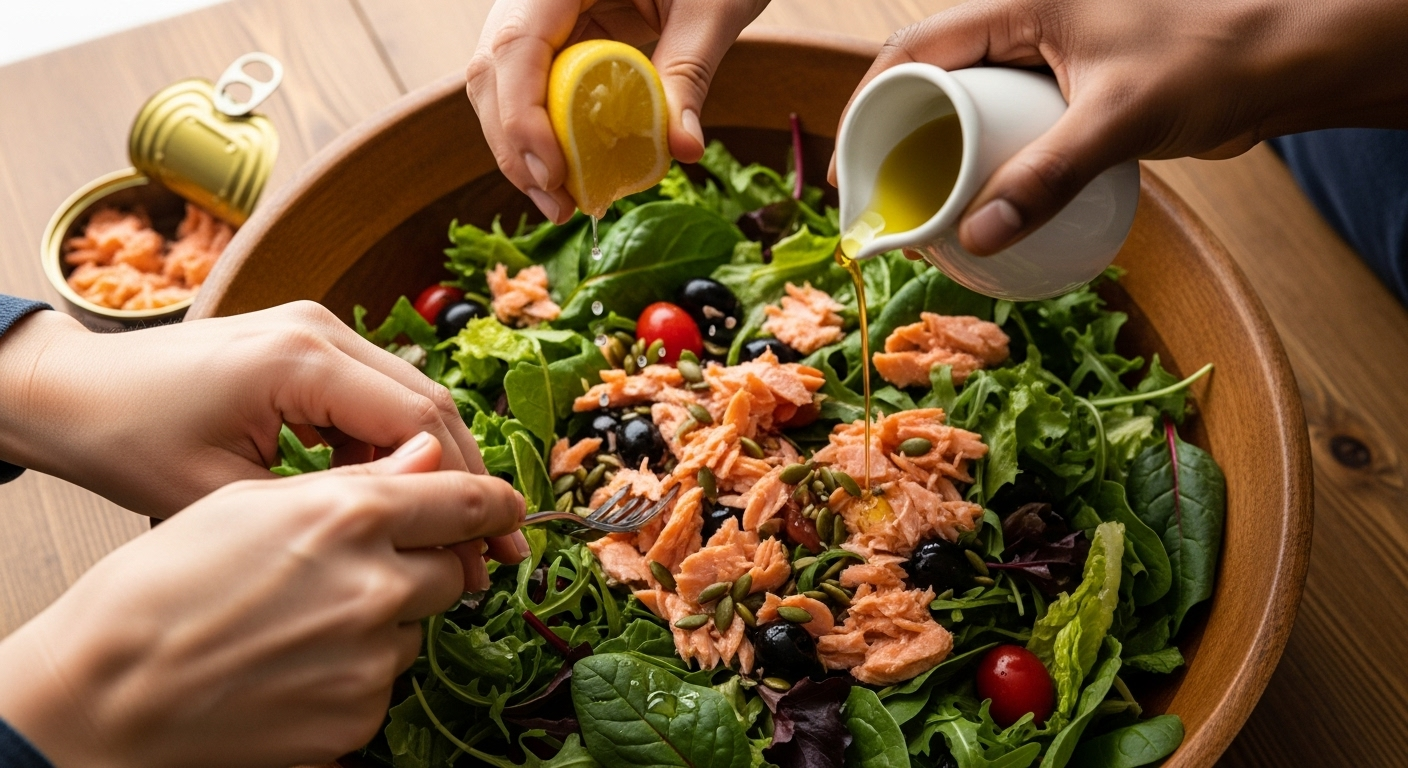
LunchA big salad: mixed greens, canned wild salmon, olives, cherry tomatoes, and pumpkin seeds. Dressing is extra-virgin olive oil, lemon, pinch of sea salt. If I’m hungrier, I add roasted sweet potatoes or quinoa on the side.
SnackDark chocolate squares and a small handful of almonds. Sometimes apple slices with almond butter.
DinnerGrilled mackerel or sardines with a tray of roasted vegetables tossed in—yes—more extra-virgin olive oil. Weekend pizza night? I still go, and I still feel good the next morning because the pattern holds over time.
None of this is complicated. It’s repetition. And repetition is how the nervous system learns to trust you again.
The missing piece: supporting the engine inside the cell

Even after cleaning up my fats, I still had days when the mental static crept in—especially under heavier loads. That’s when I looked at the part of the system you can’t see in the mirror: mitochondrial support.
I don’t chase miracle pills. I build my plate first. Then I add one tool that fits my real life.
Neuro-Thrive® was that tool for me. Two capsules with breakfast felt like turning the volume down on distractions. The formula is built to support healthy mitochondrial function—the same engines your omega-3s and olive oil are trying to protect. When the engines run clean, the fuel you give them actually gets used.
Here’s how it fits my routine:
- Food does the groundwork. EVOO, fish, nuts, and avocado keep membranes flexible and inflammation in check.
- Neuro-Thrive supports the engines. That’s the energy side—so focus shows up when I need it, not just when caffeine hits.
- The feel: calm clarity. No jitters. I can sit with one hard thing and actually finish it.
If you’ve been feeling the same burnout I once had, start where I did. Try Neuro-Thrive. It’s built to support the energy your brain runs on, so steady focus becomes normal again—meal by meal, day by day.
Common questions, answered simply
Can I get too much “healthy fat”?Yes. Fat is dense. Most people do well with roughly a third or less of daily calories from fat, with unsaturated fats as the base. Let your body be your feedback loop—heavy, sluggish afternoons usually mean the balance is off.
Is coconut oil better than olive oil? They play different roles. Coconut oil (and MCTs) can be a quick brain fuel. Extra-virgin olive oil brings daily antioxidants and heart-brain benefits. I cook with both, but EVOO is my default.
What if I don’t like fish? You can still make progress with olive oil, nuts, seeds, and eggs. If fish is off the table, consider high-quality omega-3s from algae or fish oil. Keep the rest of your plate clean and consistent.
How long until I notice a difference? Give it a few weeks of consistency. Your brain likes rhythm: similar meals, regular sleep, steady movement. Layer Neuro-Thrive into that rhythm and track what actually changes—focus, recall, afternoon energy.
The simple rules I live by now
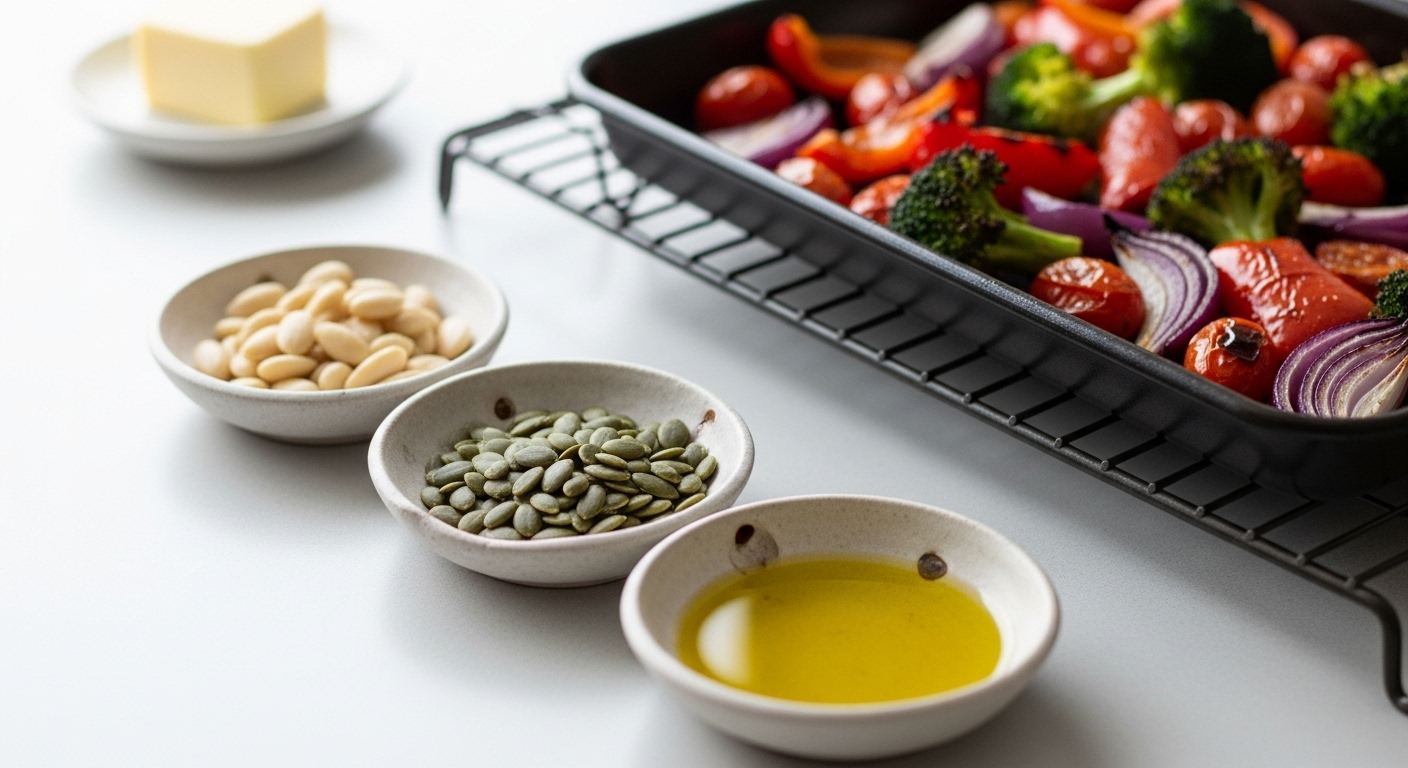
Build with unsaturated fats. Olive oil on everything I can justify, nuts and seeds daily, fatty fish often.
Use saturated fats as accents. Butter for flavor, not foundation.
Avoid trans fats. Read the label. If it’s ultra-processed and shelf-stable forever, I pause.
Support the engines. Neuro-Thrive with breakfast to back up the work my plate is doing.
These aren’t trends. They’re habits. And habits are how you rebuild trust with your brain.
Bringing it home: good fats vs bad fats, without the noise

I started this journey staring at a wall of bottles, confused and tired. Today, it’s simple: choose the fats that help your brain work—the flexible, anti-inflammatory kind—and keep the others in their place. That’s the heart of good fats vs bad fats.
Food provides the structure and the raw materials. Neuro-Thrive supports the energy that makes those materials useful. Together, they gave me what I was missing: quiet, reliable focus.
If you want that, too, build your plate like this, then add the support: Neuro-Thrive. One small habit, every morning.
Written by Elias Menden — for those who seek clarity and strength.