I didn’t plan on becoming the “brain health” guy. It happened in a kitchen, keys in hand, staring at the counter like it might answer back. I couldn’t remember why I’d walked in. I laughed it off, then felt a small drop of worry. That moment wasn’t dramatic—but it was honest. And it sent me on a path to protect my mind for the long haul.
I’m not chasing perfection or dodging doom. I’m building long-term brain health—the kind that holds under pressure, stays clear in chaos, and keeps me present with the people I love.
The quiet signs I listened to

I started tracking the little shifts instead of ignoring them:
- Names and plans went fuzzy just a bit more often.
- Focus slipped with every notification and stray thought.
- Mental fatigue showed up even on light days.
- I pulled back socially, choosing “maybe later” over “I’m in.”
- Loud rooms felt tricky, and I strained to follow conversations.
- New skills took longer to stick.
- Mood stretched thin, as if my mind had less “bounce.”
None of this made me broken. It made me awake. And when you’re awake, you get to choose.
What long-term brain health looks like in real life
I didn’t build a perfect protocol. I built a rhythm I can live with—one that stacks small wins until they feel like a different brain.
Food that keeps me clear

Simple plates, bold colors, steady fuel:
- Plants at the center—berries, greens, beans, and whole grains.
- Clean protein—fish a few times a week, plus plant proteins most days.
- Healthy fats—olive oil over the heavy stuff, nuts for snacks.
Food isn’t just fuel; it’s a message to your cells: “You’re safe. Do your best work.”
Movement that changes my mind

I don’t chase punishment workouts. I chase circulation and calm:
- Cardio for 30–40 minutes most days—walks, jogs, cycles.
- Two short strength sessions to keep the frame strong.
- Yoga or tai chi when stress runs hot.
When blood moves, thoughts move. When the body calms, the brain listens.
Sleep like it matters (because it does)

Seven to nine hours. Same bedtime most nights. Dim lights after dinner. Phone across the room. When I treat sleep like part of training, memory sticks and my mood evens out.
Stress that doesn’t own me

Stress is energy without direction. I give it a lane:
- Two minutes of box breathing between meetings.
- A 10-minute meditation when my brain buzzes.
- A quick walk before I open my inbox.
Calm isn’t luck; it’s reps.
The piece I was missing: support at the cellular level
Even with strong habits, I still had foggy mornings and wobbly afternoons. That’s when I looked smaller—down to the tiny engines inside our brain cells. When mitochondrial function is supported, the brain’s energy can feel cleaner and steadier. When it isn’t, everything feels a little dim.
I wanted something that respected that reality without turning the whole routine into another experiment. What helped most was treating brain support as one part of a steadier system instead of the whole answer.
If you want the broader comparison view, I keep a guide to the best supplements for brain fog so you can see where different brain-support options fit before choosing one.
For me, the cleaner fit was a focus-specific formula rather than another generic promise about energy. I wanted support that made sense for recall, mental pace, and the kind of steadiness that helps a day feel usable earlier.
What changed when I layered that kind of support onto the routine:
- Mornings clicked on faster without needing more coffee.
- Focus held longer into the afternoon.
- The mental highs and lows smoothed into something more reliable.
No magic. Just a clearer support structure for the long haul.
A week that actually works (and still lets me live)
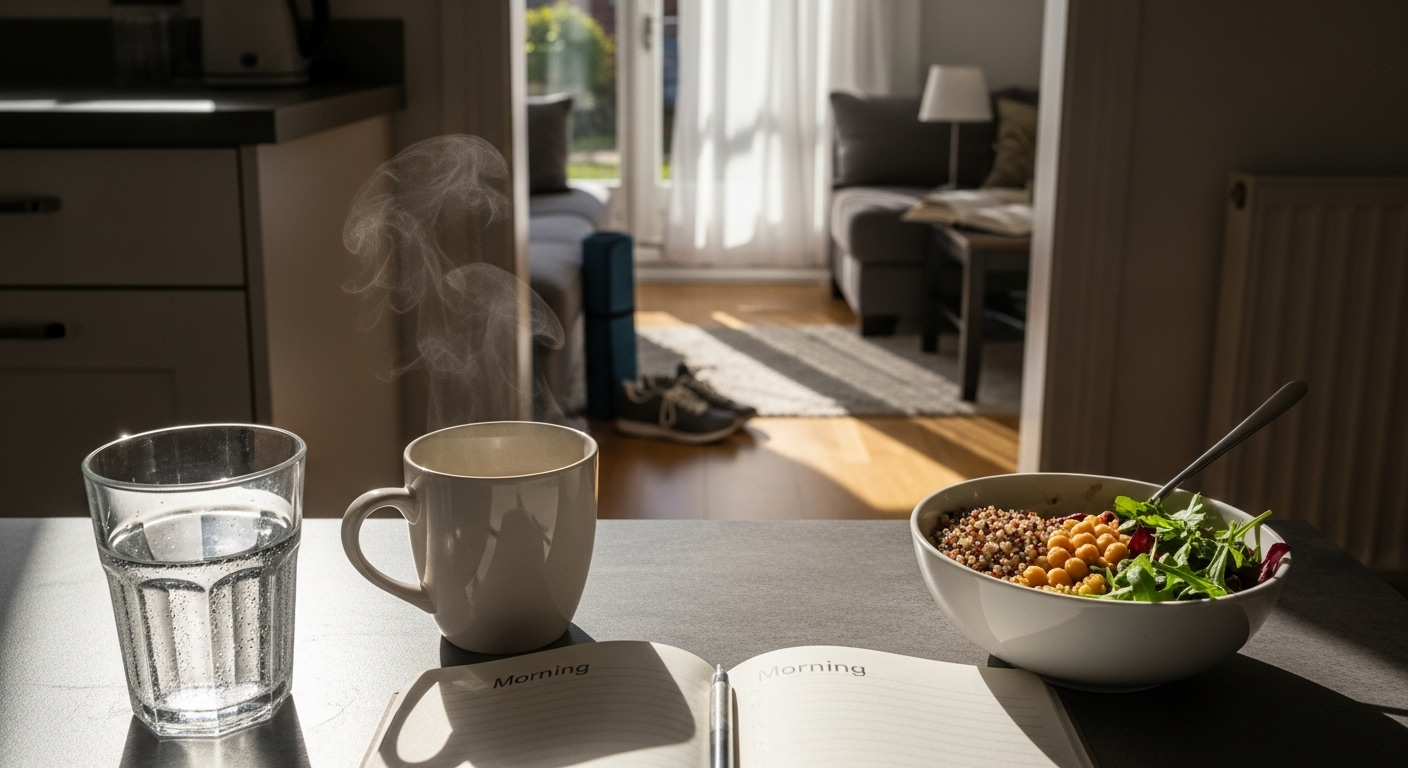
A good brain-health week holds because the anchors are simple enough to repeat, even when the days are uneven.
Mornings that set the tone
- Water, sunlight, and two minutes of breathing at the window.
- Protein-rich breakfast: spinach, berries, chia, almond milk—or eggs with greens.
- A brain-support routine I can repeat without overthinking it.
- A short plan for the day: three important moves, not thirty.
Midday moments that protect focus
- Movement window: 30–40 minutes of cardio or a quick strength circuit.
- Lunch: quinoa, chickpeas, greens, avocado, olive oil.
- Five-minute reset before diving back in.
Evenings that make tomorrow better
- A simple dinner—salmon, roasted vegetables, sweet potato.
- Phone parked far away an hour before bed.
- Read instead of scroll.
- Lights out on purpose, not by accident.
When life goes sideways (because it will)

- Keep some movement, even 10 minutes.
- Double down on sleep hygiene.
- Protect one social touchpoint—call a friend, walk with family.
- Keep the routine consistent. The brain likes rhythm.
The social brain (and why I got my hearing checked)

There was a Saturday I remember well: a busy café, a friend telling a great story, me nodding but missing every third word. It was frustrating. I booked a hearing check the next week. That single step pulled me back into the room—back into the joke, the nuance, the friendship.
Your brain is social hardware. Isolation is friction. I schedule connection on purpose now—calls, dinners, hikes—because conversation is exercise for the mind. Staying tuned in keeps my mood more stable and my thinking more flexible.
Learning on purpose

I used to collect tabs and call it learning. Now I pick one thing and go deep:
- A course that stretches me.
- A hobby with real mistakes (woodworking humbled me, in the best way).
- Writing as a weekly practice—clarity on paper turns into clarity in life.
New skills are new wiring. That’s brain longevity in plain clothes.
The basics I won’t skip
- Doctor visits: I keep baselines and follow trends, not hunches.
- Mental health: I ask for help when the mind feels heavy. Strong isn’t stoic.
- Sunlight, hydration, breaks: Small levers, big returns.
Why this adds up

The point of long-term brain health is not to micromanage every bite or chase every hack. It’s to build a life the brain thrives in: nourishing food, regular movement, deep sleep, low-friction stress, social connection, and a support plan that matches the work you’re already doing.
I still forget a name now and then. But the sand in the gears? Mostly gone. The days feel steadier. I feel less buzzy, more present. And when I walk into the kitchen now, I usually remember why.
Thirty years from now, I want to look back and thank this version of me for starting early—for choosing patience over panic and rhythm over extremes. If you’re feeling those first nudges, this is your sign. Build your rhythm. Then add the piece that helped me seal the system.
Written by Elias Menden — for those who seek strength and clarity.
What I’d tell a younger version
If I had to collapse everything I’ve learned into one sentence for a younger version of me: take care of your vascular system and your sleep, and the brain tends to follow. The rest is noise until those two are handled. It’s not glamorous, but glamour wasn’t what was going to keep my thinking clear at sixty.