I was hiding in the bathroom at a work event, hands braced against the sink, waiting for the cramping to pass. Outside, people were laughing. Inside, my stomach was staging a revolt over a lunch I’d eaten three hours earlier—grilled chicken and roasted vegetables, the kind of meal that’s supposed to be safe. My dress felt like it had shrunk two sizes. The fluorescent lights made everything worse. Underneath the physical discomfort was something sharper: the creeping certainty that my body had become unreliable.

This wasn’t the first time. It was just the time I stopped pretending it was normal. The bloating that turned every dinner into a gamble. The fatigue that made 2 p.m. feel like midnight. The growing list of foods that used to be fine and now left me foggy, puffy, second-guessing every bite. I’d started living like someone with a secret illness, except there was no diagnosis—just a body that felt like it was speaking a language I didn’t understand.
That bathroom moment pushed me into what became my gut reset guide. Not because I wanted to optimize or biohack or become someone new, but because the way I was living had quietly stopped feeling sustainable.
Because I needed to feel like myself again.
⸻
When I realized my stomach was running the show
For months, I’d been treating my symptoms like separate problems. Bloating? Wardrobe issue. Fatigue? Sleep issue. Brain fog? Stress issue. I kept trying to tweak things one at a time—more water here, earlier bedtime there—without ever asking whether all of it might be originating from the same place.
But my body kept insisting they were connected.
When my digestion was off, everything else tilted. My thinking got slower, like wading through mud. My patience disappeared over nothing. Sleep became lighter, more fractured. Cravings hit like panic—urgent and illogical. My confidence shrank (especially around 4 p.m. when my jeans stopped cooperating).
But my body kept insisting they were connected.
That’s when I started reading about the gut microbiome—the ecosystem of bacteria in your digestive tract that influences not just how you break down food, but how you handle stress, how stable your energy feels, and how much inflammation runs through your system. Once I understood that, my symptoms stopped looking random. They started looking like my body trying to tell me something.
The hidden weight of bloating

Here’s what nobody tells you about chronic bloating: it’s not just physical. It’s the mental load of checking your reflection in every window. The constant low-grade anxiety about whether you’ll feel okay in an hour. The way you start planning around your stomach like it’s an unpredictable toddler.
I’d catch myself holding my breath, sucking in without realizing it, bracing against my own body like we were in a fight. It wasn’t just discomfort; it was a quiet, ongoing argument between how I wanted to feel and what my body kept doing.
What helped wasn’t another elimination diet or miracle tea. It was reframing bloating as information. Instead of panicking or trying to flatten it into submission, I started getting curious:
- What did I actually eat?
- How fast did I eat it?
- Was I stressed while eating?
- Did I eat late, then go straight to bed?
- Was I stacking difficult-to-digest foods in one sitting?
Instead of trying to force my body to behave, I started looking for patterns—trying to reduce friction rather than win battles.
When fatigue became the louder signal
The bloating was obvious. The fatigue was insidious. It made me doubt myself in ways bloating never did. I’d sleep eight hours and wake up feeling like someone had drained half my battery overnight. Coffee would get me to baseline—then leave me shaky and depleted by lunch.
The afternoon crash wasn’t just tiredness; it was emotional, like my body was giving up on the day and taking my mood with it. I started to feel unreliable to myself, never sure which version of me would show up after lunch.
Here’s what I didn’t understand then: digestion isn’t separate from energy. It’s foundational to energy. When your gut is chronically irritated or overwhelmed, your body struggles to break down food efficiently. Nutrients don’t get absorbed as well. And when your system is in a low-grade stress state, it starts acting like it needs to conserve resources—which means less available energy for you.
So instead of pushing harder, I started asking a quieter question: what would make my body feel safe enough to produce energy again?
The silent grief of food sensitivities
When foods I’d eaten my whole life started turning on me, I went through a weird kind of mourning. First I got strict. Then confused. Then exhausted by my own rules. Every meal felt like a test I might fail.
The emotional toll of eating something simple—scrambled eggs, a salad, yogurt—and spending the next four hours monitoring for consequences is hard to explain to someone who hasn’t lived it. You start to feel fragile. High-maintenance. Like you’re failing at something everyone else does effortlessly.
The breakthrough wasn’t finding a permanent list of “safe” versus “unsafe” foods. That constantly shifting list was part of what was wearing me down. The real shift was creating a calm enough environment that I could actually hear what my body was trying to say, instead of drowning it out with noise, stress, and constant change.
⸻
The gut reset guide I wish someone had handed me
This is the gut reset guide I eventually pieced together—not from perfection, but from exhaustion with extremes. I didn’t have the bandwidth for a 40-step protocol or a lifestyle overhaul that collapsed the first time I had a busy week.
No dramatic overhauls. No rules that made me feel like I’d failed by noon. Just a few steady shifts that gave my body breathing room and gave me data I could trust.
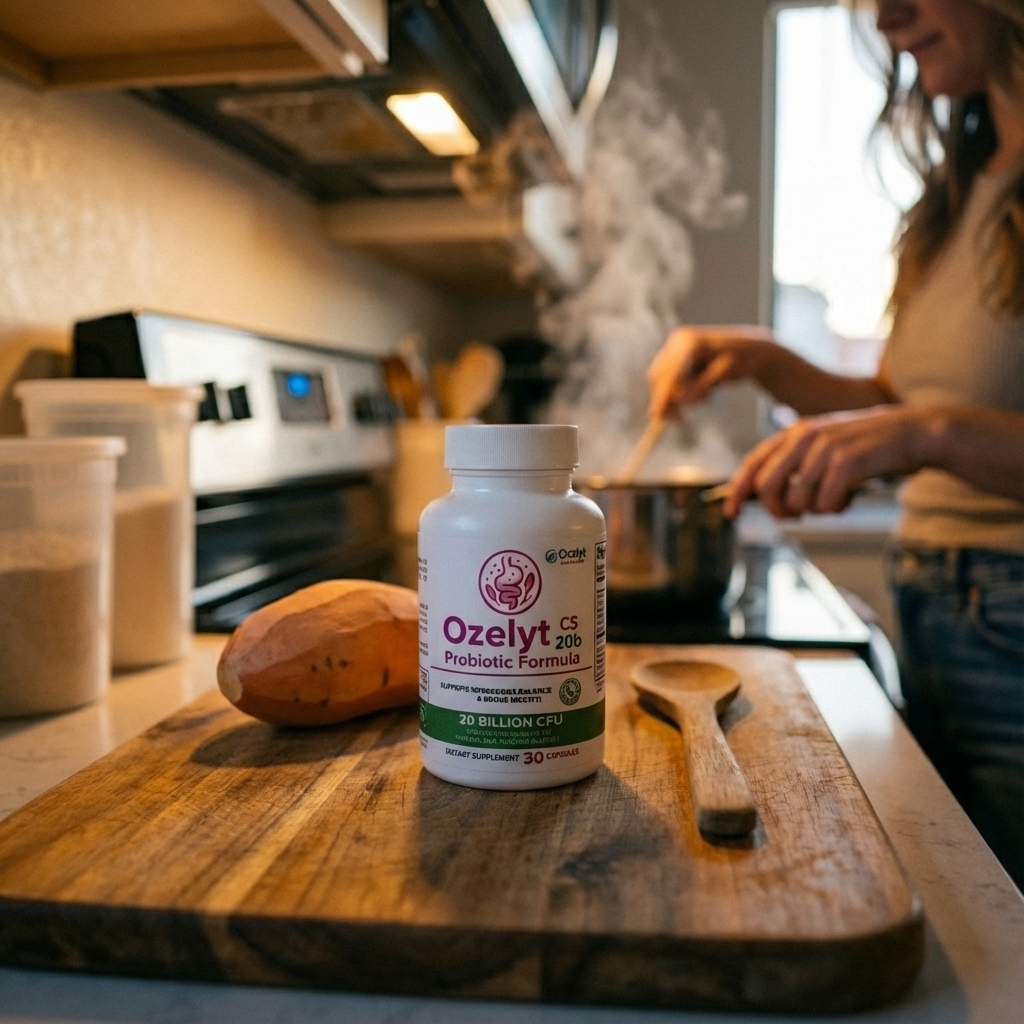
Your Daily Gut Base
When meals get simple, your support should be simple too
I chose Ozelyt CS 20b because it tells you exactly what you’re taking. Each daily serving delivers 20 Billion CFU from a 13-strain complex in a vegetable capsule with brown rice flour—and it’s free from gluten, dairy, soy, corn, hormones, GMOs, and alcohol.
I made meals boring on purpose
I stopped chasing variety and started chasing predictability. For a few weeks, I leaned into foods that felt genuinely easy on my system—meals my body seemed to recognize without a fight.
That looked like:
- Warm, cooked meals instead of cold “superfood” bowls
- Simple proteins—chicken, fish, eggs, lentils, whatever my body tolerated well
- Softer fibers like sweet potato, zucchini, carrots, greens cooked until tender
- Fats in moderate amounts: olive oil, avocado, a small handful of nuts
And I set aside the things that consistently caused problems:
- Ultra-processed snacks with ingredient lists I couldn’t pronounce
- Sugar crashes disguised as “energy”
- Grazing all day without structure
- Trying five new foods in one meal
This wasn’t deprivation. It was a strategic pause—a reset, not a forever diet. Once my system calmed down, I could add variety back in more intentionally.
I changed the way I ate, not just what

This shift surprised me more than anything. Eating while tense is like trying to fall asleep with your jaw clenched. Your body can technically do it, but it extracts a price.
I started doing small things that felt almost silly at first:
- Actually sitting down to eat (not standing at the counter)
- Chewing each bite more than felt necessary
- Putting my phone face-down for at least the first few minutes
- Taking one slow breath before I started eating
None of it was ceremonial or Instagram-worthy. It was just a series of signals to my nervous system: we’re not in danger; you can digest this. That tiny bit of softness around meals made a bigger difference than I expected.
I gave my gut an overnight break
I didn’t follow a strict intermittent fasting protocol. I just stopped eating late at night because waking up heavy and groggy was wrecking my mornings. I started paying attention to how I felt when my last meal crept later and later.
What emerged was a loose rhythm: a longer stretch overnight without food, then meals within a consistent window during the day. Most days it looked like a later breakfast and an earlier dinner, and it gave my digestion room to actually finish its work.
The biggest benefit wasn’t weight loss or discipline. It was waking up feeling lighter—like my body had actually rested instead of working overtime on a 10 p.m. snack.
I added one probiotic that didn’t overpromise
I’m wary of supplements. I don’t want a shelf full of bottles I bought out of hope and stopped taking out of skepticism. During my reset, the one thing that stayed consistent was Ozelyt CS 20b—a multi-strain daily probiotic that felt refreshingly straightforward.
What I appreciated most was the absence of drama. No miracle claims. No overnight transformation. Just small, steady shifts that felt supportive:
- Less puffiness after meals
- More regularity without urgency
- Fewer “why am I exhausted after eating?” crashes
- A steadier baseline that made everything else feel easier
It didn’t replace the food changes—it supported them, like a quiet teammate doing reliable work in the background. There was relief in that simplicity: one less thing to overthink.
I tracked patterns, not perfection
I didn’t count macros or calories. I didn’t make color-coded charts. I just kept quick notes in my phone—simple cause-and-effect observations I could scan later:
- “Bloated after that iced salad at lunch”
- “Felt good after soup and bread”
- “Better energy when I ate by 7”
- “Stressful call = stomach immediately tight”
Over time, the patterns became obvious without turning my life into a science experiment. I started trusting myself more, not because I had every answer, but because I finally had evidence instead of spirals.
⸻
Why my stomach kept reflecting my stress

Your gut and brain are in constant conversation. That’s not metaphor—it’s biology. When stress stays high, digestion often becomes erratic. Your appetite shifts. Your bathroom habits change. Your body gets more reactive to everything.
So part of my gut reset guide wasn’t about food at all. It was about learning to downshift from high alert so my body could stop acting like every meal was a potential threat.
I didn’t overhaul my personality or become a different person. I just added small pauses:
- A ten-minute walk after dinner when I could manage it
- Gentle stretching in the evening instead of collapsing straight onto the couch
- A calmer wind-down routine so I wasn’t going to bed wired and exhausted at the same time
Slowly, my gut stopped acting like it was on constant emergency duty. My reactions softened. My body started trusting that it didn’t have to stay on guard 24/7.
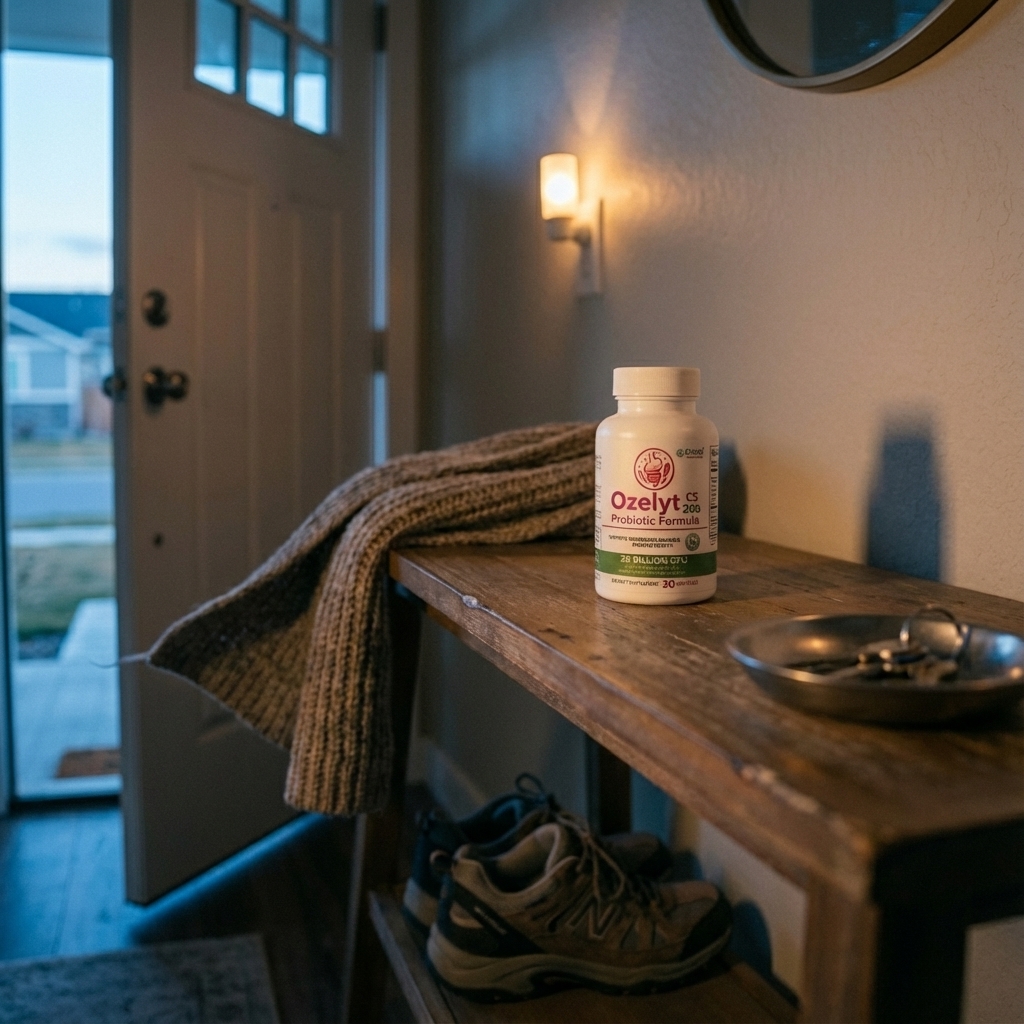
Stop Dreading After Meals
I wanted “normal” again—quiet digestion and a steadier day
Ozelyt CS 20b is made to support digestive comfort—including helping reduce occasional gas and bloating—and to support nutrient absorption. It also supports a resilient immune response through the gut-immune connection.
⸻
What “better” actually looked like
People talk about healing like it’s a before-and-after photo. A sudden revelation. A light switch. For me, it was quieter than that—less like a transformation and more like a gradual exhale.
Better felt like:
- Putting on jeans in the morning and still being comfortable at night
- Finishing a meal without my mood souring
- Waking up with a clearer head, like the fog had finally lifted
- Cravings that felt manageable instead of desperate
- Going to a restaurant without running through worst-case scenarios
Some weeks were better than others. There were still off days and confusing reactions. But the trajectory was unmistakable.
My body was becoming a place I could live in again.
What I’d tell myself six months ago
If you’re reading this from that bathroom stall—bloated, tired, suspicious of every meal, exhausted from guessing—here’s what I wish I’d known sooner:
Your body isn’t broken. It’s overwhelmed.
Start with simple, repeatable meals. Give your digestion an overnight break. Let your nervous system settle before you eat. And if you want one gentle add-on while you rebuild, a steady probiotic like Ozelyt CS 20b can anchor the process without adding complexity.
That’s the heart of this gut reset guide: less chaos, more rhythm. Not perfection, not control over every variable—just a life where your stomach isn’t calling all the shots.
You don’t need to become someone else. You just need a body that isn’t constantly bracing for the next crisis.
⸻
Written by Liora Menden — for those who seek ease that lasts.