The moment it really hit me wasn’t dramatic. It was… embarrassingly small.
I was standing in my kitchen with a bag of groceries, staring at a cutting board like it had personally offended me. Not because cooking is hard. Not because my day was tragic. Just because my body felt finished—and it was only early evening.
The plastic handles had left those red half-moons on my fingers. The fridge hummed. The overhead light felt too bright. And I remember thinking, “Wait. This is it? This is what my energy looks like now?”
I used to treat tiredness like a speed bump. Coffee. Music. A little grit. Keep going. In my twenties, I could sleep poorly, sprint through deadlines, work out anyway, and still have enough spark left to laugh at night.
Then, somewhere in the last few years, the spark started flickering. Not always. Not even every day. But often enough that I couldn’t pretend it was “just a busy season.”
That’s when I met a phrase that changed the way I looked at my body: mitochondrial decline with age.
Not in a scary, doom-scroll way. More like… oh. This explains the weird quiet shift I’ve been blaming on my personality.
Because mitochondria aren’t just a science word. They’re the reason a walk feels easy or heavy. They’re the reason your brain feels clear or cottony. They’re the reason recovery happens overnight—or drags on for three days like a reluctant apology.
And once I saw it, I couldn’t unsee it.
What mitochondrial decline feels like when it’s your actual life

People talk about aging like it’s a wrinkle situation. Like the biggest problem is what your face does under bathroom lighting.
But for me, the bigger change was invisible.
It showed up as tiny betrayals:
- I’d stand up after sitting for too long and feel like my legs were full of wet sand.
- I’d open my laptop after lunch and feel my thoughts slow down, like someone turned the dial on my brain from “play” to “buffering.”
- I’d finish a workout and realize recovery wasn’t a quick bounce-back anymore. It was a negotiation.
The hard part is how normal it looks from the outside.
You’re still doing your job. Still answering texts. Still paying bills. Still showing up. But inside, you’re rationing energy. You’re planning your day around how drained you might feel later.
And that’s the part that quietly messes with your confidence.
Because when your energy becomes unpredictable, you start doubting yourself—not your mitochondria. You think you’re losing discipline. You think you’re becoming “one of those people” who can’t handle life.
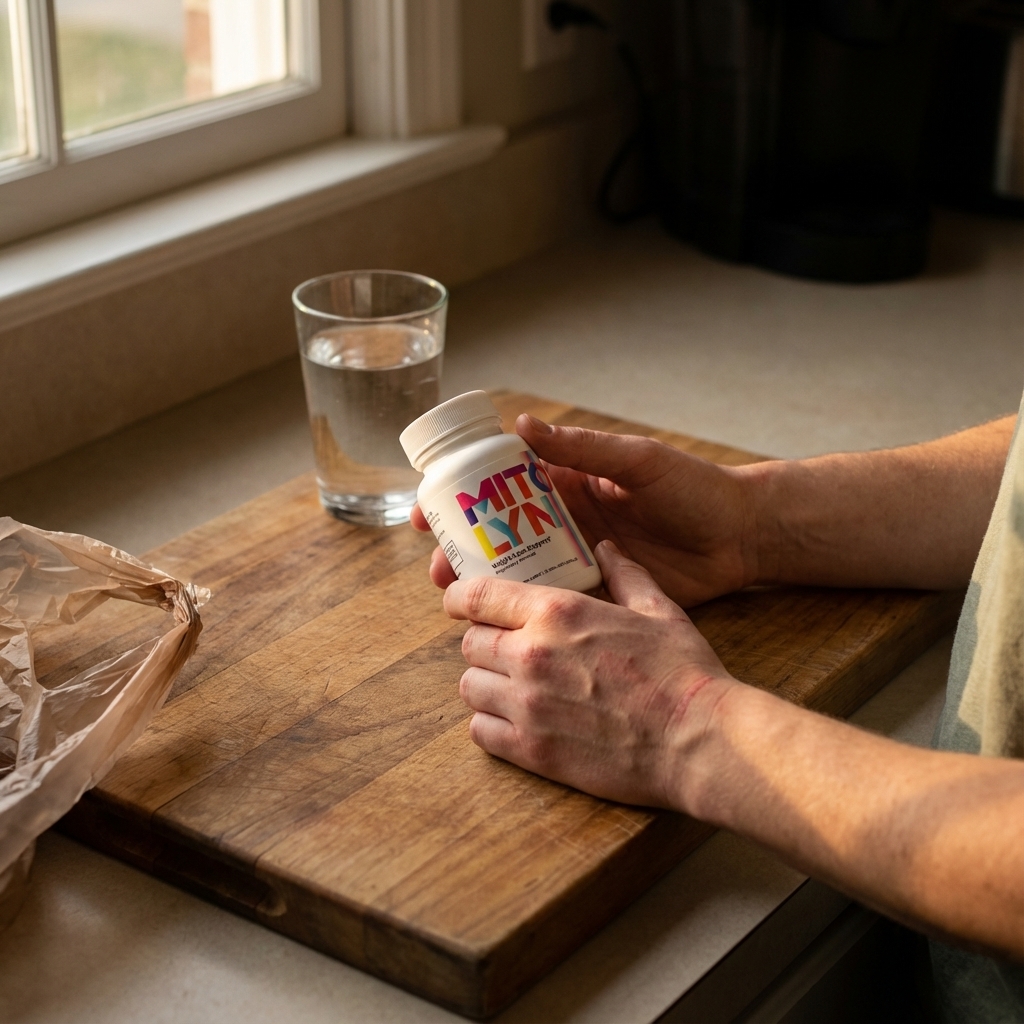
Stop the Afternoon Crash
When your energy drops without warning, you need support you can repeat
Mitolyn is a daily mitochondrial support formula built for steadier cellular energy. Take it each morning and give your body consistent help where usable energy starts—so your day doesn’t feel like a trap door. Simple routine. Real support.
-
Helps smooth out energy dips
-
Supports clearer, steadier focus
-
Makes recovery feel less punishing
I did that for a while. I judged myself.
Until I learned something simple: mitochondria make your usable energy. When they struggle, your whole day feels different—especially as the years stack up and the cellular wear adds up too.
Mitochondria have their own DNA. They deal with a lot of stress. Over time, they can get less efficient. And when they’re less efficient, you feel it as fatigue, slower recovery, and that low-grade “why am I like this?” fog.
Not a moral failing. A biological shift.
That reframe alone gave me relief.
Because relief is where change begins.
The things I started doing that actually helped

I didn’t “biohack” my life into a sterile spreadsheet. I didn’t become someone who wakes up at 4:45 a.m. to do cold plunges and stare at the sun like an eagle.
I did something much less glamorous:
I started paying attention.
I noticed what made me crash. What made me feel steady. What made my afternoons heavier or lighter. What made my sleep feel like real restoration versus “I was unconscious but somehow still tired.”
And then I built a few simple rituals around what mitochondria seem to love: nutrients, movement, oxygen, and consistency.
I stopped treating food like an afterthought
When your energy drops, it’s tempting to eat like you’re trying to soothe a problem instead of solve it.
I was doing the classic tired-person loop: quick carbs, quick fixes, quick snacks that made me feel better for ten minutes and worse for two hours.
So I shifted toward meals that felt like they were building something, not just filling space.
More protein. More colorful plants. More healthy fats. Less “whatever is closest.”
Not extreme. Not strict. Just… sturdier.
I paid attention to how I felt after breakfast, because that first meal sets the tone for the whole day. If I ate something flimsy, I felt flimsy.
If I ate something solid, I felt like my body had material to work with.
I changed how I move—so I could keep moving

I used to think workouts had to be big to “count.” Like if I didn’t sweat hard for an hour, it wasn’t real.
But one thing I learned quickly: when your cellular energy is already compromised, going all-in can backfire. Not always. But often enough that I had to get honest.
So I started doing movement in small doses.
A walk before breakfast. Ten minutes of strength work later. A few bursts of stairs. A stretch break when my brain started glazing over.
It sounds too simple. But it changed something important: my body stopped feeling like it was bracing for impact.
Instead of one huge demand, it was gentle reminders: “We still move. We still circulate. We still create energy.”
I used breathing like a reset button (because it is)

This one surprised me.
I used to think breathing exercises were for people who owned incense.
Then I tried it on a day when I felt like my head was full of static. I stood by a window, put one hand on my chest, and took slow, deliberate breaths—like I was trying to convince my nervous system it wasn’t in danger.
Five breaths. That’s it.
And the shift was subtle, but real. My shoulders dropped. My jaw unclenched. My focus returned like it had been waiting behind a curtain.
Mitochondria need oxygen to do what they do. But breathing isn’t just oxygen—it’s a signal. It tells your body whether to tighten or soften. Whether to burn through energy in stress mode, or conserve and rebuild.
So now I treat breath like a tiny intervention I can do anywhere:
At the sink. Before a meeting. In the car. Between tasks.
It doesn’t solve everything. But it changes the tone of my day.
How mitochondrial decline with age changed the way I supplement
Here’s what I wish more people would say out loud:
Sometimes lifestyle changes are necessary… and still not enough on their own.
You can eat well and move and sleep and do all the “right” things—and still feel like your baseline isn’t what it used to be.
That’s not failure. That’s reality.
For me, supplements used to feel like a gamble. Too much hype. Too many promises. Too many labels that sounded like they were written by someone yelling through a megaphone.
So when I started looking for something to support my mitochondria, I wanted one thing above all:
It has to feel believable.

Support Cellular Energy Daily
If you’re tired of guessing, make one choice you can stick to
Mitolyn is made to support mitochondrial function—where your body produces usable energy. Add it to your morning routine and keep it simple. Over time, that consistency can help your baseline feel steadier, your focus less slippery, and your day less fragile.
-
Helps reinforce your daily energy baseline
-
Supports mental clarity and follow-through
-
Encourages easier post-movement recovery
That’s how I ended up trying Mitolyn.
What caught my attention wasn’t a magic claim. It was the angle: a focused blend designed around supporting mitochondrial function and cellular energy—because if mitochondria are where my “usable fuel” is getting made, that’s where I wanted support.
I started simply. One daily routine. No dramatic stacking. No complicated timing. Just consistency.
And the changes weren’t fireworks.
They were quieter—and honestly, that’s what made me trust them.
The first change I noticed was steadiness
Not a sudden burst of energy. More like fewer “power drops.”
You know that feeling when your day has a trap door in it? Like you’re okay… okay… okay… and then suddenly you’re gone?
That started happening less.
Afternoons felt more manageable. My focus didn’t evaporate as fast. I could do one more task without that internal bargaining—please let me be done.
Then came recovery
The next thing I noticed was how my body felt the day after movement.
I still got sore. I’m human.
But I stopped feeling like workouts were punishing me. I could move, recover, and move again without dread.
That matters, because movement is one of the best ways to encourage healthier mitochondria—but it’s hard to stay consistent when recovery feels like dragging a heavy blanket around for two days.
And the weirdest benefit: my mood felt less brittle
This one is hard to explain without sounding poetic, but I’ll try.
When you’re tired in a deep way, your emotional skin gets thin. Little things feel bigger. Your patience drops. Your resilience shrinks.
As my energy steadied, my mood steadied too. I felt less reactive. Less fragile. More like myself.
Not euphoric. Just… more available for my own life.
The routine I come back to when I want my energy to feel dependable
I don’t follow a strict “plan” anymore. I follow a rhythm.
Here’s what my rhythm looks like most days:
- A big glass of water early—before I start bargaining with coffee
- A short walk or a few minutes of strength work to wake up my system
- Breakfast that actually has structure (protein + color + real food)
- Mitolyn as part of that morning anchor
- A few slow breaths sprinkled through the day—especially before my focus slips
- Movement in small pockets instead of one giant demand
- A calmer landing at night: lighter stretching, less screen chaos, softer lighting
None of this is extreme. That’s the point.
Because what I’m trying to build isn’t a “perfect health lifestyle.”
I’m trying to build energy I can trust.
A few questions I keep hearing (and what I’ve learned)
“Do I have to work out hard to help my mitochondria?”
No. Consistent movement matters more than intensity. If you can only do ten minutes, do ten minutes. Your cells notice rhythm.
“Is brain fog really connected to mitochondria?”
It can be. Your brain is energy-hungry. When your cellular energy is strained, focus can feel slippery—especially in the afternoon.
“How long did it take before Mitolyn felt noticeable?”
For me, it was a few weeks of consistency before I realized the dips were smaller. The shift felt gradual—like my baseline quietly moving upward.
The part nobody tells you about aging (but I will)

Aging isn’t just time passing.
It’s your body asking for different support than it used to.
And if you treat that request like a threat, you’ll panic. You’ll grasp at extremes. You’ll blame yourself.
But if you treat it like information, something steadier happens.
You start building a relationship with your energy again.
You stop chasing a version of yourself that ran on chaos and adrenaline. And you start creating a version of yourself that runs on something deeper: cellular strength, calm systems, and repeatable habits.
That’s why mitochondrial decline with age isn’t a sentence to me anymore.
It’s a signal.
And if you’ve been feeling that signal—heavy afternoons, slow recovery, fog that makes you doubt your own sharpness—there is real comfort in knowing you’re not “broken.”
You’re just ready for a different kind of support.
Mitolyn became one piece of that support for me, not as a miracle, but as a steady companion to the changes I was already making.
And if you’re craving that same steadiness—the kind that lets you cook dinner without resentment, move your body without dread, and finish your day with something left—this might be worth exploring, too.
Written by Elias Menden — for those who seek steadier energy and clearer days.
Related reading
- Why Mitochondria Decline With Age — And What Your Tired Body Is Trying to Tell You
- My Cellular Health for Longevity Blueprint: What I Changed to Finally Age Slower
- Joint Pain Recovery Routine: How I Stopped Negotiating With My Body at 43
- Signs Your Cells Are Aging Too Fast (And What Finally Made Me Stop Guessing)