I noticed it first in the tiny moments.
Standing at the sink, sponge in hand, completely blank on what I’d walked into the kitchen to do. In meetings, my mind slid sideways. I lost simple words. Saturday brunch—usually my bright spot—felt flat. The change wasn’t dramatic, but it was constant. And because I pay attention to patterns, I started to suspect the real driver: my hormones.
I didn’t panic. I got curious. I wanted to understand why hormonal shifts and mood move together—and how that ripple can touch memory and motivation, too.
The quiet chemistry behind the “off” days

Think of your hormones as messengers and your brain as a bustling city. When messages arrive on time, traffic flows. When they surge or dip, lights flicker and intersections jam.
- Estrogen helps your brain cells “talk” by supporting neurotransmitters like serotonin and acetylcholine. When estrogen wobbles, mood steadiness and word recall can wobble, too.
- Cortisol is your stress signal. It’s useful in short bursts, but when stress stacks up, cortisol can stay high. That’s when anxiety nudges in and focus thins.
- Your thyroid sets the pace. If that pace drifts too slow or too fast, mental speed and motivation can drift with it.
I could feel those tiny traffic jams. Not broken—just mis-timed.
Early on, I made small shifts: earlier bedtime, morning light on my face, steadier protein. And I added one anchor to support brain energy while my routine recalibrated—a daily, stimulant-free brain support called Neuro-Thrive. It wasn’t the star of the show; it was the quiet crew keeping the lights on while I did the foundational work.
Short answer: when hormonal shifts and mood change together, the day can feel mentally noisy before anything looks dramatic on paper. The most useful first move is usually rhythm support: sleep timing, protein early, gentle movement, and a routine calm enough to make the brain feel predictable again.
| What feels off | Best first move | Why it matters |
|---|---|---|
| Word-finding slips | Protect sleep and reduce all-day stress spikes | Recall often worsens when the brain stays in recovery debt. |
| Flat motivation | Eat protein early and get outside within an hour of waking | That gives hormones and circadian rhythm a steadier cue. |
| New confusion or big mood swings | Get medical guidance rather than self-diagnosing with supplements | Some symptoms need evaluation, not a louder stack. |
How hormonal shifts and mood tangle with memory & motivation
Mood isn’t just “how you feel.” It affects what you notice, what you start, and whether you finish. In midlife, fluctuating estrogen can make serotonin signals less predictable. That can look like:
- Feeling “flat” for no clear reason.
- Reaching for sugar or caffeine because your get-up-and-go feels stalled.
- Struggling to start tasks you normally enjoy—or bouncing between five open tabs without landing on one.
Motivation often follows energy. When sleep slips or blood sugar swings, your brain reads “low fuel” and chooses the safest path: do less, protect. That’s not laziness; it’s biology trying to conserve. Understanding that softened my self-talk. I didn’t need to push harder. I needed to feed and time my rhythms better.
My simple stack that cleared the fog

I didn’t overhaul everything. I chose levers that move a lot with a little.
1) Sleep like it matters (because it does)
Sleep is when your brain does deep cleaning. I set a screen curfew, dimmed lights an hour earlier, and made my room cooler and darker. A consistent rhythm—same bedtime, same wake time—was more powerful than any hack. If sleep is your Achilles’ heel, start here: [Internal: /guide-sleep-biohacking].
2) Morning movement, any pace
I began most mornings with a 20-minute walk. Some days brisk; some days slow. Movement makes your hormone receptors more responsive and evens out insulin—two wins for mood and focus.
3) Protein first, then color
I rebuilt breakfast around 25–30g protein—eggs, Greek yogurt, or a smoothie with a clean protein base—then added fiber and color (berries, chia, spinach). The result: fewer mid-morning crashes and steadier decisions.
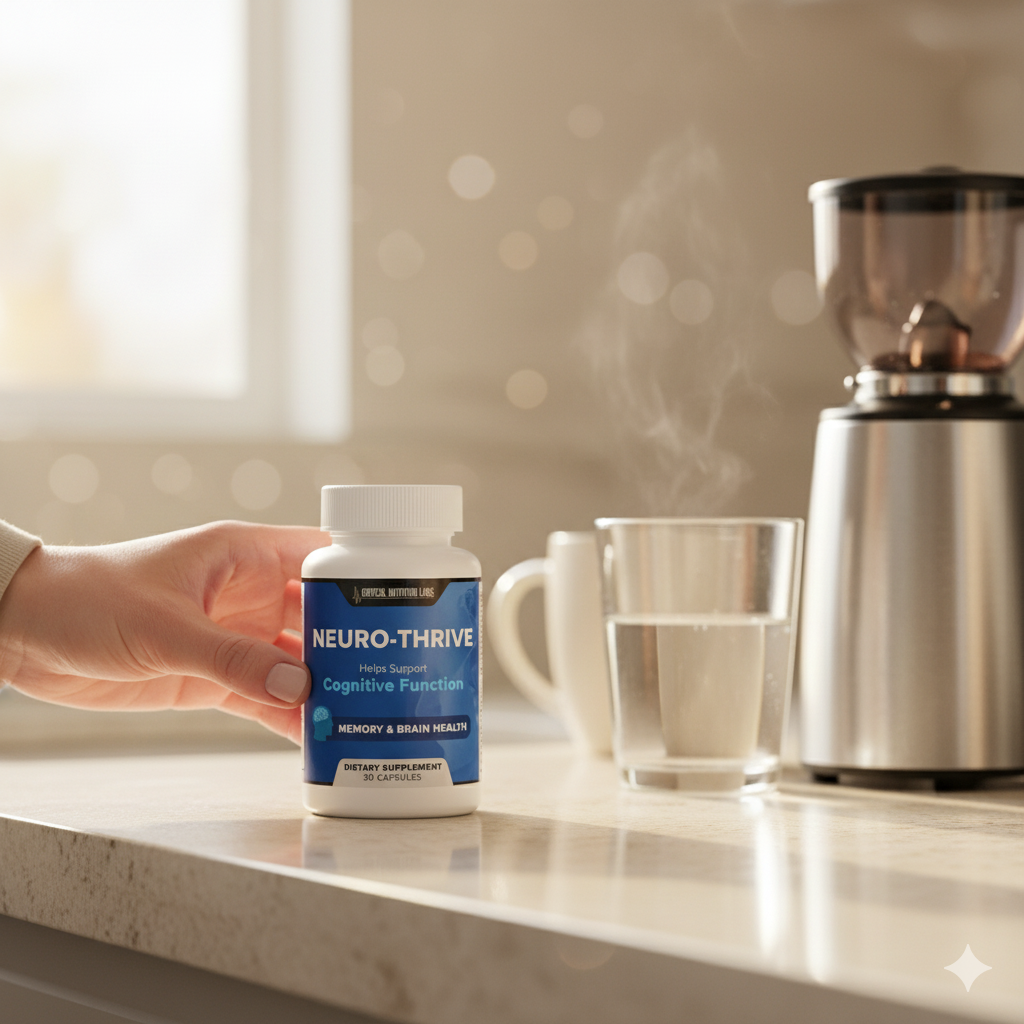
Make mornings steadier
Calm, clear energy that fits right beside your coffee
Place this daily helper where you already pause—by the grinder or kettle. Gentle, no buzz, designed to support focus while your sleep, food, and light do their work. Consistency over perfection.
-
Pairs with breakfast, no fuss
-
Supports even afternoon focus
-
Fits a calmer daily rhythm
4) Micro-calm breaks
I set three alarms labeled “breathe.” When they chirped, I did 60 seconds of slow exhales: in for four, out for six. That tiny practice lowers the stress signal and keeps cortisol from running the day. My favorite reset is here: [Internal: /stress-breath-reset].
5) A quiet helper for brain energy
Alongside the basics, I layered in Neuro-Thrive, a daily brain-support formula designed to nourish brain energy rather than rev you up. I wanted something I could take during hormone shifts without feeling wired. It fit.
By week two, the lights felt steadier

Not perfect. Just clearer. Names surfaced faster. My mood had fewer edges. I still had foggy moments, but they didn’t run the day. This wasn’t a miracle; it was the compound interest of simple things done consistently—sleep, food, light, breath—and one supportive tool I could stick with.
What I noticed with Neuro-Thrive (and how I use it)
- A calmer kind of energy. No buzz, no crash.
- Mid-afternoon felt more even; fewer “why did I open this tab?” detours.
- Better recall of small details (meeting points, grocery list items).
- Motivation returned sooner in the day; starting felt easier.

Calm energy, daily
Quiet focus, no jitters—just steady, usable energy
Take once with breakfast and a full glass of water. It tucks under your bigger habits—sleep, light, protein—so your day feels clearer and more even. Keep the bottle where you’ll see it.
-
Once-a-day routine
-
Supports recall and focus
-
Gentle enough for busy weeks
How I take it: Once daily with breakfast. I drink a full glass of water and keep the bottle by the coffee grinder so I don’t forget. On heavy-focus days, I pair it with a short walk outside before I sit down to work. Consistency matters more than timing; I chose mornings because that’s when my routine is tightest.
When hormones whisper, the brain listens
Here’s the pattern I see most often:
- Sleep debt makes cortisol louder → mood swings feel bigger.
- Low morning protein invites glucose swings → motivation dips by noon.
- Skipped movement blunts insulin sensitivity → fog creeps in.
- Lonely days amplify stress chemistry → focus frays.
None of this means you’re broken. It means your city needs better timing—lights aligned, lanes clear, fuel topped.
Midlife brain-fog pages need stronger trust signals than “this worked for me.” The National Institute on Aging’s guides to menopause and cognitive health are useful because they keep the conversation anchored in sleep, vascular health, movement, and routine. NCCIH’s explainer on using dietary supplements wisely and the FDA’s page on dietary supplements are the right reminder that labels do not diagnose hormone problems. If confusion is sudden, comes with weakness, severe headache, speech trouble, or fainting, skip the supplement experiment and get medical care.
A gentle plan for steadier days
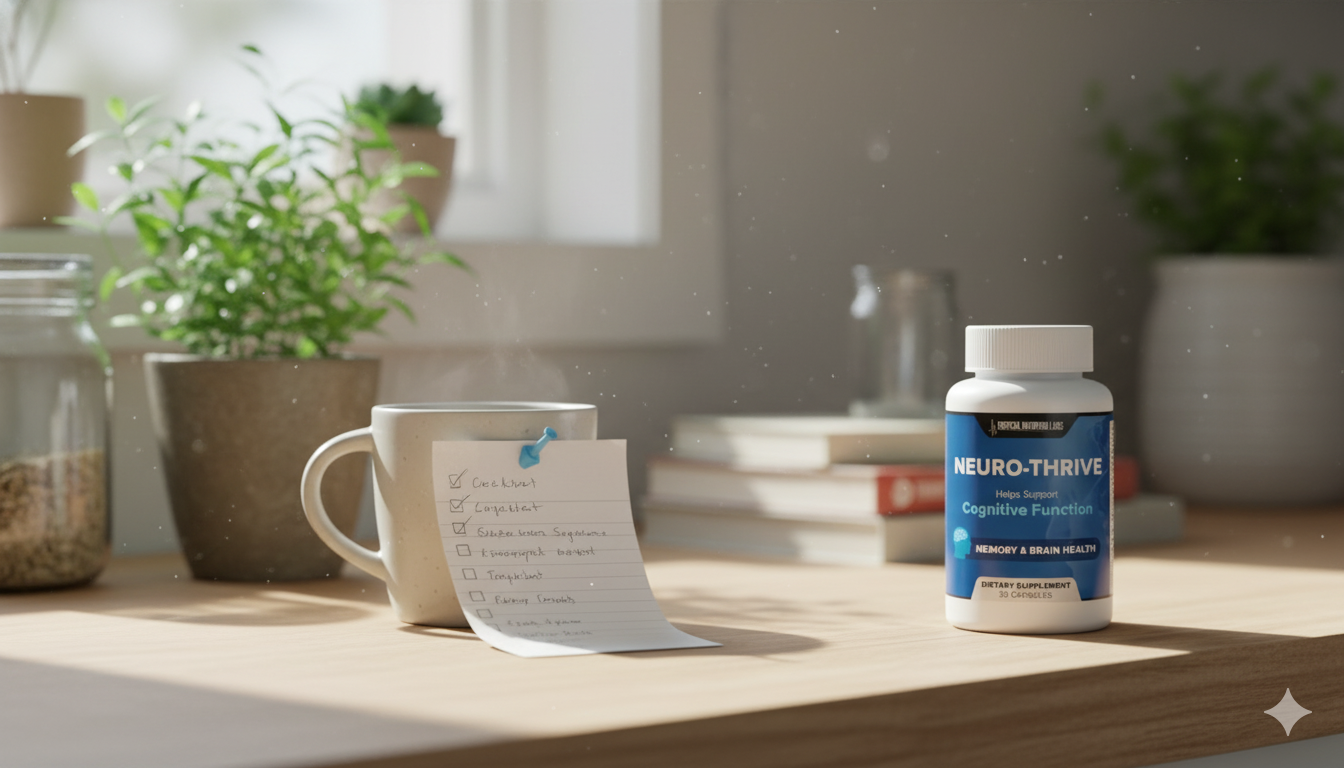
Anchor your rhythm
Pick one sleep boundary this week: screens off 60 minutes before bed or lights out 30 minutes earlier. That single change can boost mood the next day.
Feed focus early
Front-load protein at breakfast. Aim for 25–30g. Add fiber and color. Notice how your 10 a.m. brain feels.
Invite light and movement
Get outside within an hour of waking. Even five minutes helps set your clock. Add a short walk after lunch to steady the afternoon.
Support the engine
If you want a calm, consistent brain-support alongside the basics, Neuro-Thrive has been a helpful addition in my routine. It sits quietly under the bigger habits—no flash, just support while hormones do their midlife dance.
For readers still sorting the pattern, I would branch next into diet for brain fog, hormonal imbalance fatigue, and best supplements for focus. That cluster does a better job separating “my routine is noisy” from “something medical may be changing.”
Hormonal Shifts and Mood: the kinder story we can tell
The old story says, “Push harder.” The kinder—and more effective—story says, “Align the signals.”
When your hormones shift, your mood may lean tender, your memory may play hide-and-seek, and your motivation may hesitate at green lights. But with steady inputs—sleep, light, protein, breath—and one well-chosen support, your brain can feel like itself again.
Last Saturday, I returned to that same brunch spot. Same table by the window. The sun hit the mugs just right. And instead of drifting, I was there—fully—laughing about nothing, mind clear enough to notice everything.
If you’re ready for a gentle helper while you build these foundations, this is the brain support I trust: Neuro-Thrive. Start with one bottle, take it daily with breakfast, and give it a couple of weeks to settle in.
A few weeks from now, your mornings can feel brighter—and your afternoons steadier.
Written by Elias Menden — for readers trying to steady focus and mood without turning midlife changes into panic.
Related reading
- Hormonal Changes Support: The Cocoa Ritual That Helped Me Feel Steadier Again
- The Cellular Key That Unlocked My Hormonal Balance
- Fatty Acids and Hormonal Energy: What the Research Reveals (and the One Thing That Finally Made It Feel Real)
- Supplements for Hormonal Burnout: The 5 That Brought Me Back to Steady