I was forty-two when I first noticed my reflection had become a stranger. Not dramatically—nothing you could point to and say “there, that’s wrong.” Just a gradual shift in the way my body held itself, the way my face looked back at me in the morning mirror. The shoulders seemed less broad somehow, though the measurements hadn’t changed. The jawline felt softer, though I couldn’t prove it with any before-and-after comparison.
What disturbed me wasn’t the physical changes alone. It was the growing distance between the man I felt I was inside and the one my body was becoming.
The cellular conversation that had once felt seamless—mind to muscle, intention to action—now required translation, negotiation, conscious effort where none had been needed before.
The medical world speaks about testosterone in clean numerical terms: normal ranges, deficiency thresholds, replacement protocols. But living through declining testosterone feels nothing like a number. It feels like watching your biological software slowly lose compatibility with your hardware, creating glitches in systems that used to run invisibly in the background.
The Morning Tell

The first reliable signal wasn’t what I expected. I’d prepared myself for the obvious markers—reduced libido, difficulty building muscle, unexplained fatigue. What caught me off guard was how mornings began to feel different. That natural surge of wakefulness that had always carried me from sleep to full consciousness without conscious effort started requiring more time, more coffee, more deliberate motivation.
I found myself lying in bed for an extra ten minutes, not because I was tired, but because the transition from horizontal to vertical felt like crossing a threshold my body was reluctant to cross. The morning erection that had been such a reliable biological clock became inconsistent, then infrequent, then absent.
These weren’t dramatic changes—they accumulated gradually, like sand filling the gears of a watch.
The quality of my morning energy shifted too. Where I used to wake with a sense of metabolic readiness—muscles primed, mind clear, appetite healthy—I began waking into a body that felt like it was still negotiating with sleep. Even after full rest, something essential felt dampened, like trying to start a fire with slightly damp kindling.
Ready to support your body’s natural capacity for hormonal balance?
The Gym Became Honest
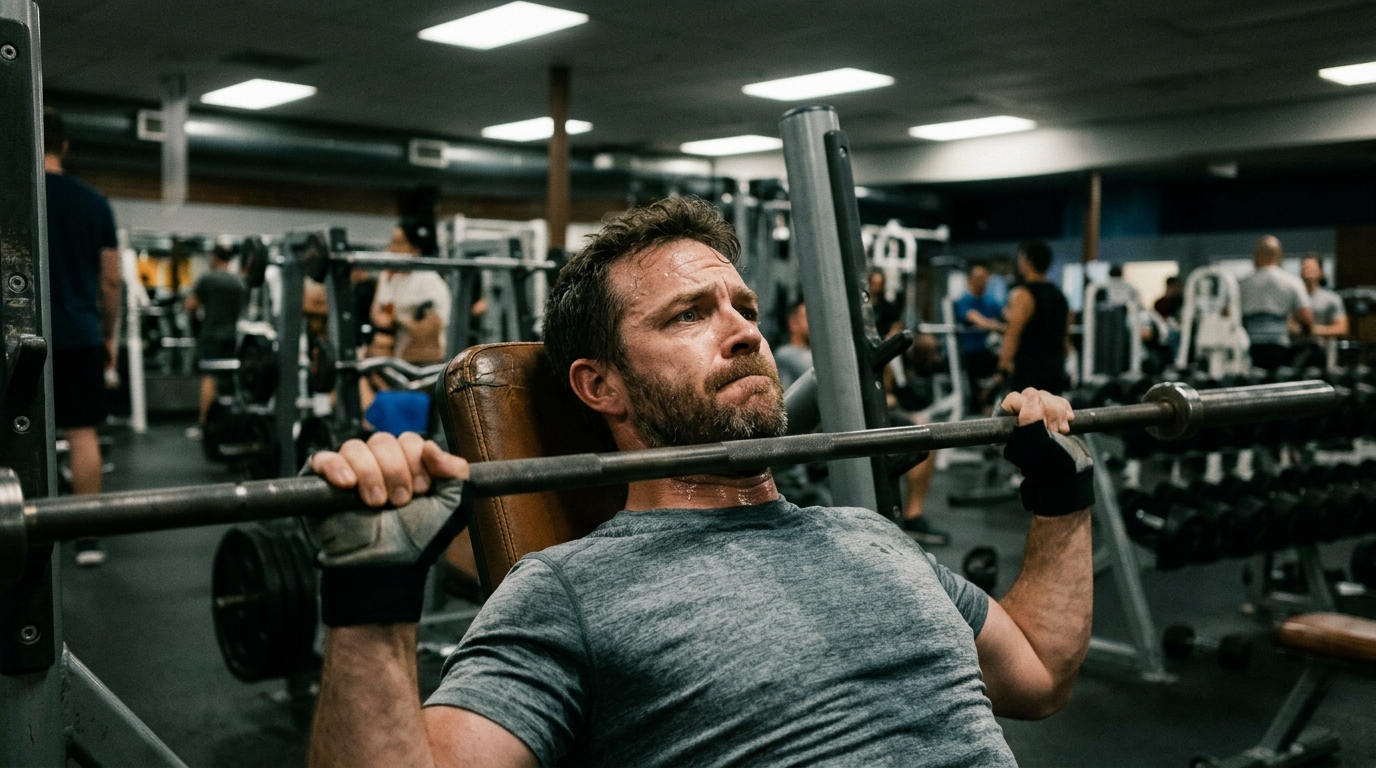
If mornings revealed the problem, the gym made it undeniable. For twenty years, I’d trusted a simple equation: consistent effort plus adequate recovery equals predictable progress. Suddenly, that equation stopped working. The weights that had felt manageable began requiring more mental preparation. The recovery between sets stretched longer. The pump that used to arrive easily and linger through the evening became something I had to chase.
More telling than strength loss was the change in how my body responded to training stimulus. Muscle soreness that used to resolve in forty-eight hours stretched into three, four days.
The tight, full feeling that indicated healthy muscle tissue adaptation became rare, replaced by a softer, less defined quality that no amount of dietary precision seemed to correct. I started logging everything obsessively—sleep hours, protein intake, training volume, stress levels—searching for the variable I could adjust to restore the reliable cause-and-effect relationship between effort and result.
But the problem wasn’t in my programming. It was in the hormonal foundation that made all programming effective in the first place.
Don’t accept declining energy as inevitable aging—targeted support can help.
The Motivation Mystery

Perhaps the most insidious change was what happened to my sense of drive. Not the big-picture motivation to achieve goals or pursue interests—that remained intact. But the moment-to-moment impulse to initiate action, to move from thought to behavior without internal resistance, began requiring conscious management. Tasks that had once felt automatic—calling clients, organizing paperwork, maintaining social connections—started feeling like they required a small act of will to begin.
The biological urge to compete, to test myself against challenges, to pursue difficult things because they were difficult, became something I had to manufacture rather than something that arose naturally.
I noticed this most acutely in decision-making situations. The confident, almost aggressive quality that had characterized my approach to choices—in work, relationships, even minor daily decisions—was replaced by a more hesitant, analytical style that felt foreign to who I understood myself to be. Not indecisive exactly, but missing that forward-leaning certainty that had always felt like my natural gear.
When lifestyle changes aren’t enough, cellular support makes the difference.
The Body Composition Drift

The scale numbers told one story, but the mirror told another. My weight remained relatively stable, but the distribution was shifting in ways that felt irreversible despite consistent attention to diet and exercise. The lean mass around my shoulders and arms seemed to be migrating south, settling around my midsection with a persistence that defied my usual methods of body composition management.
What bothered me wasn’t vanity—it was the recognition that my body was changing according to biological laws I didn’t understand and couldn’t control through willpower or discipline alone.
The abs that had always been accessible through a few weeks of focused effort became hidden behind a layer of tissue that seemed immune to caloric deficits and increased cardio. My face was changing too, in subtle ways that photographs couldn’t quite capture but mirrors revealed daily. A slight puffiness around the eyes, a softening along the jawline, a general quality of inflammation that made me look perpetually like I hadn’t slept well, even after perfect rest.
Your body remembers optimal—help it get there naturally.
When Everything Clicked

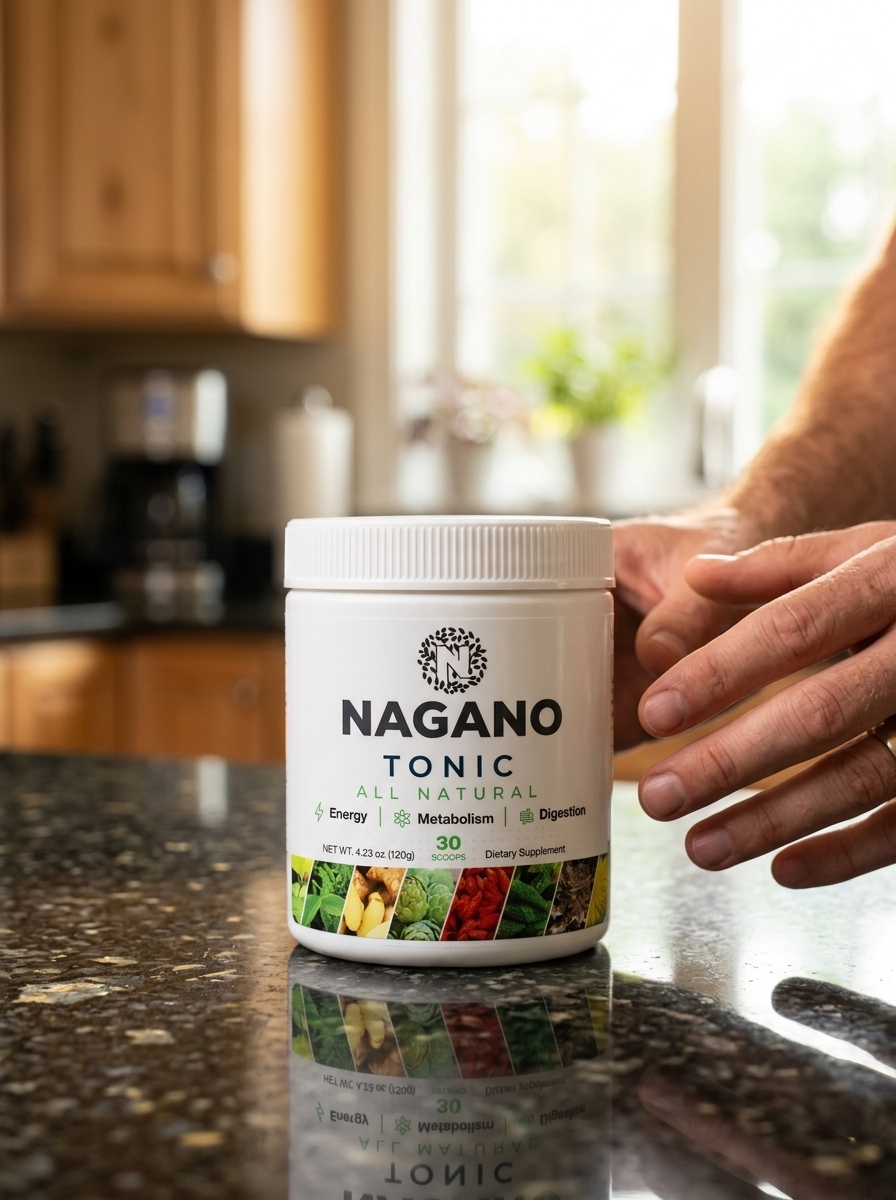
The turning point came during a conversation with my brother, who mentioned feeling similar changes at forty-five. We weren’t comparing symptoms exactly, but sharing observations about energy, recovery, motivation—the kind of honest talk men rarely have about their changing bodies. He mentioned something called Nagano Tonic, a metabolic supplement that had helped him feel more like his younger self without the complexity of medical interventions.
I’m naturally skeptical of supplements, having tried dozens over the years with minimal results. But something about his description—increased morning energy, better recovery, a sense of metabolic efficiency returning—matched exactly what I felt I was missing.
The science behind it made sense: natural compounds like Ashwagandha and EGCG that support healthy testosterone production while helping manage cortisol levels, the stress hormone that can suppress testosterone synthesis.
What convinced me to try Nagano Tonic wasn’t the promise of dramatic transformation, but the recognition that declining testosterone rarely responds to lifestyle changes alone.
I needed something that worked at the cellular level, supporting the biological processes that create hormonal balance rather than forcing artificial elevation through synthetic replacement.
Restore Your Natural Edge
When your body stops responding like it used to, targeted support makes the difference.
Nagano Tonic combines Ashwagandha and EGCG to support healthy testosterone levels while managing cortisol naturally. No synthetic replacements—just biological restoration that helps your body remember what optimal feels like. Return to the confident energy and reliable recovery you thought were gone forever.
- ✓ Morning energy that arrives naturally without effort
- ✓ Gym results that match your consistent dedication
- ✓ Mental clarity and decisive confidence restored
The Return

The changes didn’t announce themselves dramatically. After about six weeks with Nagano Tonic, I simply noticed that mornings had become easier again. The reluctance to transition from sleep to wakefulness faded first, replaced by something closer to the natural surge of energy I remembered from my thirties. My body began responding to exercise stimulus the way it used to—recovery shortened, strength gains resumed, the muscle fullness returned.
More importantly, the psychological changes that had felt so foreign began reversing. That forward-leaning confidence in decision-making returned gradually, like adjusting the focus on a camera until the image becomes sharp again.
The biological drive to initiate action, to pursue challenges, to compete and test myself became available on demand rather than something I had to manufacture through conscious effort. My body composition began shifting back toward the distribution I recognized—lean mass returning to shoulders and arms, the persistent midsection softness finally responding to my usual dietary and exercise protocols.
The morning reflection became familiar again, not because my face had changed dramatically, but because the quality of masculinity that I associated with myself had been restored.
Stop adapting to less and start supporting your biological foundation.
Beyond the Numbers

Six months into using Nagano Tonic consistently, I had lab work done to confirm what I was feeling experientially. My testosterone levels had moved from the lower end of normal into the middle range—not supraphysiological, not dramatically elevated, but optimized within healthy parameters. More importantly, my cortisol profile had improved, creating the hormonal environment where testosterone could function effectively.
But the real validation wasn’t in the numbers. It was in the return of that seamless communication between mind and body, the restoration of metabolic efficiency that made effort translate reliably into results.
The feeling of inhabiting a body that responded predictably to sleep, nutrition, exercise, and recovery rather than one that seemed to operate according to its own mysterious rules. What I learned is that declining testosterone isn’t just about one hormone becoming less available. It’s about the disruption of an entire biological conversation—between testosterone and cortisol, between muscle protein synthesis and breakdown, between energy production and utilization.
Nagano Tonic addressed that conversation systematically, supporting not just testosterone production but the metabolic foundation that allows testosterone to function optimally.
Experience what targeted hormonal support can restore in your life.
The Quiet Revolution
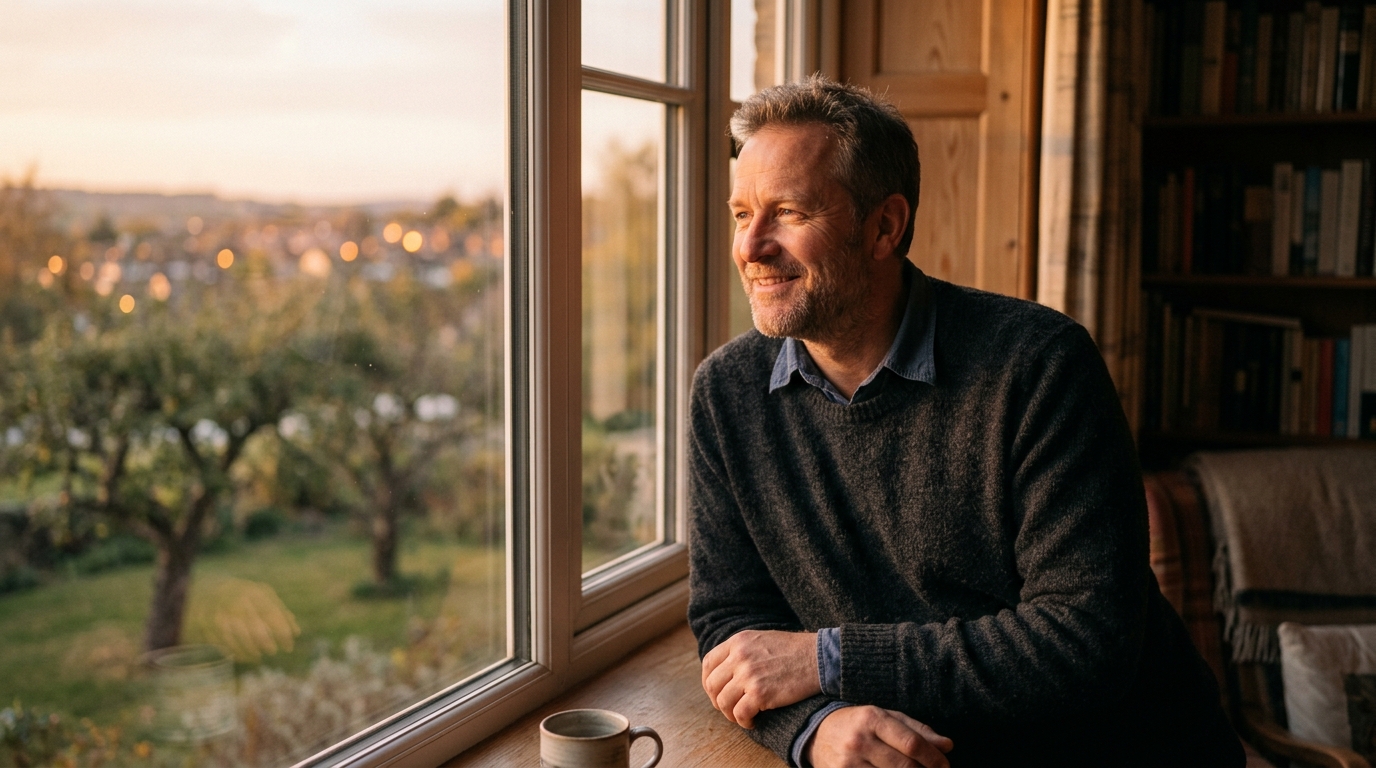
Looking back, I realize the experience taught me something important about how biological changes accumulate in the space between our awareness and our acceptance. We adapt so gradually to declining function that we begin to mistake it for normal aging, when often it’s correctable through targeted support for the cellular processes that maintain hormonal balance.
Nagano Tonic didn’t make me superhuman or reverse time. It restored the biological baseline that allowed me to feel like myself again—energetic in the morning, responsive to exercise, confident in decision-making, comfortable in my own skin.
The man in the mirror became recognizable again, not because his appearance had changed dramatically, but because the quality of vitality behind his eyes had returned.
The relief wasn’t in becoming someone new, but in returning to someone familiar. Someone whose body felt like home again, whose energy levels supported his ambitions, whose reflection confirmed rather than questioned his sense of masculine identity. That’s not a prescription you can get from a doctor, but it’s a restoration you can achieve through supporting your body’s natural capacity for hormonal balance.
Sometimes the most powerful interventions are the ones that help your body remember what it already knows how to do, rather than forcing it to become something foreign. That’s what Nagano Tonic provided—not artificial enhancement, but biological restoration.
Not a new version of myself, but the return of the version I had temporarily lost.
Written by Elias Menden — for those who seek authentic vitality
Ready to feel the difference this formula makes?