By the time I finally sat down that night, my legs felt like they belonged to someone twenty years older.
It was one of those weeks: short sleep, long days, a hard workout I hadn’t really trained for. My mind felt foggy, my muscles stayed sore for days, and even simple tasks felt heavier than they should.
I’d done the usual things—more water, extra stretching, a few early nights—but something still felt “off,” like my body was trying to heal with the wrong tools.
I didn’t know it yet, but this was my first real lesson in how fatty acids influence cellular regeneration and recovery.
For me, the turning point started with something I had ignored for years: the fats on my plate and the quiet support I was giving my cells every morning. Once I understood how fatty acids shape cellular health—and how a mitochondria-focused supplement could work alongside them—the whole picture began to make sense, and my body started to respond.
Why Fatty Acids Matter for Cellular Regeneration

Every cell in your body is wrapped in a thin, flexible shell made mostly of fat. That outer layer—your cell membrane—is built from fatty acids. It’s not just a wall; it’s a living gate.
It decides:
- what comes in (nutrients, signals, support)
- what stays out (waste, noise, excess stress signals)
- how easily messages can move from one cell to another
Essential fatty acids, especially omega-3 and omega-6, are “must-haves” your body can’t make on its own. You have to bring them in through food or supplements.
They’re woven into cell membranes all over your body—especially in your brain, eyes, and nervous system—helping those membranes stay flexible and responsive.
Polyunsaturated fatty acids (PUFAs) like these change how your membranes behave: they make them more fluid, less rigid, and better suited for fast communication between cells.
When people go too long without enough essential fats—like patients once fed fat-free nutrition—doctors start seeing clear signs: dry, scaly skin, poor healing, and other clues that cells are struggling. Adding essential fatty acids back into the diet helps reverse those changes.
In simple terms:
If the fats are wrong, the walls of your cells are stiff, leaky, or confused.
If the fats are right, cells stay flexible, responsive, and better able to repair.
That’s the quiet foundation of cellular regeneration and recovery.
Omega-3 and Omega-6: Everyday Architects of Cellular Health
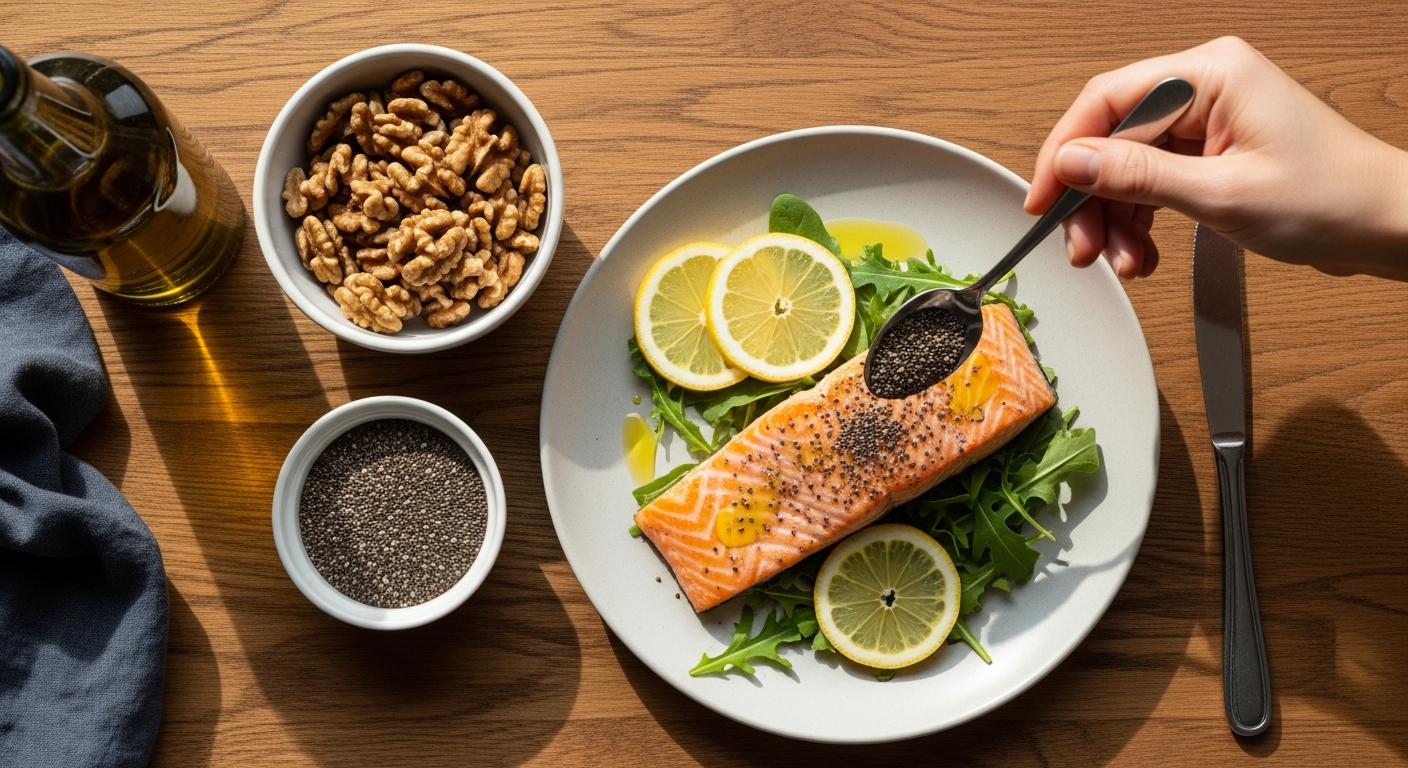
I like to think of omega-3 and omega-6 fats as two architects working on the same house.
They use similar materials, but their styles are different—and you need both to keep the structure balanced.
Omega-3: Calm, Flexible, Focused
Omega-3s (especially EPA and DHA) are found in:
- fatty fish like salmon, sardines, and mackerel
- plant sources like flaxseeds, chia seeds, and walnuts
- algae-based oils
These fats slide into your cell membranes and make them more flexible. Flexible membranes mean:
- signals move more smoothly between cells
- cells can respond more gently to stress
- the brain and eyes get support for clear focus and vision
DHA in particular is packed into the membranes of your brain and retina, where it helps those tissues send and receive signals cleanly.
Omega-3s also help your body create special “peacekeeping” molecules—internal signal compounds that help bring inflammation back down once the job is done.
Omega-6: Response, Repair, Structure
Omega-6s show up in:
- nuts and seeds
- many vegetable oils
- some grains and processed foods
They help your body respond to challenges. When something goes wrong—a cut, a strain, or a micro-tear in a muscle—omega-6–derived signals help turn on the inflammatory response so healing can begin.
The issue today isn’t that omega-6 is “bad.” It’s that, for many of us, it shows up in huge amounts compared to omega-3. When that internal ratio leans too far toward omega-6, it’s easier for inflammation to stay switched on longer than we’d like.
Raising omega-3 intake nudges that balance in a calmer direction and shifts the mix of inflammatory molecules your body produces.
How Fatty Acids Influence Cellular Regeneration and Recovery

Now let’s pull this into a real day: the sore legs, the tight back, the slow recovery after simple effort.
When you exercise, carry something heavy, or even sit too long at a desk, tiny bits of stress and micro-damage build up in your muscles and connective tissues. Your body responds with:
- inflammation (to clean up and repair)
- oxidative stress (a kind of internal “rust”)
- shifts in how your cells use and create energy
Omega-3 fats help on several of these fronts at once. In a randomized, placebo-controlled trial of sedentary, overweight older adults, people who took omega-3 supplements showed decreases in inflammatory markers like IL-6, while the placebo group actually went up.
At the membrane level, PUFAs change how receptors and proteins are embedded and how they move. More fluid, omega-rich membranes can:
- pass along repair signals more smoothly
- allow nutrients to move in and waste to move out with less resistance
- help cells coordinate the “start” and “stop” phases of inflammation
I didn’t feel this as “membrane biophysics.” I felt it as soreness that finally started to ease.
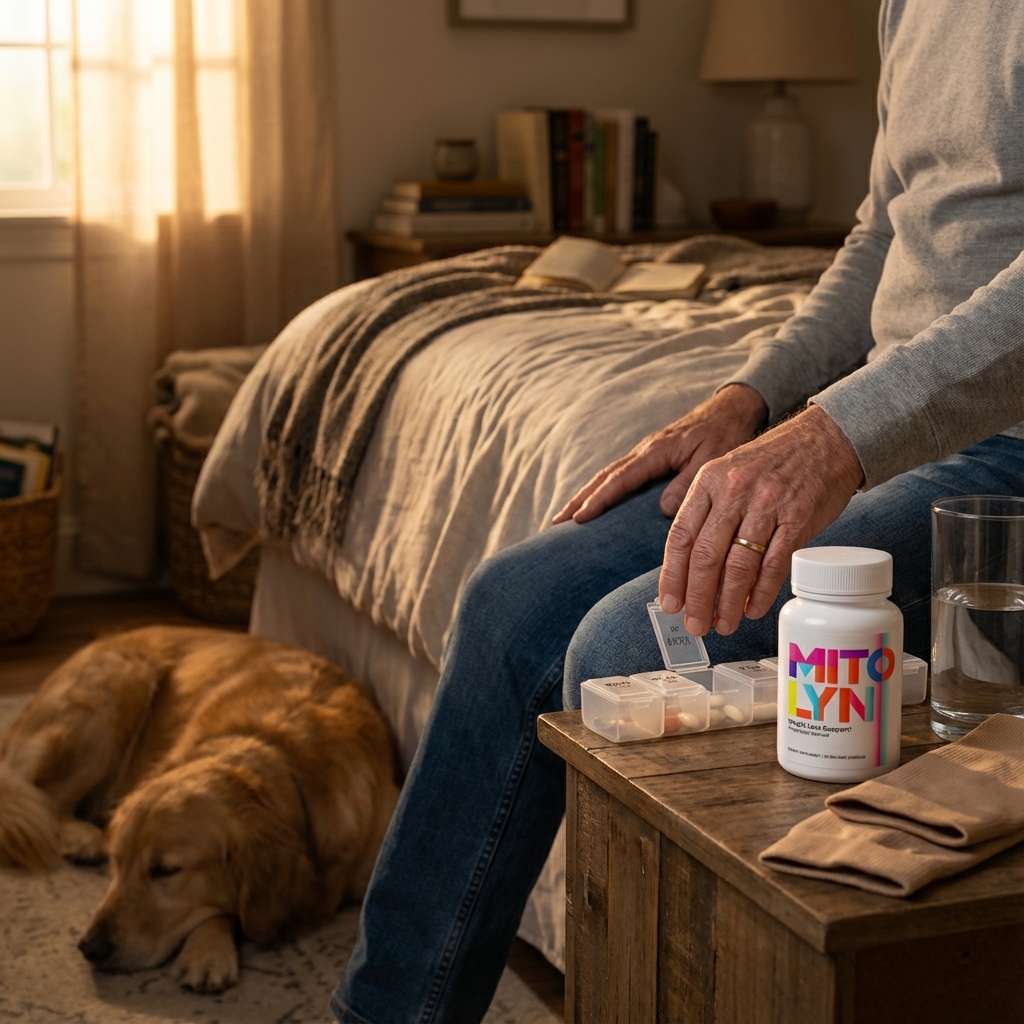
Let Mitolyn Back Your Recovery
When your legs feel years older, Mitolyn becomes the daily ally you actually reach for
Mitolyn is a mitochondria-support supplement built to live right beside your everyday routines. One capsule with your morning or evening ritual gives your cells targeted support for energy and recovery. If you’re ready to back your body with something more intentional, make Mitolyn the supplement you keep within arm’s reach.
-
Turns “I’m wiped out” days into a more manageable rhythm.
-
Helps recovery feel less like starting from zero every time.
-
Gives your cells focused help while you simply live your life.
By week two of deliberately increasing omega-3s—in my meals and with a mitochondria-supporting formula called Mitolyn—I noticed something subtle but real:
The day-after soreness wasn’t as sharp.
My joints felt less “hot” after runs.
The evening brain fog loosened a little earlier.
Not a miracle. Not overnight.
Just a steady shift toward feeling more like myself.
Where Mitolyn Fits Into Cellular Recovery

For a long time, I tried to fix everything with food alone. Then I looked honestly at my week: rushed lunches, travel days, and long stretches where my plate wasn’t exactly a picture of balance.
That’s when I added a focused mitochondria formula to my routine—Mitolyn, a plant-based supplement designed to support healthy mitochondria levels and cellular energy.
If fatty acids are like the material of the cell walls, mitochondria are like the little engines tucked inside each room. Mitolyn is built for those engines.
From the maker’s description, Mitolyn combines six key plant-based ingredients—like maqui berry, rhodiola, astaxanthin-rich algae, amla, cacao, and schisandra—chosen for their roles in mitochondrial biogenesis, antioxidant support, and energy metabolism. (Mitolyn)
In plain language, that means it’s designed to:
- help your cells build and maintain more efficient mitochondria
- support how those mitochondria turn fuel into usable energy
- provide antioxidant backup while those tiny engines are working hard
Here’s what it looks like in a normal day for me now:
- I wake up, drink water, and get a few minutes of morning light.
- Breakfast is simple: eggs or yogurt, leftover roasted vegetables, maybe some berries and walnuts.
- With that meal, I take one capsule of Mitolyn.
It’s quiet and almost boring—which is exactly what I want from something that supports my cells.
Over time, I noticed:
- My energy felt less “spiky” and more like a steady current.
- Long workdays didn’t wipe me out as completely.
- Recovery after harder workouts felt a little smoother, as if my muscles got the memo faster.
Do fatty acids still matter? Absolutely. They’re the structure.
Mitolyn simply joins the story at a different level—on the inside of the cell—where mitochondria decide how much energy you actually have to heal, move, and think.
If you’re exploring broader options, our guide to the best supplements for cellular health can help you compare formulas and choose the one that fits your rhythm.
Bringing Helpful Fats Onto Your Plate
Supplements can amplify what you’re already doing. They can’t replace your daily choices.
So I like to keep my focus on three simple fat “buckets” most days:
- Ocean fats
Salmon, sardines, mackerel, trout, or an algae-based omega-3 oil if fish isn’t your thing. These bring in EPA and DHA, which your body doesn’t make well on its own. - Seed and nut fats
Flaxseeds, chia seeds, walnuts, pumpkin seeds, almonds. They add ALA (the plant omega-3), some omega-6, and a mix of antioxidants and fiber that support your cells in more than one way. - Stable whole-food fats
Things like avocado and olive oil, plus a moderate amount of traditional fats your body handles well. These help round out cell membranes and keep meals satisfying so you’re not chasing sugar all afternoon.
This way, your cells get:
- omega-3s for flexibility and calm
- omega-6s in more natural, balanced forms
- other supportive fats that keep membranes resilient rather than brittle

Complete the Plate With Mitolyn
You’re already buying the salmon and seeds—Mitolyn is the missing piece on your counter.
Mitolyn is the mitochondria-support supplement designed to sit right beside your olive oil and omega-rich foods. While those fats build healthier membranes, Mitolyn focuses on the tiny engines inside your cells. If you want more from the effort you’re already making in the kitchen, make Mitolyn part of your regular grocery rhythm.
-
Helps your “better fats” feel like part of a fuller recovery plan.
-
Supports smoother-feeling energy on real workdays, not just perfect ones.
-
Slides into your existing cart and counter routine, no overhaul required.
If you want to go deeper into how your whole eating pattern shapes inflammation, our anti-inflammatory diet for cellular health guide breaks it into simple, doable shifts.
A Quiet Rethink of Recovery

Here’s what I’ve come to believe, after years of watching my own body and reading the science:
Cellular regeneration doesn’t just depend on “more protein,” “more sleep,” or “more willpower.” It depends on whether the tiny membranes around your cells are built from the right fats—and whether the engines inside those cells, your mitochondria, are being quietly supported.
Give your body the helpful fats it’s asking for and you:
- soften the edges of chronic, low-grade inflammation
- give your muscles a better chance to repair after strain
- support clearer thinking and steadier energy throughout the day
- help every cell communicate more cleanly with its neighbors
For me, that meant:
- bringing fish, seeds, and whole-food fats back onto my plate with intention
- adding a daily mitochondria-support formula like Mitolyn to back up my cells from the inside
- paying attention to how I actually felt over weeks, not days
If you sense that your own recovery is slower than it should be, it might not be “just age” or “just stress.” It might be your cells quietly asking for better building blocks and gentler support.
Start with one small change—a fish-based dinner twice a week, a spoon of ground flax on your yogurt, or a thoughtfully chosen mitochondria-support supplement in the morning—and watch how your body responds.
Your cells are always trying to move toward healing.
The fats you choose, and the support you give your mitochondria, hand them the tools to get there.
Written by Elias Menden — for those who seek resilience and clarity.