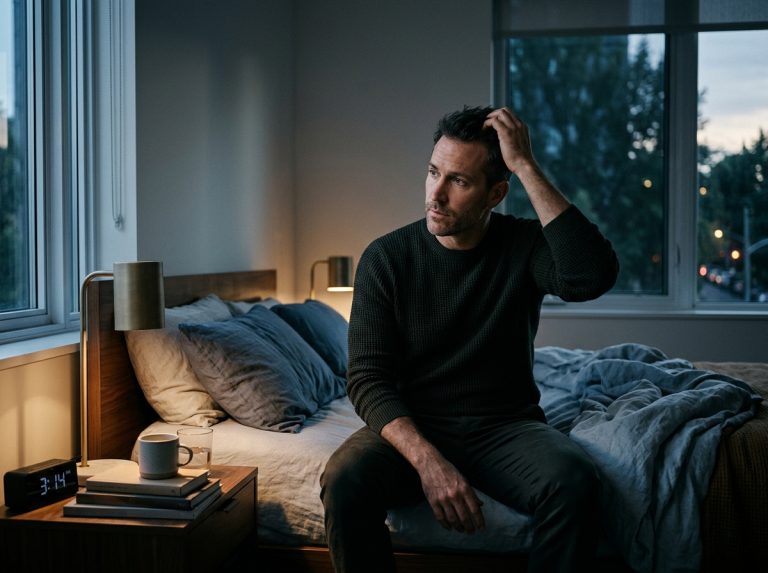
There is a particular kind of tired that feels unfair because it arrives after a full night in bed. You did the obvious thing. You went to sleep. The room went dark. The hours passed. And yet the morning still finds you as if something underneath never finished repairing itself. Your eyes are open, but the deeper part of you still feels somewhere else, slow to return and reluctant to begin.
I used to get confused by that feeling because it did not look like bad sleep from the outside. I was not always awake in the middle of the night. I was not necessarily tossing, panicking, or staring at the ceiling. I was simply waking up with a body that felt as though it had rested shallowly, like the night paused me without really restoring me. That difference matters. It changes the conversation from bedtime discipline to true recovery.
Once I understood that, mornings became easier to read. The issue was not just whether sleep happened. It was whether sleep had enough softness, enough nervous-system support, and enough real recovery to become repair instead of mere unconsciousness. That is a subtler problem, but it is also a more solvable one because it points toward rhythm, transitions, and deeper support instead of blame.
Why Does Time in Bed Sometimes Fail to Feel Restorative?

Time in bed and real recovery are not the same thing. A person can log plenty of hours and still wake up feeling as if the body spent the whole night processing stress rather than replenishing itself. The National Heart, Lung, and Blood Institute explains that sleep deficiency can affect concentration, mood, and daily function. I find that helpful because it gives language to what many readers already feel: the night may have happened, but the morning still reports that recovery stayed shallow.
That is what makes unrefreshing sleep so discouraging. It steals the sense of fairness. You did what people tell you to do, and the result still did not arrive. When that happens repeatedly, it is easy to start doubting yourself instead of questioning the quality of the recovery cycle itself.
I think that is why this topic resonates so quickly. The reader does not need to be convinced that the problem is real. She already knows the feeling. What she needs is a better explanation than “try harder” or “go to bed earlier.”
What Usually Interrupts Recovery Before Sleep Even Begins?

What surprised me most was how often the real issue started long before I closed my eyes. Stress carried too close to bedtime. Scrolling until my thoughts felt noisy and bright. Late eating that kept my body busy while I wanted it to unwind. The habit of treating exhaustion like the same thing as readiness for sleep. All of that created a night that looked restful from the outside but still felt crowded on the inside.
The body does not flip into recovery just because the clock says it should. It needs a handoff. It needs cues that say the day is actually done. That can mean dimmer light, a quieter room, fewer emotional jolts, and less treating the last hour of the day like an extension of the most demanding part. When those cues were missing, my sleep often felt like a shutdown rather than a repair cycle.
The National Center for Complementary and Integrative Health also notes that stress regulation and healthier sleep habits support better recovery. That matched my experience. Collapse is not the same thing as recovery. Collapse ends the day because you are spent. Recovery ends the day because the body is being helped into restoration.
How Can You Tell the Problem Is Recovery Depth?

The mornings after shallow recovery carry their own language. You may feel vaguely inflamed, mentally dim, or emotionally behind before the day has properly started. Your body wants a softness you do not have time to give it. Your patience shows up late. Even hunger can feel strange, as if your system is not quite certain which signal to send first.
I like to make that recognition concrete:
- sleep happened, yet your body still feels as if it borrowed rather than rebuilt
- focus and patience arrive later than the day requires
- you wake up with heaviness even when you were not obviously awake all night
- the whole morning feels slightly under-restored before anything difficult happens
When those signs travel together, the conversation gets much more honest. The issue stops sounding like poor discipline and starts sounding like incomplete restoration.
What Starts Making Mornings Feel More Like Yours Again?

The best changes for me were not glamorous. I needed calmer evenings, less overstimulation, and more respect for the handoff into bed. I needed to stop making the last hour of the day compete with every leftover demand. I also needed to notice that mornings were easier when the previous evening had been gentler, dimmer, and less emotionally crowded.
That is part of why I prefer talking about recovery rather than just sleep. Recovery includes the atmosphere around the night. It includes whether the body feels safe enough to drop into deeper restoration. It includes the small choices that either help the system settle or keep it hovering near the surface.
As those pieces improved, mornings stopped feeling so borrowed. They were not magically perfect. They were simply less punishing. The body began returning more fully by morning, which is the real outcome readers are looking for anyway.
I also noticed that my whole day got gentler when the morning was less compromised. Better recovery changes the tone of everything else. Mood, movement, appetite, and attention all become easier to work with when the body no longer starts from a quiet deficit.
Where Renew Fits in a More Honest Recovery Plan
Renew made sense to me because it belonged to the actual problem. I was not looking for a shortcut that excused chaotic nights. I wanted support that fit the reader who is doing the obvious things and still feeling like repair falls short. That is a different kind of need, and it deserves a different kind of product bridge.
When the issue is incomplete restoration, the next step should feel calmer and more precise. Renew fits beside softer evenings, less overstimulation, steadier rhythms, and the kind of recovery plan that treats the morning as the proof. It is not there to replace sleep habits. It is there to support the body that wants deeper return from the sleep it is already trying to get.

That fit matters because the support arrives after the reader understands her own pattern. It feels proportional instead of premature, which is exactly what a sleep-recovery recommendation should feel like.
Which Internal Links Help the Reader Go Deeper Without Getting Lost?
IyoMend already has useful sleep and hormonal recovery content, so this post should act like a spoke and a bridge. That means linking readers into best supplements for sleep and recovery, the more symptom-led piece at when rest stops feeling like recovery, and the adjacent fatigue article at when eight hours of sleep still leaves you empty.
Those links help the reader move from recognition to comparison without flattening the story into one symptom page. They also help the site say something more useful than “sleep more.” The topic becomes deeper recovery, better rhythm, and clearer buyer intent.
That structure matters for search and for trust. Readers who land on one symptom page are rarely done after one explanation. They need a next step, a comparison page, and a neighboring article that helps them recognize whether the issue sounds stress-driven, hormone-linked, or simply restorative in a broader sense.
It also gives AI-driven search systems cleaner passages to cite for different question shapes. One page explains the lived feeling of shallow recovery, another compares solutions, another frames the hormonal overlap. That is how the site becomes more useful and more citable at the same time.
I want this article to do that work gently. Not by scaring the reader, but by helping her see that her morning has a pattern, and patterns can be supported.
The Goal Is Not More Hours. It Is More Return.
I do not want readers judging the night only by how long they stayed in bed. I want them judging it by what it gives back. Better recovery means more return: more steadiness, more usable patience, more attention, and less of that private feeling that the body never fully came back from yesterday.
If you slept but your recovery stayed behind, pay attention to that with more curiosity than shame. The answer may live deeper than bedtime alone. Once the conversation gets honest, the next steps become gentler and more effective.
That is the promise I want this page to hold. Not perfection. Just a morning that feels more like your own again.
Written by Liora Menden — for readers who want deeper recovery and less borrowed mornings