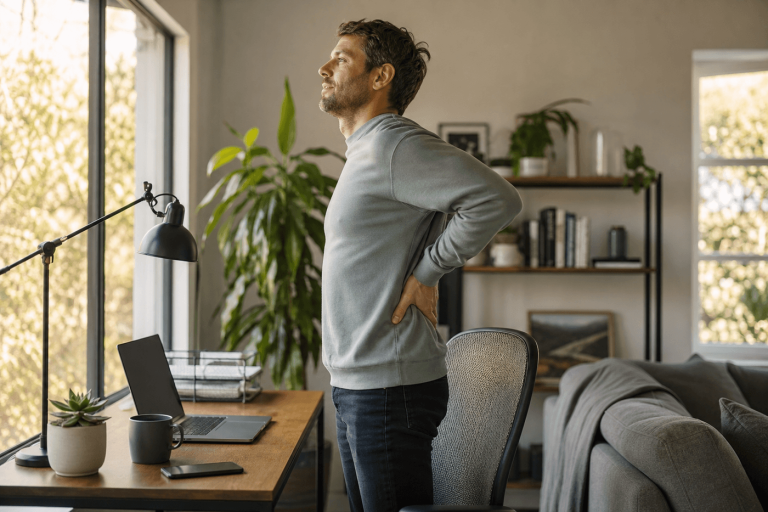
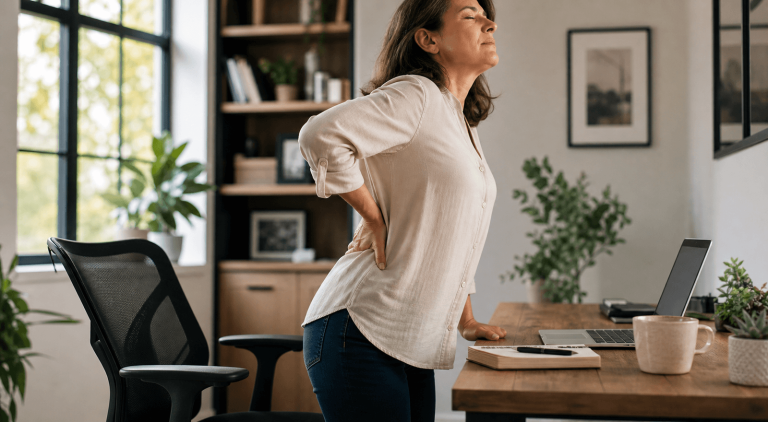
There is a kind of stiffness that does not look serious enough to explain, yet it changes the entire evening. You stand up after the final meeting and your hips feel as if they were borrowed from someone older and much less patient. Your knees need a second before they trust the floor. The chair comes with you into the kitchen, into the hallway, and sometimes into bed as a low-grade ache that was not there when the day began. Nothing dramatic happened. The problem is that nothing moved enough while the day was happening.
I used to dismiss that feeling because it seemed too ordinary to count. I was not injured. I was simply working, typing, answering, and spending too much time in one shape. But ordinary repetition is still repetition. The body keeps score even when the work looks harmless. Hours of stillness accumulate in the hips, knees, lower back, and the quiet mechanics of how a person gets up, turns, bends, and starts walking again.
Once I stopped treating desk stiffness like a mild annoyance, I understood why evenings felt more expensive than they should. The issue was not only age or bad luck. It was a daily pattern: too much sitting, not enough interruption, and a body repeatedly asked to restart itself from cold.
Why Does Long Sitting Feel Bigger Than It Looks?
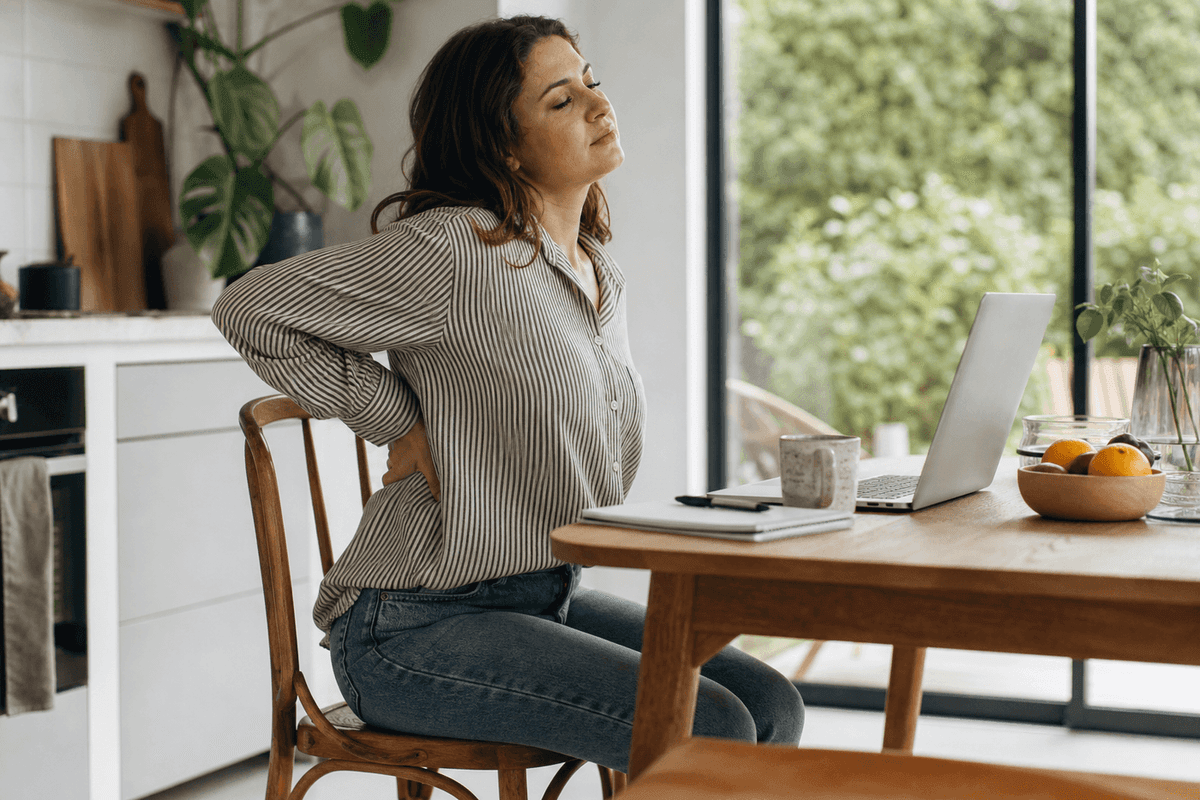
Sitting does not look demanding, which is exactly why it is easy to underestimate. Yet stillness changes the body in ways that become obvious only when you try to move again. Hips stay shortened. Shoulders roll forward. The lower back absorbs more than it should. The joints stop getting the small reminders that tell them movement is still part of the day.
The Centers for Disease Control and Prevention notes that regular movement throughout the day supports joint function, circulation, and overall physical health. That sounds broad, but it maps neatly onto what so many people feel by evening: the body is less upset by work itself than by the long periods where work teaches it not to move.
That is why desk-day stiffness often feels oddly disproportionate. It is not a response to one bad lift or one obvious strain. It is a response to the accumulation of small static hours.
What Are Your First Steps After Work Trying to Tell You?
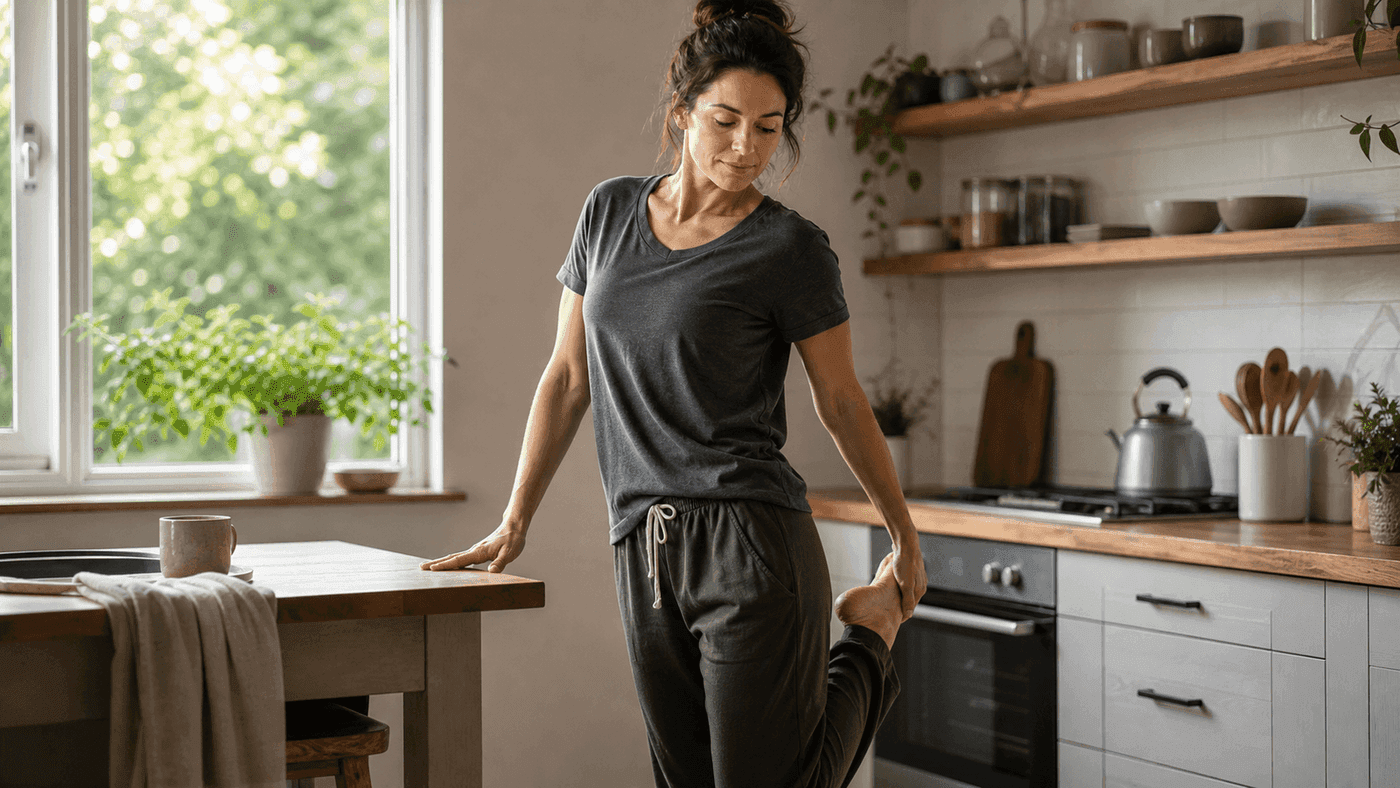
The first few steps after a long sitting block are honest. They tell the truth before the rest of the body has had time to compensate. You feel it in the hips that do not want to open, in the knees that hesitate on the stairs, or in the lower back that asks you to stand a little straighter before it agrees to move comfortably.
I used to ignore those first steps and assume I would loosen up on my own. Sometimes I did. But the more useful response was to treat them as feedback. If the first steps are stiff every evening, the answer probably does not live only in the evening. It lives inside the workday and the way the body is being asked to spend it.
That realization makes the problem feel less mysterious and much more practical. You do not need a heroic cure. You need a better movement rhythm.
Why Can One Good Stretch Still Leave You Stiff Later?
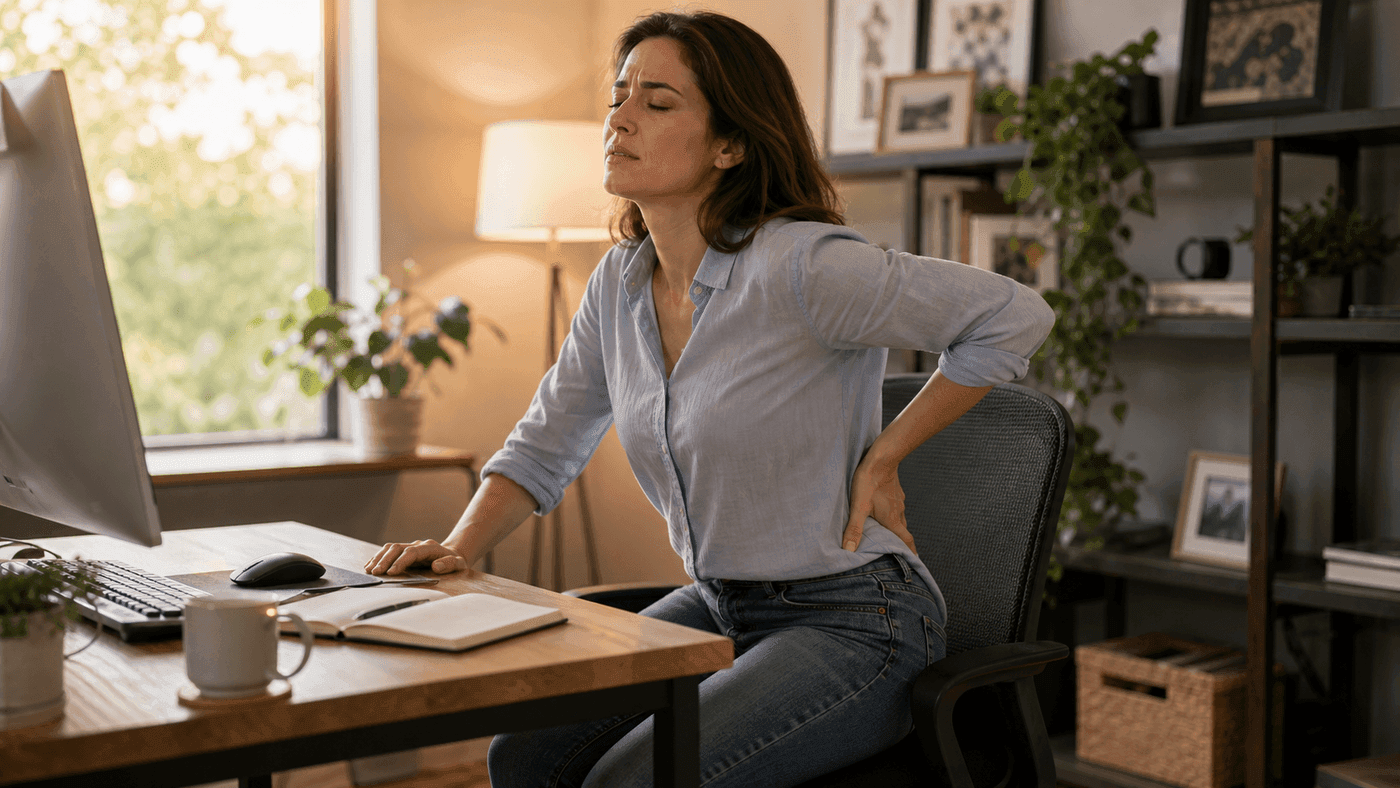
One stretch after work can help, but it cannot fully repay an entire day spent almost motionless. Stiffness created by repetition usually responds best to repetition in the other direction. Many small movement returns often matter more than one dramatic correction at the end.
That is inconvenient only if you think support has to look athletic to count. In practice, it can be ordinary: standing during one call, walking to refill water, opening the hips for thirty seconds between tasks, or taking the stairs without turning it into a production. These actions are small, but they remind the body that movement still belongs in the day.
- stand up when a work block ends, not only when pain begins
- keep water far enough away that you have to earn it with a few steps
- walk for a few minutes after lunch before dropping back into a chair
- treat the first walk after work as part of recovery, not a bonus task
That list sounds basic because it is. Basic is often exactly what a desk-shaped body is missing.
What Started Making Evening Movement Feel Easier?
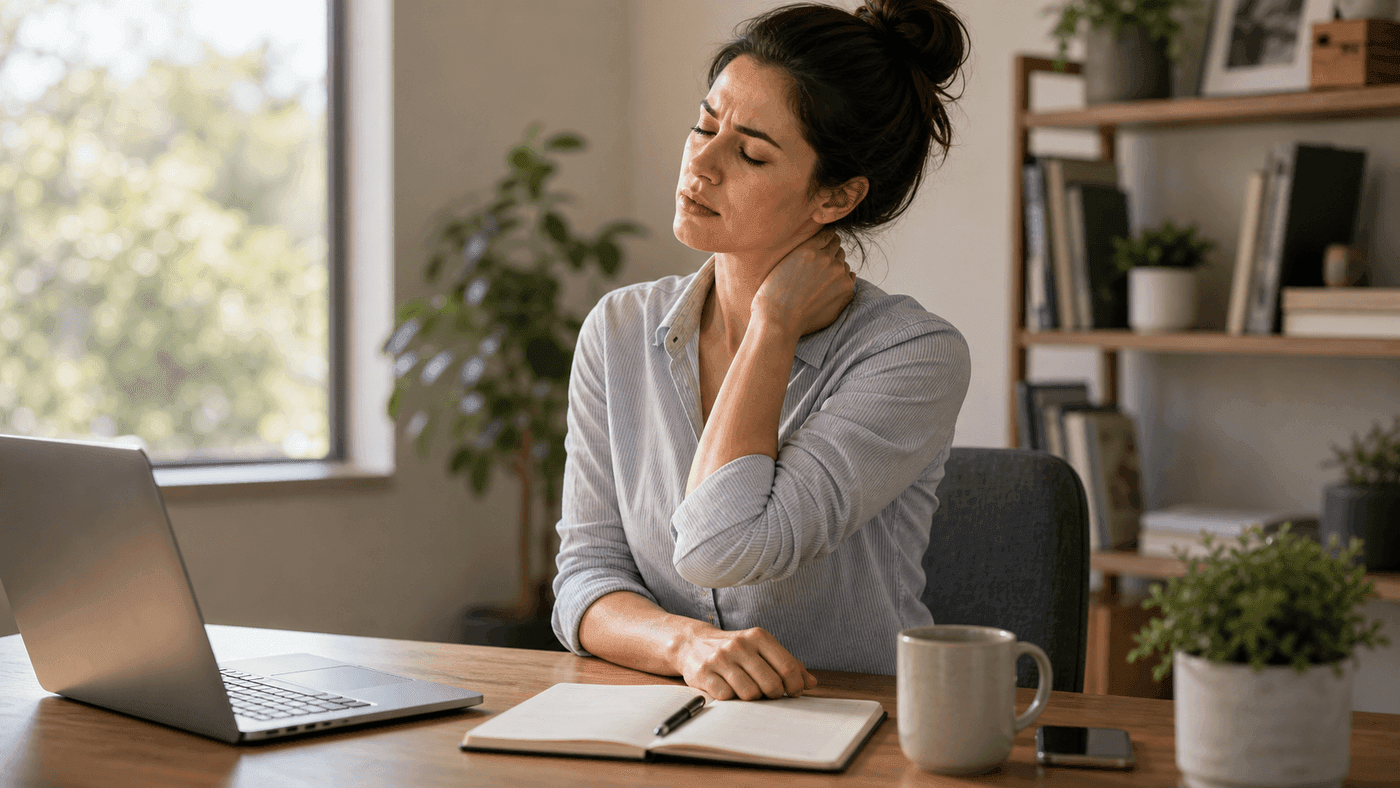
The changes that helped most were practical enough to survive real life. I stood up after sending anything that took real concentration. I walked a little before lunch and a little after. I stopped acting as if the body should happily absorb ten hours of stillness and then spring into evening life without complaint.
Those shifts did not make me feel dramatically fitter overnight. They made me feel less trapped inside the physical consequences of my own schedule. By evening, the joints were no longer being asked to go from stillness to full life without a transition.
That distinction matters. The goal is not to become some perfect mobility person. The goal is to stop arriving at evening already braced against movement.
Where Does Balmorex Pro Fit in a Mobility Routine?
Balmorex Pro made sense to me because it belonged to the real pattern. I was not looking for a product to erase the fact that long sitting has consequences. I wanted support that fit alongside walking breaks, easier transitions, hydration, and a routine that respected the joints I was asking so much from every day.
That is what makes the product bridge feel measured instead of pushy. The reader first sees the cause clearly: a desk-centered day that quietly stiffens the body. Then the product becomes a practical support step inside a believable mobility plan.
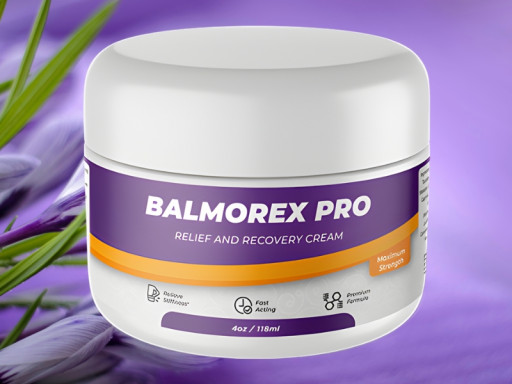
That placement keeps the article trustworthy. The offer does not replace the routine. It belongs inside the routine.
Which Internal Paths Help the Reader Build a Fuller Plan?
This article works best as an entry point into IyoMend’s broader joint cluster, which is why I want it linking naturally to best supplements for joint pain, the desk-to-evening companion piece at daily movement for joint health, and the age-and-recovery angle at over 40 joint pain recovery.
Those links matter because readers rarely stop at one stiffness question. They want to know whether the problem is daily posture, age-related recovery, or a bigger pain pattern that needs a different support decision.
That kind of structure is useful for search, but more importantly it is useful for trust. It shows the page belongs to a fuller conversation instead of pretending one evening symptom page can carry the whole topic alone.
I also like this angle because it gives the reader permission to stop normalizing avoidable discomfort. A stiff evening is common, but common is not the same thing as inevitable. When the site offers adjacent answers instead of one isolated take, it becomes much easier for a reader to decide whether she needs more movement cues, a better recovery routine, or a more direct joint-support comparison.
That is what good cluster content should do. It should lower confusion. Instead of leaving a person with one emotional recognition piece and no next step, it should show the wider path: practical mobility changes, a money-page comparison, and related symptom pages that help her recognize whether the stiffness is mostly behavioral, mostly age-related, or a blend of both.
The Goal Is Not Perfect Flexibility. It Is Easier Evenings.
I do not need my work routine to become a performance of wellness. I need it to stop hardening me into the shape of my chair. I want the first steps after work to feel ordinary. I want evening movement to feel available. I want the body that carried the workday to keep cooperating once the workday is done.
If long sitting keeps negotiating with your joints every evening, pay attention to that. The discomfort may be quiet, but it is still asking for support. A few small movement returns, a steadier daily rhythm, and the right joint-comfort help can change how the whole second half of the day feels.
That shift matters beyond comfort alone. Easier movement changes mood, patience, and the way the rest of the night unfolds. Cooking feels simpler. Walking feels less like another demand. Even the choice to exercise tomorrow becomes easier when today did not end in a small argument with your knees and hips.
I keep coming back to that because readers do not just want less pain. They want more willingness from their own body. They want to move through the evening without feeling as if the day already took the best out of them. That is the standard I want the article to hold.
Written by Elias Menden — for readers who want freer movement after long sitting