There is a particular kind of skin tiredness that no amount of product seems to reach. Not the dryness that a good cream fixes overnight, not the redness that fades with a gentler cleanser. This is something quieter — a flatness, a loss of that certain something that used to be just there when you looked in the mirror. If you have been standing in front of your reflection lately wondering why your skin looks like it has given up a little, this is for you. And the answer, it turns out, has far less to do with your bathroom shelf than you might expect.
Skin that looks persistently tired — muted in tone, rough at the surface, somehow thicker and less alive — is often skin that is waiting for something your topical routine simply cannot deliver. It is asking a question from the inside. The frustrating part is that most of us are so well-trained to answer from the outside that we keep reaching for another serum, another overnight mask, another promising ingredient in a small glass jar. We are answering the wrong question.
What follows is not a skincare routine. It is something closer to a reframe — one that might make a lot of things suddenly make sense.
The Morning Mirror Moment Most People Misread

You wake up. You splash water on your face. And before the day has even started, there is already a small, quiet disappointment. Your skin looks tired even though you slept. It looks dull even though you moisturized. There is a texture to it — not quite rough, not quite soft — that makes your makeup sit differently than it used to. You add more product. You try a new one. You tell yourself it is stress, or hormones, or the season changing.
And sometimes it is those things. But sometimes — often — it is something happening much deeper than your dermis. Your skin is a surface, but it is not a separate system. It is connected to everything happening internally: your digestion, your gut microbiome, your body’s ability to turn over old cells and generate new ones with quiet, efficient regularity. When those internal systems are sluggish or imbalanced, the skin does not hide it well. It shows. Not dramatically, not with a clear diagnosis — just with that flat, uninspired look that makes you feel older than you are and more tired than you feel.
That morning mirror moment is not a skincare problem. It is an internal signal dressed up as one.
Your skin has been trying to tell you something your shelf cannot answer.
Why the Gut Has Everything to Do With Your Glow
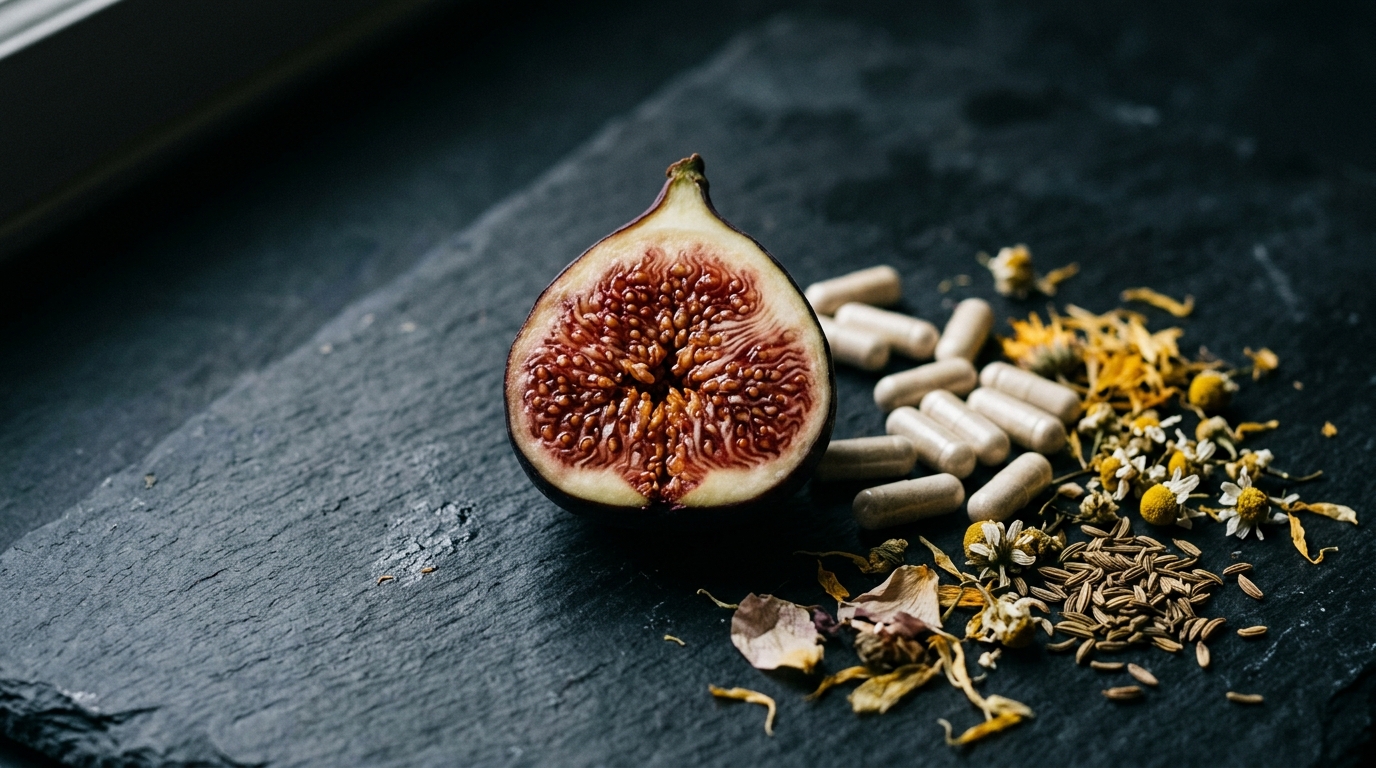
The relationship between digestion and skin health is one of those connections that science is only beginning to articulate in full, but that the body has known about for a very long time. Your gut is home to trillions of microorganisms — bacteria, fungi, and other microscopic residents — that collectively influence everything from immune function to hormone regulation to the speed at which your skin renews itself. When that inner community is thriving, the downstream effects often show up as clearer, more luminous skin. When it is disrupted, the effects show up there too.
This happens through several quiet channels. Gut bacteria influence how well your body absorbs the nutrients that skin cells need to stay plump, resilient, and well-hydrated. They help regulate inflammatory signals that, when elevated, can manifest as blotchiness, congestion, and that persistent dullness. And they play a role in the pace of cellular turnover — the speed at which old, tired skin cells give way to fresh ones. When turnover slows, skin looks dull. When inflammation runs quietly elevated, skin looks stressed. The connection is real, and it runs deeper than any topical treatment can reach.
The glow you have been reaching for starts somewhere deeper than a serum.
When Cellular Renewal Quietly Slows Down

In your twenties, your skin renews itself roughly every four weeks. As time moves on — and as the gut microbiome shifts due to diet, stress, sleep, and other lifestyle factors — that renewal cycle tends to lengthen. Old cells linger at the surface a little longer. The result is that subtle thickening, that slightly ashy quality, the way your skin somehow looks like it is holding onto something it should have let go of already.
Cellular turnover is not just a cosmetic concept. It is a metabolic process — one that depends on a well-functioning gut to deliver the right building blocks at the right time. When the microbiome is out of balance, those building blocks — nutrients, antioxidants, amino acids — may not be absorbed or distributed as efficiently as the skin needs them to be. The skin is always last in line when the body is under stress. It gets what is left over after every other system has taken what it needs. If what is left over is not much, the face tells you plainly.
This is not about aging. This is about a system that needs support, at any age, from the inside out.
What if the missing piece was never on your bathroom counter?
The Shelf Full of Answers That Missed the Question

Most of us have a skincare shelf that has grown quietly over the years. Serums with beautiful packaging. Creams that promised luminosity. Tools that promised to lift, tone, or stimulate. And most of them are not bad products — many of them do something real and useful at the surface level. But there is a ceiling to what a topical can accomplish when the root conversation is happening somewhere else entirely.
Moisturizers hydrate the outermost layer of the skin. Retinoids encourage surface turnover. Vitamin C serums brighten. These are all real, measurable effects. But none of them communicate with your gut bacteria. None of them influence how efficiently your digestive system extracts the minerals your skin cells need. None of them calm an immune system that is quietly overreacting, causing low-grade inflammation that dims your skin’s vitality from the inside. The shelf is doing its best. It just does not have access to the conversation that matters most.
That is the gap. And once you see it, you cannot quite unsee it.
Glow Starts at the Gut
When your skin looks tired despite everything — the answer might be one layer deeper.
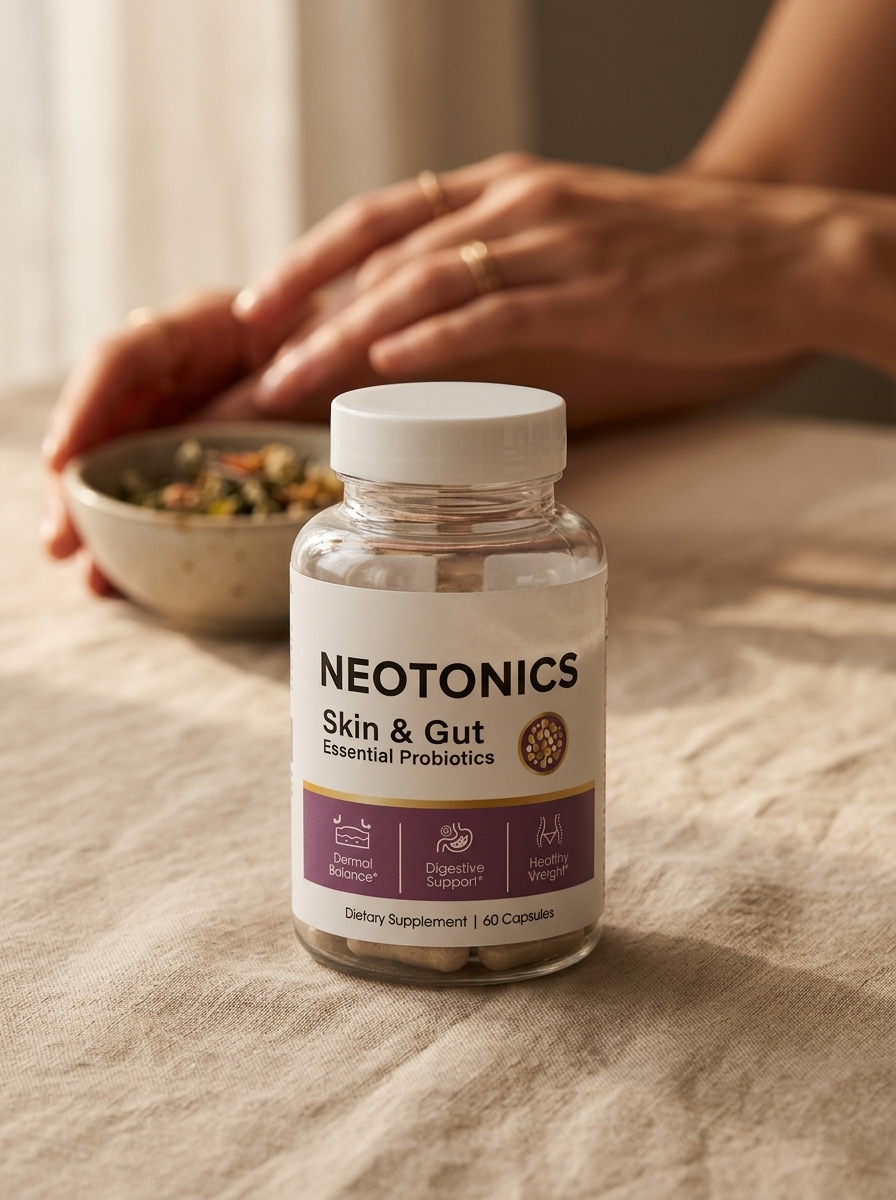
Neotonics works at the gut-skin connection — supporting microbial balance, digestion, and cellular renewal from the inside. It is not another topical. It is the conversation your skin has been asking for. When the internal systems that sustain your skin find their footing, the surface tends to quietly follow.
- ✓ Supports cellular turnover so tired skin can finally let go
- ✓ Works with your gut microbiome — where glow actually begins
- ✓ Gentle, consistent support that topicals simply cannot reach
Something Gentler Than Another Product

What if the thing your skin has been asking for this whole time was not a new formula but a different kind of support entirely? Neotonics was developed around exactly this idea — that skin health is an inside story, and that the gut-skin connection is where real, lasting change begins. Rather than sitting on your bathroom shelf, it works at the level of microbial balance, digestion, and cellular renewal. It is the kind of support that addresses the root of what tired skin is actually expressing.
The premise is elegant in its simplicity: when your gut is supported — when the microbial environment is balanced and digestion is working efficiently — the skin tends to follow. Nutrient absorption improves. Inflammatory signals quiet. Cellular turnover finds its rhythm again. The face does not just look better — it looks rested. Settled. More like itself. Neotonics is not a shortcut, and it is not a replacement for anything you already love in your routine. It is the conversation your skin has been trying to start with you from the inside, finally given something to work with.
Support the gut. Let the skin quietly follow.
What Shifts When the Inside Finds Its Footing

There is a particular morning — and it comes quietly, without announcement — when you look in the mirror and notice that something is different. Your skin has more of that quality you stopped expecting to see. The tone is more even. The texture feels smoother under your fingertips. Your makeup, if you wear it, sits differently — like it belongs there rather than sitting on top of something unresolved. You look like yourself again. Maybe even a version of yourself you had not seen in a while.
This is what skin looks like when the internal systems that support it are finally getting what they need.
It is not a dramatic transformation. It is a return — a recognizable softness coming back into the face, a luminosity that was always there, just obscured by an internal conversation that was not going well. The shelf did not change. The routine did not change. What changed was the source. And the source, it turns out, was always the gut — the place that feeds, renews, and quietly sustains everything that shows up on the outside.
Tired skin is not a routine failure — it is an invitation to look inward.
Learning to Listen to the Right Signal

There is a kind of wisdom in finally listening to what your skin has been saying for months, maybe years. It is not dramatic. It does not demand that you throw out everything you know or start over from scratch. It simply asks you to look one layer deeper — past the surface of the problem, past the serum and the mask and the morning routine — and ask what might actually be going on inside.
Tired skin is not a failure of your skincare routine. It is an invitation. An invitation to pay attention to your gut, to your digestion, to the microscopic world inside you that does so much of the quiet work of keeping you well. When you start to support that world rather than just managing the surface, something shifts — slowly, genuinely, in a way that holds. You stop looking for the next product that will finally fix it. You start feeling what it is like to nourish the system that was trying to speak all along.
Your skin has been patient. It is not too late to hear what it has been saying.
Written by Liora Menden — for those who seek luminosity that begins from within
You have been patient with your skin. It has been patient with you.