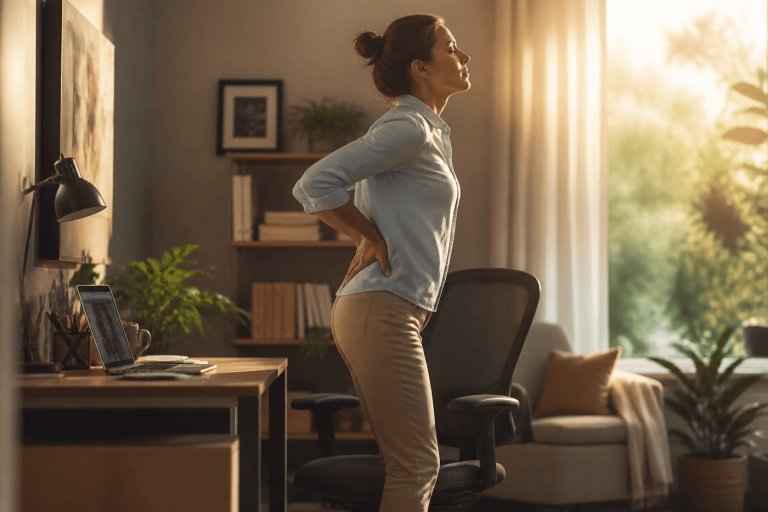
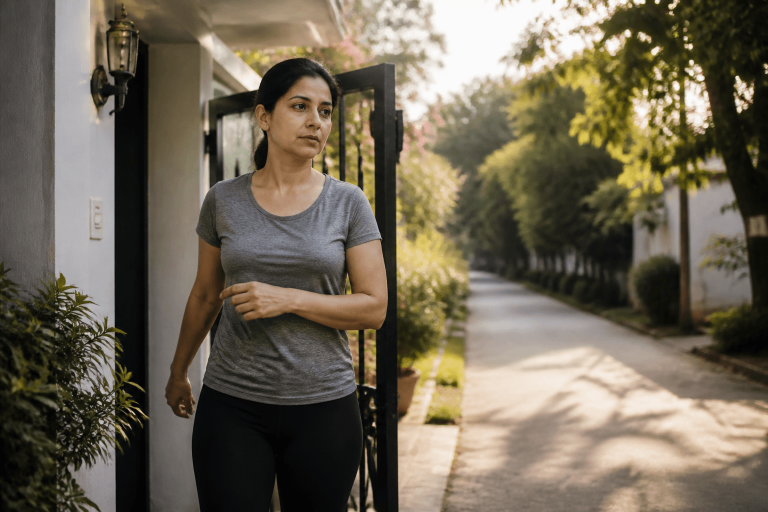
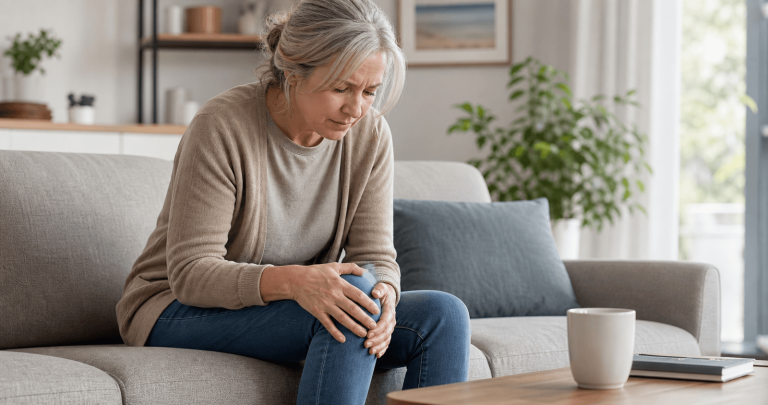
There is a specific kind of stiffness that does not fully show itself until the workday is already over. You make it through the desk hours well enough, get into the car, drive home, and then step out feeling like your knees aged somewhere between the parking lot and your driveway.
I noticed this because it made the evening feel strangely less open than it should have. Nothing dramatic had happened. I had simply spent too much time sitting still, then added one more block of compression on the ride home before asking my body to walk, cook, or take stairs as if the day had not been collecting tightness the entire time.
Once I stopped calling that random wear and tear, the pattern got easier to work with. I could look at movement breaks, warmth, hydration, and the kind of joint support that actually fits a body being held still for too long before it has to move again.
Why Can The Ride Home Make Knee Stiffness Feel Suddenly Louder?
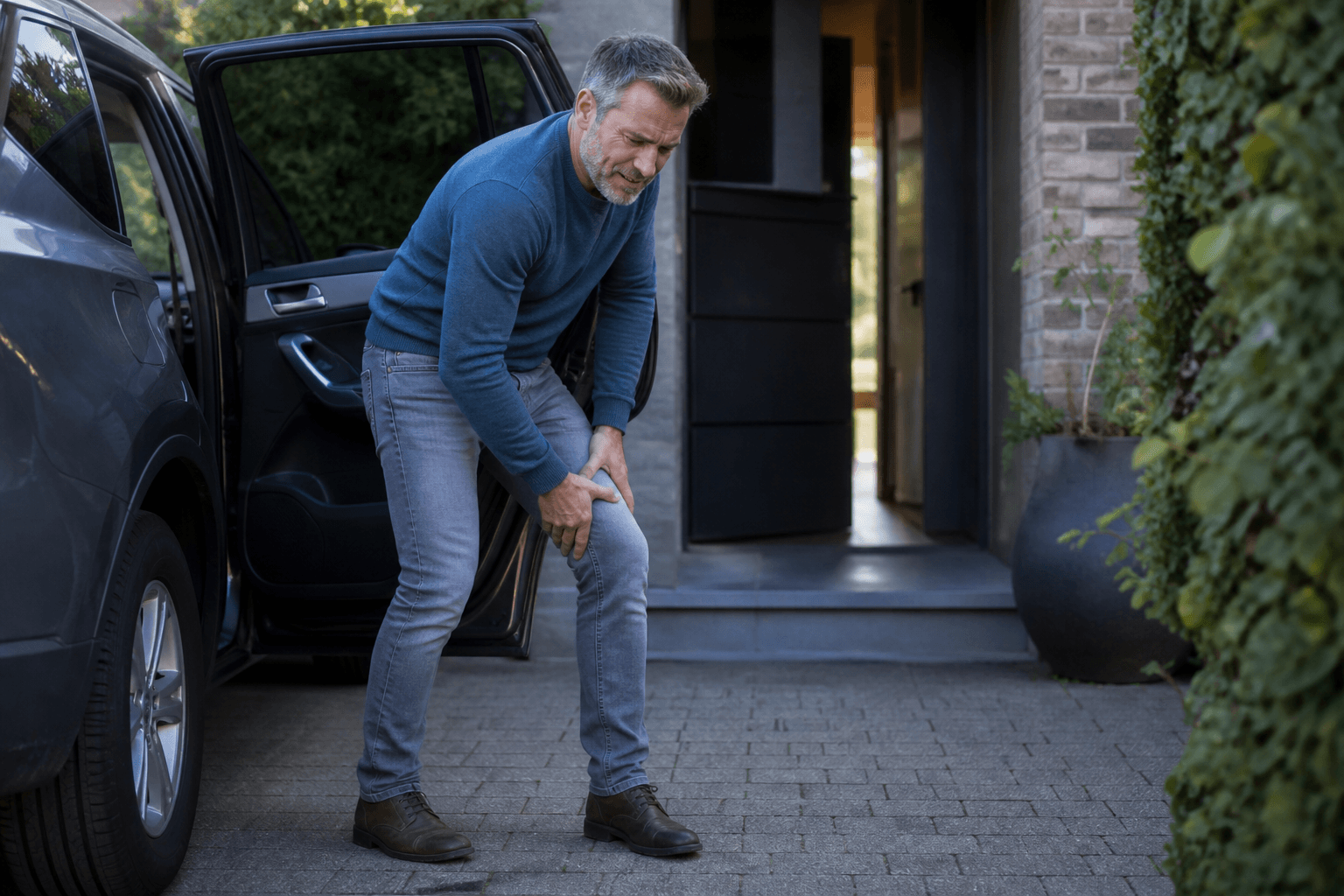
A still workday can hide its cost until you add one more seated block at the end. The commute is often where that cost becomes obvious. The knees have already spent hours with limited movement. Then they get one more stretch of stillness before they are asked to bend, step, and support the shift into evening life.
The National Institute on Aging explains in its guidance on exercise and physical activity that strength, flexibility, balance, and endurance all shape everyday movement. In real life that means sitting too long can make ordinary movement feel older than the body really is, especially when the transition from stillness to motion happens quickly.
That is why the stiffness can seem to appear out of nowhere when you park. It did not begin in the driveway. The drive home simply gave it the final silence it needed to become obvious.
What Daily Habits Usually Build That End-Of-Day Knee Friction?

The usual causes are almost boring in how ordinary they are. Long desk blocks. Too few walking resets. Tight driving posture. Hydration that keeps getting postponed. A day built around concentration but stripped of the little motions that help joints keep feeling fluid.
- stacking long seated work blocks with almost no walking resets
- adding a compressed drive home onto an already still lower body
- standing up and moving too quickly after extended sitting
- waiting until the body protests before giving it warmth or motion
What makes this pattern tricky is that the body often tolerates it until you ask for something more natural and dynamic. Walking into the store, climbing steps, unloading the car, or simply turning after standing can all feel more negotiated than they should.
I also found that rushing made it worse. If I stood up and moved immediately after the drive as if the body should already be ready, the stiffness felt louder. A slower transition changed the whole feel of the evening.
How Does Commute Stiffness Change The Mood Of An Evening?
When the ride home makes your knees feel older than the day, the cost is not only physical. It changes the emotional tone of the evening. Simple errands feel less casual. A short walk sounds less inviting. Even standing at the kitchen counter can seem like one more demand on a body that already feels guarded.
That shift matters because mobility confidence is built in ordinary transitions. If those transitions stop feeling easy, the body begins teaching you to avoid movement before movement even begins.
This is why mobility articles work best when they stay close to the daily experience. Readers are often not asking for elite performance. They want the evening to stop feeling narrower than it should after a perfectly normal workday.
What Helps The Evening Transition Feel Less Compressed?

The changes that helped me most were not complicated. More short walking breaks earlier in the day. A brief pause before getting out of the car. A little warmth when the tightness was predictable. More gentle movement before things got stuck instead of one heroic attempt to undo the whole day after dinner.
Harvard Health notes in its overview of how to cope with stiff joints that regular movement, sensible activity, and warmth can help support comfort and function. That matched what I found. The body usually needed steadier care through the day rather than one desperate fix when the stiffness was already speaking for everything.
Once I respected that, the ride home stopped feeling like the moment my knees announced defeat. It became one more transition I could prepare for more intelligently.
Where Does Joint Genesis Fit In A Better Mobility Routine?
Joint Genesis made sense to me because it fit the actual rhythm of the problem. I was not looking for a miracle that erased sitting. I wanted support that belonged beside movement breaks, warmth, hydration, and a more realistic evening recovery plan.
That is the honest bridge here. The article first explains why the ride home can make knees feel older than the day itself. Then Joint Genesis appears as one support step inside a broader routine that makes standing, walking, and evening movement feel less negotiated.

That sequence makes the recommendation easier to trust. The reader feels understood before being asked to click anything.
Which Internal Links Strengthen This Mobility Cluster?
This article should feed IyoMend’s strongest joint-mobility pages directly. The most useful next steps are best supplements for joint mobility, best supplements for joint pain, and why your first steps feel cautious after a long workday.
Those links help the reader move from symptom recognition into both commercial comparison and adjacent story depth. One page handles the broad buying query, one supports a more pain-led angle, and one extends the same late-day movement theme through a different transition point.
That network also helps search and AI systems understand the site’s topical authority. IyoMend is building a mobility cluster around real life moments, not a pile of disconnected stiffness pages.
The Goal Is Not Pushing Through. It Is Ending The Day With Less Friction.
I do not want readers treating knee stiffness like a verdict on age or usefulness. I want them noticing the pattern more accurately. If the ride home makes your knees feel older than the day, the body may be telling the truth about stillness, transition speed, circulation, recovery, or mobility support.
The answer is often less about willpower and more about better conditions. Better movement rhythm. Better transitions. Better warmth. Better support. When those pieces line up, the evening starts feeling more open again.
That matters because mobility freedom is built from ordinary moments. A body that cooperates when you get out of the car, walk into the house, or take the first few steps indoors gives the rest of the evening back its ease.
For me, the win was not feeling superhuman. It was ending the workday without already planning around the stiffness I expected to feel after the drive. That quieter kind of trust is often what readers are really missing.
Once that trust returns, the whole evening softens. You move more spontaneously, recover more calmly, and stop treating every tight signal like proof that something irreversible is happening.
It also changes the emotional tone of movement. Standing up stops feeling like a checkpoint and starts feeling ordinary again, which is exactly the kind of relief many people are actually hoping for.
When the knees feel lighter, other choices get easier too. A walk sounds more realistic, stairs feel less loaded, and the body stops teaching you to avoid movement before movement has even started.
I have also found that the ride home becomes a useful signal instead of an enemy. If the body feels notably older after that final seated block, it is showing you where the day kept collecting compression. That is actionable information. It tells you where to add small walking resets, where to slow the transition out of the car, and where mobility support can stop the evening from beginning in a deficit.
That kind of clarity matters because many readers quietly normalize end-of-day stiffness for too long. They assume the body is simply becoming more difficult. Often the pattern is more mechanical than that. Too much stillness, not enough circulation, and one more compressed transition can explain a surprising amount. Once you see the pattern, the evening becomes much easier to negotiate with less fear and more practical care.
Written by Elias Menden — for readers who want easier evening movement and less commute-driven knee stiffness