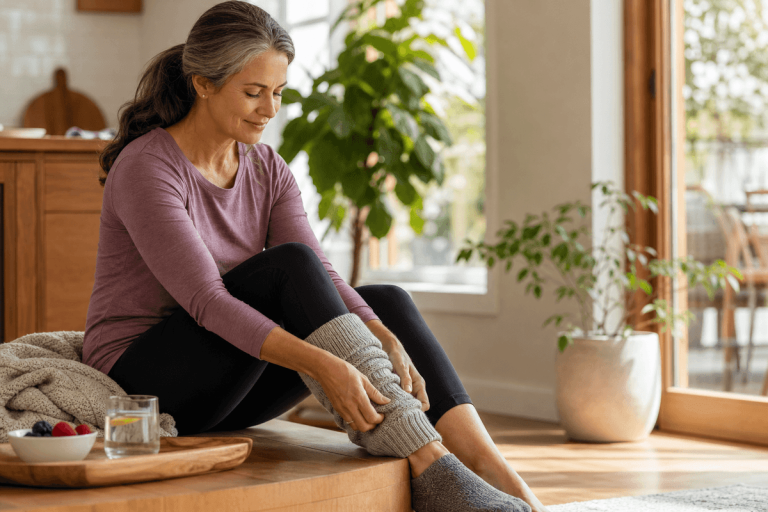
There was a stretch of time when my body felt louder than my life. Not dramatic. Just constant. I would wake up and feel that dull, stubborn ache in my hands before I even reached for the light. My knees complained going down the stairs. My brain felt slow, like it had to wade through wet wool before it could finish a thought.
By three in the afternoon, I was already bargaining with the day. Just get through dinner. Just answer one more message. Just make it to bedtime.
The strange part was how ordinary it all looked from the outside. I was still showing up. Still working. Still doing groceries, answering texts, making plans, smiling when I needed to. But inside, I felt rubbed raw. Heavy. Dimmed. Like my system was carrying around a low, invisible fire that never fully went out.
That was my first real understanding of inflammation. Not as a big scary word. As a feeling.
A puffy ring that suddenly felt tight on my finger. A morning where my ankles felt stiff for no clear reason. A conversation I should have followed easily, but couldn’t. A tiredness that sleep did not fix.
I had spent a long time treating all of those things as separate problems. Maybe I needed more coffee. Maybe I was stressed. Maybe I was just getting older. Maybe I needed to push harder. But that approach only made me feel more disconnected from myself.
The shift started when I stopped asking, “How do I force my way through this?” and started asking, “What is my body trying to tell me?”
That question changed everything.
⸻
What inflammation really looked like in my everyday life

It did not look like one dramatic crash. It looked like a hundred small frictions. I remember standing in the kitchen one morning, waiting for the kettle to boil, feeling the cold tile under my feet and thinking, Why do I already feel behind? The day had not even started. But my body felt like it had been carrying something all night.
My joints were the first thing I noticed clearly. Not severe pain. Just enough ache to make me move differently. Enough to make me hesitate before a walk. Enough to make ordinary things feel slightly harder than they should.
Then came the brain fog. That part bothered me almost more than the physical discomfort. I would lose simple words mid-sentence. Read the same paragraph twice. Forget why I had opened a tab. My mind, which used to feel quick and dependable, suddenly felt padded over. It made me feel less like myself.
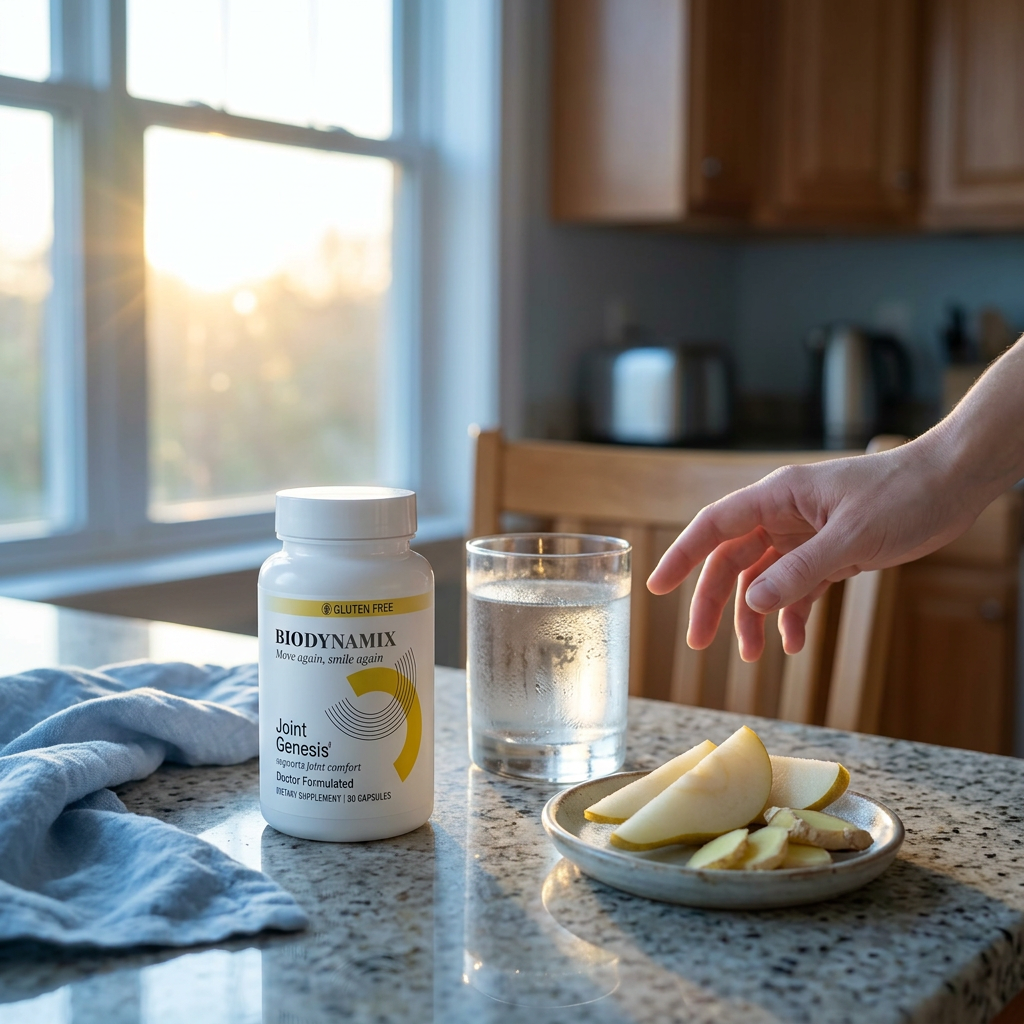
Refill What Aging Joints Lose
I wanted help for that dry, creaky morning feeling, not another fake burst of energy
Joint Genesis is built around Mobilee®, a patented complex of hyaluronic acid, collagen, and polysaccharides that the brand says helps raise hyaluronan in synovial fluid. That matters when your joints feel stiff, under-cushioned, and resistant first thing in the morning. I’d frame this as the formula that helps movement feel less dry and more fluid.
-
Targets low joint lubrication
-
Helps cushion stiff first steps
-
Supports smoother daily motion
And then there was the fatigue. The kind that makes even pleasant things feel like effort. The kind that steals the clean edge from your day. I was not lazy. I was not unmotivated. I was just depleted.
Once I could name the pattern, I started paying attention to what made it worse and what made it softer. That was the beginning of learning how to reduce inflammation naturally without turning my life into a rigid project.
How I started to reduce inflammation naturally
I did not overhaul everything in a weekend. I did not buy a cart full of powders and promise myself a brand-new life by Monday. I started smaller than that. Smaller, and more honestly.
I noticed that certain foods left me feeling swollen, wired, or flat. Sugary drinks gave me a short spark and then a hard drop. Refined snacks made me feel puffier by evening. Heavier processed meals seemed to sit in my body like a complaint.
So I began removing the foods that made me feel worse more often than better. Not with punishment. With relief.
I cut back on soda and sweet drinks first. That alone changed more than I expected. My energy stopped swinging so wildly. I felt less inflamed in that vague but undeniable way you can feel in your hands, face, and midsection.
Then I eased away from the foods that always seemed to leave me foggy: ultra-processed snacks, white pastries, the grab-and-go things that tasted easy and felt expensive later. In their place, I started building meals that felt calmer.
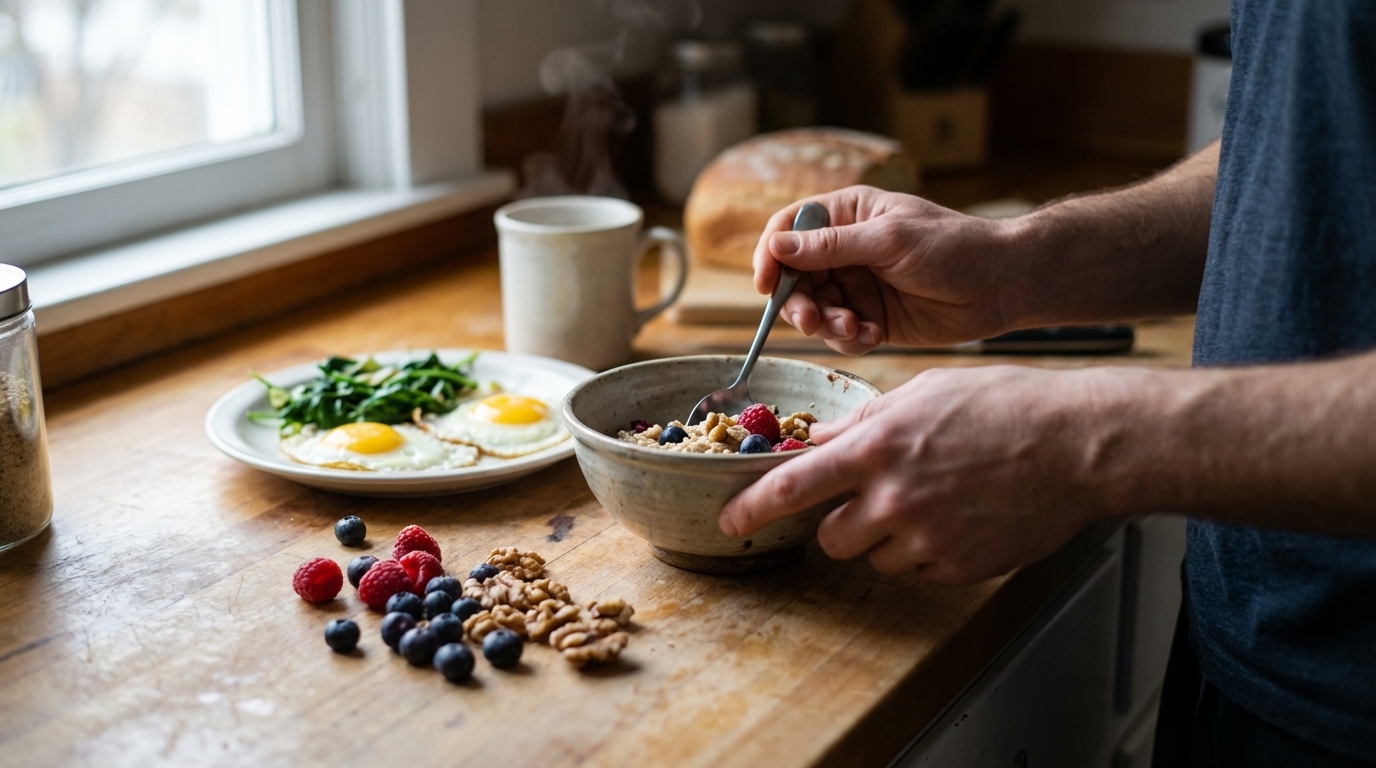
- Breakfast became oatmeal with berries and nuts, or eggs with greens.
- Lunch became salmon, olive oil, roasted vegetables, or leftovers that had actual color.
- Dinner leaned simple: chicken, sweet potato, broccoli, lentils, soups, rice, herbs, warm things that felt grounding.
I drank more green tea. More water. Less of anything neon or overly sweet. And I noticed something important: anti-inflammatory foods did not make me feel dramatically different overnight. They made me feel more like myself, a little at a time.
Because when you have been tired for a while, what you want is not hype. You want a body that feels easier to live in.
The food swaps that helped most
The biggest difference came from a few steady changes:
- sugary drinks out, water and green tea in
- refined carbs down, whole grains and fiber up
- processed meats less often, fish and simpler proteins more often
- random snacking down, nuts, fruit, and real meals up
- more colorful vegetables, especially leafy greens and broccoli
None of this felt glamorous. That is probably why it worked. My body did not need me to become perfect. It needed less friction.
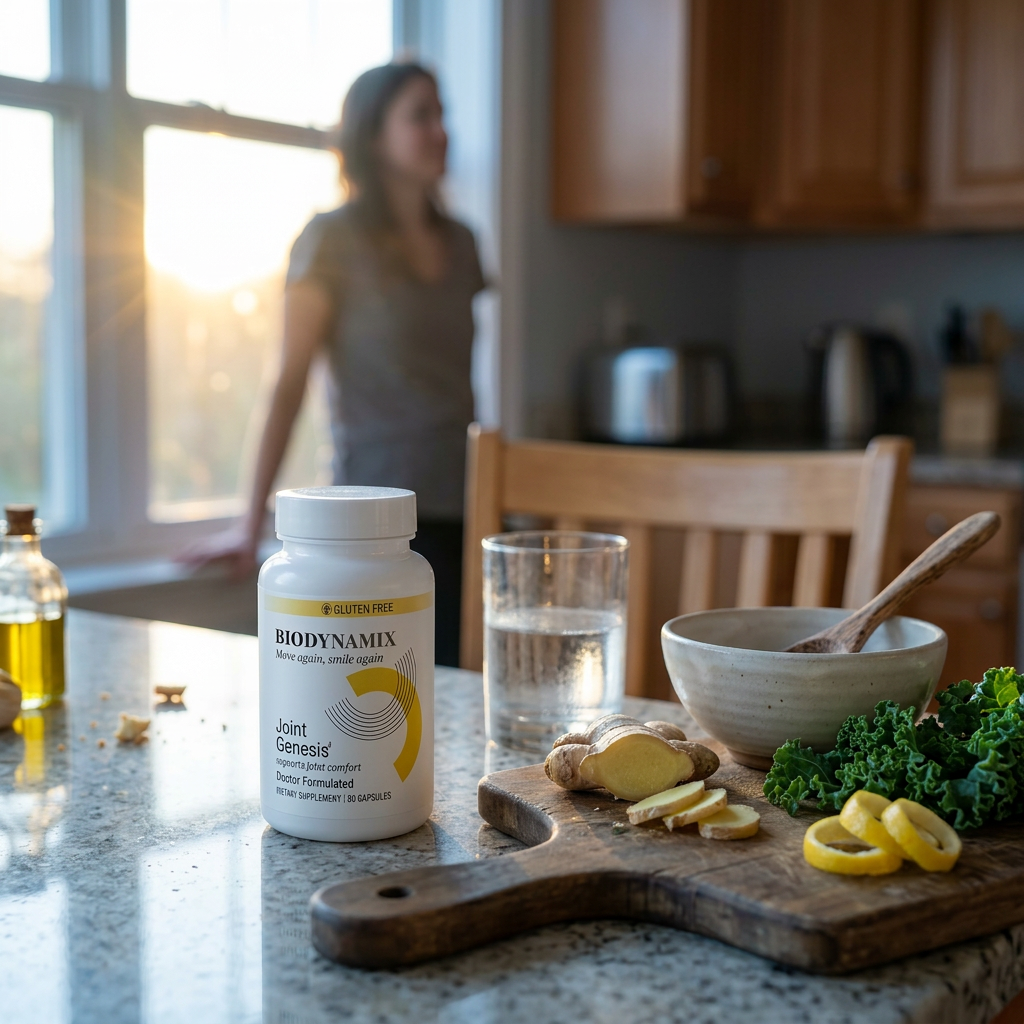
Calm The Angry Joint Cycle
When food helped but the stiffness still kept showing up, this is the layer I’d add
Joint Genesis pairs boswellia serrata with ginger root extract, two ingredients the product uses to support a healthier inflammatory response and more comfortable movement. For a blog about reducing inflammation naturally, this is the most direct product bridge: fewer angry-feeling joints, less background stiffness, and a body that feels easier to move through the day.
-
Supports a calmer joint response
-
Helps ease stiffness after sitting
-
Fits an anti-inflammatory routine
The puffiness began to ease. My joints felt less cranky in the morning. The afternoon crash softened. I was still tired sometimes, but it stopped feeling like I was dragging myself through wet sand every day.
⸻
The daily habits that gave my body room to recover

Food helped. But food was not the whole story. Stress was pouring gasoline on everything.
I could feel it in the way my shoulders stayed tight even when I was sitting still. I could feel it in the shallow way I breathed when my inbox got too full. I could feel it at night, when I was exhausted but somehow still buzzing.
So I stopped treating stress as something invisible. I started walking every day, even if it was only twenty or thirty minutes. Not power walking. Not punishing cardio. Just movement. Fresh air. The rhythm of my feet on pavement. The sound of leaves shifting overhead. That simple act lowered the noise in my body.
I added gentle stretching and yoga on the days my joints felt stiff. Some mornings, the most healing thing I did was reach my arms overhead, breathe deeply, and stop rushing the first ten minutes of the day.
I made sleep more serious too. That meant going to bed at roughly the same time. Dimming lights earlier. Putting my phone away sooner. Letting bedtime feel like a landing instead of a collapse.
Once my sleep got steadier, everything else became easier. My cravings were less intense. My patience came back. My body stopped feeling like it was bracing all the time.
And maybe most importantly, I stopped flooding myself with stimulation. Less doom-scrolling. Less multitasking. Less pretending my nervous system could handle endless input with no consequence. That part does not get enough attention, but it matters. A constantly overstimulated body rarely feels safe enough to settle.
The support I added when food and habits were not enough
There came a point where I had already cleaned up a lot. I was eating better. Sleeping better. Walking more. Stress was still there, but it was no longer driving the whole car. And yet I still felt like I needed one more layer of support, especially for the joint stiffness that kept showing up in the background.
That is when I came across Joint Genesis. I did not want anything flashy. I did not want a miracle. I wanted something that made sense for what I was actually feeling: that creaky, dry, resistant quality in my body that made movement feel older than it should.
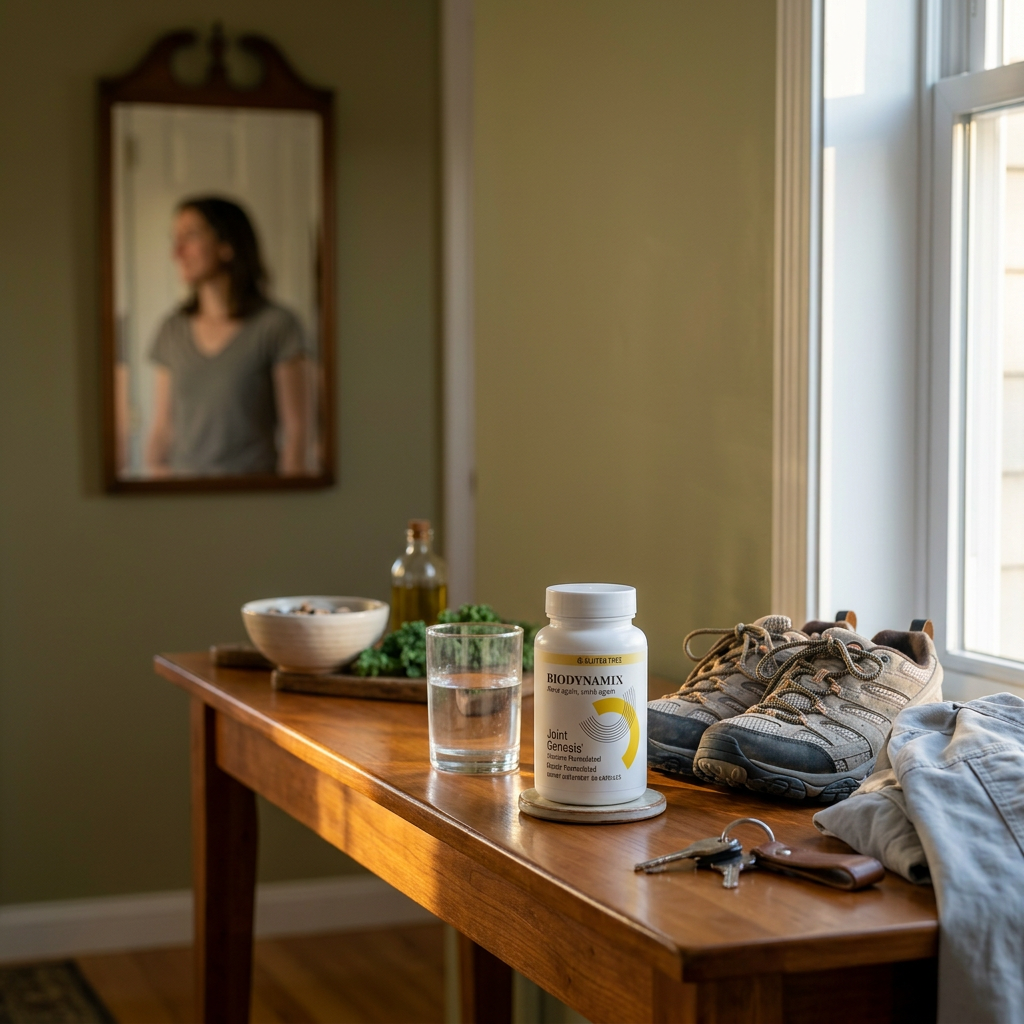
Build A Better Joint Routine
This is the one I’d place in the part of the story where the reader is ready to do something real
Joint Genesis also includes French maritime pine bark for antioxidant support and BioPerine® to help absorption, and it is sold as one capsule daily in a formula the brand describes as free from gluten, dairy, soy, nuts, eggs, and GMOs. That makes it an easy long-game choice for someone who wants support they can actually keep taking.
-
Adds antioxidant joint support
-
Helps the formula absorb better
-
Easy one-capsule daily habit
What I liked was how quietly it fit into the routines I was already building. It did not replace the work. It supported it.
I would get out of bed and realize I had not thought about my knees yet. I would go on a walk and notice my body felt more cooperative. I would finish the afternoon and still have enough energy left to cook, answer a text, maybe even enjoy the evening instead of just surviving it.
That is the kind of support I trust now. The kind that helps your day feel less effortful.
⸻
The emotional side of healing from inflammation
This was the part I did not expect. As my body started calming down, so did a quiet layer of dread I had been carrying.
When you feel inflamed for a long time, you start losing trust in your own consistency. You wonder which version of you is going to wake up. The foggy one? The achy one? The one who needs to cancel? The one who cannot think clearly by lunch? That unpredictability wears on you.
So when I say I got my energy back, I do not just mean physical energy. I mean I got some steadiness back. I got reliability back. I got the feeling of being able to meet my own life again without silently apologizing to it.
Not becoming some glowing wellness character. Just feeling clear enough to be present. Light enough to say yes to simple things. Rested enough to recognize myself.
What life feels like now

Now my mornings feel quieter. Not perfect. Just cleaner. I wake up without that immediate sense of resistance in my body. My thoughts arrive faster. My joints do not greet me like a complaint. I do not feel that same heaviness pressing on the edges of the day.
My energy feels steadier now, not spiky. More like a candle that stays lit than a match that burns out in a second. I still pay attention. I still know that stress, sleep, and food can shift how I feel. But I no longer feel trapped by that fact. I feel informed by it.
That is the real gift of learning how to reduce inflammation naturally. It is not about obsessing over every bite or every symptom. It is about creating a life that gives your body fewer reasons to struggle.
For me, that looked like simpler meals, fewer inflammatory foods, more walking, better sleep, less noise, and one support that helped my joints feel less stubborn along the way. Nothing extreme. Just enough consistency to let my body exhale.
And once it did, the difference was hard to miss.
More clarity.
More ease.
More energy for the parts of life that actually matter.
If you are in that season right now, where the brain fog feels thick, the fatigue feels personal, and your body seems to be arguing with you for no obvious reason, I hope this reminds you of something simple: You do not have to fix everything at once.
Sometimes the way back begins with a calmer breakfast. A walk after dinner. An earlier night. A little less sugar. A little more softness. A support that makes the day feel more manageable.
Sometimes healing does not arrive like a breakthrough.
Sometimes it arrives like your body finally saying, there you are.
Written by Elias Menden — for those who seek steadier energy.