The smoothie bowl looked perfect on my kitchen counter — deep purple açai, bright green spinach swirled through, hemp seeds scattered like confetti across sliced strawberries. Three years into plant-based eating, I had become the friend others asked for recipe advice. My pantry was organized by nutrient density. I meal-prepped like a professional.
But my reflection in the morning mirror told a different story. My skin had a grayness that good lighting couldn’t fix. My energy dipped predictably around 2 PM, no matter how much I’d eaten for lunch. And despite consuming what felt like half the produce section each week, something fundamental felt… missing.
“You’re eating beautifully,” she said, reviewing my food journal. “But are your cells actually receiving what you’re giving them?”
The Absorption Reality I Didn’t See Coming

I learned that plant-based nutrition operates on a different absorption model than I’d assumed. Certain nutrients in plant foods exist in forms that require extra steps for cellular uptake. Iron from spinach isn’t the same as iron from meat — it needs vitamin C present to become bioavailable. B12 isn’t naturally found in plants at all. And zinc, magnesium, and other minerals can be bound to compounds called phytates that actually inhibit absorption.
The realization felt like discovering I’d been trying to water my houseplants through a screen. The intention was right, the nutrients were there, but something was blocking the connection between my careful food choices and my cells’ actual needs.
Even more surprising was learning that gut health plays a central role in this process. The beneficial bacteria in my digestive system weren’t just processing fiber — they were actively involved in breaking down plant nutrients into forms my body could use. If my gut environment was struggling, my cellular nutrition suffered, regardless of how many nutrient-dense meals I consumed.
Ready to bridge the gap between beautiful plant nutrition and cellular energy?
The Signs My Body Was Sending

Looking back, the symptoms had been building gradually. That afternoon energy crash wasn’t just about blood sugar — it was my mitochondria, the tiny powerhouses in each cell, working harder to produce energy with inadequate fuel. My skin’s dullness reflected cells that weren’t receiving the antioxidants and minerals they needed for repair and renewal. Sleep became lighter, less restorative. My mind felt sharp in the morning but cloudy by evening, as if my brain cells were running on backup power.
Even my hair texture changed, becoming more brittle despite regular trims and expensive treatments.
The most telling sign was how quickly I felt hungry again after meals. I’d eat a substantial lunch packed with protein-rich legumes and healthy fats, only to find myself searching the kitchen for snacks two hours later. My cells were receiving bulk but not the specific nutrients they craved for optimal function.
Stop letting good nutrition get lost in translation at the cellular level.
What Traditional Approaches Were Missing
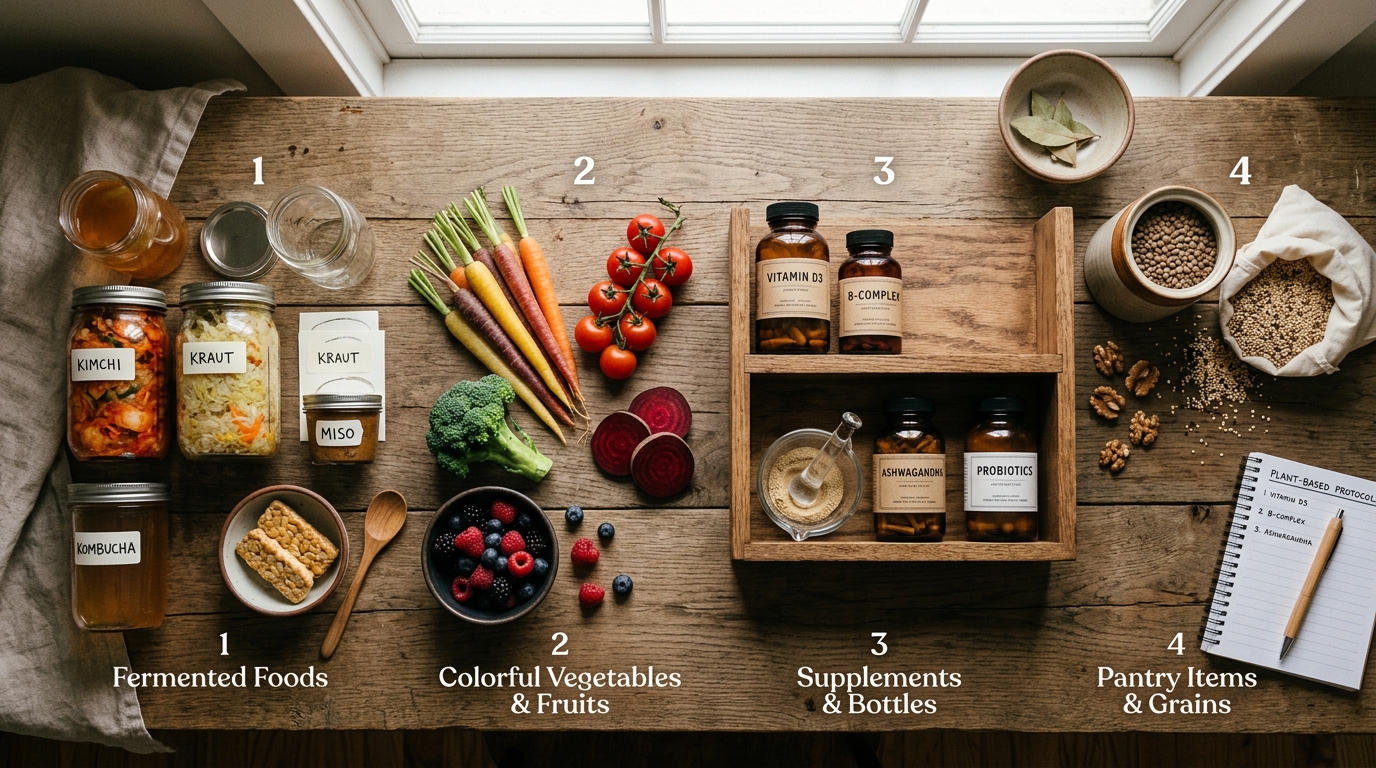
I tried the usual solutions first. More variety in my diet. Different cooking methods to break down tough plant fibers. Fermented foods to support gut bacteria. Strategic food combining — eating citrus with iron-rich greens, avoiding calcium supplements with meals to prevent mineral competition. These adjustments helped, but they felt like incremental improvements rather than the transformation I was seeking.
I was still operating under the assumption that if I could just optimize my diet perfectly, my cellular nutrition would follow.
The missing piece wasn’t just about what I was eating — it was about giving my cells the energy they needed to effectively utilize whatever nutrients did make it through. My mitochondria were working overtime to convert plant-based nutrients into usable energy, and they needed their own targeted support to function at their best.
Give your cells the energy support they need to thrive on plants.
The Cellular Energy Connection

The breakthrough came when I started thinking about nutrition from my mitochondria’s perspective. These cellular powerhouses don’t just convert food into energy — they’re actively involved in processing and utilizing every nutrient that enters my system. When mitochondria function optimally, they enhance my body’s ability to extract and use nutrients from plant foods.
This is where Mitolyn entered my routine. Rather than trying to force better absorption through diet alone, I began supporting the cellular machinery responsible for energy production and nutrient utilization. Mitolyn works directly with mitochondria to enhance their efficiency, creating the optimal internal environment for plant-based nutrients to be properly processed and utilized.
That 2 PM energy dip began to soften, replaced by sustained vitality that lasted through late afternoon.

Power Your Plant Nutrition
When your cells work efficiently, every plant-based meal becomes more nourishing.
Mitolyn supports your mitochondria — the cellular powerhouses that process nutrients into usable energy. Instead of forcing better absorption through diet alone, give your cells the targeted support they need to transform plant-based nutrition into sustained vitality. Feel the difference when your cellular machinery functions at its best.
- ✓ Energy that flows instead of crashes
- ✓ Plant nutrients your cells can actually use
- ✓ Natural cellular repair and renewal
How My Mornings Changed

Three months later, my morning routine looked similar from the outside — same açai bowl, same handful of supplements, same intention to nourish my body well. But everything felt different from the inside. My energy rose more naturally and sustained more steadily. The reflection in my bathroom mirror showed skin with renewed brightness, eyes that looked alert rather than searching for caffeine.
More importantly, food began to feel like fuel again rather than a puzzle I was trying to solve.
I stopped obsessing over nutrient timing and absorption strategies because my body seemed to be handling that conversion more efficiently. The plant-based foods I loved were finally connecting with my cellular needs. Even my relationship with hunger changed. Instead of the urgent, scattered hunger that had me reaching for quick snacks, I experienced the kind of satisfied fullness that comes when cells are properly nourished.
Transform how your body processes every nutrient you carefully choose.
The Deeper Shift in How I Think About Plant Nutrition

Supporting mitochondrial function changed how I approach plant-based eating entirely. I stopped viewing my diet as a series of nutrients to optimize and started seeing it as fuel for a complex cellular system that needed its own targeted support to function well. This shift moved me away from the exhausting cycle of dietary perfectionism toward something more sustainable and effective.
I still choose nutrient-dense foods and pay attention to absorption factors, but I’m no longer trying to solve cellular energy production through diet alone.
The most profound change has been in my confidence around plant-based nutrition.
I no longer second-guess whether I’m getting everything my body needs, because I can feel the difference in my energy, sleep, and overall vitality. My cells are receiving not just good nutrition, but the support they need to use that nutrition effectively.
Experience the confidence of knowing your cells receive complete support.
What Sustained Energy Actually Feels Like

Six months in, I recognize this version of myself — the one I was before I realized something was missing. My energy flows rather than peaks and crashes. Mental clarity extends well into the evening. Sleep comes easier and feels more restorative, as if my cells are properly recharging overnight. The visual changes followed the internal ones. My skin regained the kind of natural glow that no amount of expensive skincare could replicate.
My hair grew stronger and shinier. Even small cuts and bruises seemed to heal more quickly, evidence that my cellular repair mechanisms were functioning optimally.
But beyond the physical improvements, there’s a deeper sense of alignment between my values and my body’s needs. I can maintain the plant-based lifestyle I believe in while ensuring my cells receive the comprehensive support they require. It’s no longer a choice between ethical eating and optimal health — with the right cellular support, both are possible.
Looking at that same açai bowl on my counter now, I see more than just good food. I see nourishment that my body can actually access and use, supported by cellular machinery that’s functioning at its best. Sometimes the most important changes happen not in what we eat, but in how well our bodies can transform that food into lasting energy and vitality.
Written by Liora Menden — for those who seek cellular nourishment
Let your mitochondria work with your plant-based choices, not against them.