My hands gave it away first.
Not shaking — just slow. Unscrewing a jar lid took a beat longer than it should. Typing felt heavier by mid-afternoon, like my fingers had to think before they moved. I’d catch myself pausing between tasks, not because I didn’t know what to do next, but because something in my body needed a breath before it could shift gears.

I was thirty-eight. I slept well. I moved every day. I ate better than most people I knew. And still — this strange lag. Like a phone that shows a full battery but stutters when you open an app.
That’s the feeling, I think, that eventually drives people to search for the best supplements for cellular health. Not a crash. Not a diagnosis. Just a growing suspicion that something under the surface isn’t keeping pace with the life you’re trying to live.
⸻
The gap nobody talks about

There’s a conversation happening in health right now that most people haven’t heard yet. It’s not about diets. It’s not about stress management or sleep hygiene or gut bacteria — though all of those matter. It’s about what’s happening inside the cell itself.
Your body contains roughly 37 trillion cells. Each one runs its own energy cycle, its own repair schedule, its own waste removal. And inside most of those cells sit mitochondria — small, ancient structures whose only job is to produce ATP, the molecule your body uses as fuel for everything. When you’re young, mitochondria run hot and efficient. They churn out energy with very little waste. But as years pass — through normal aging, accumulated oxidative stress, environmental exposures — mitochondrial output slows. The cells still work, but they work harder for less.
That slowdown doesn’t show up on a blood panel. It doesn’t trigger a diagnosis. It shows up as a Tuesday where you can’t find the word you want. A Saturday where you sit on the edge of the bed for an extra forty-five seconds before standing. A Wednesday evening where cooking dinner feels like it takes willpower instead of just happening.
That’s the gap. The space between “nothing is technically wrong” and “I don’t feel like myself.”
What real cellular support looks like

Once I understood that mitochondrial decline was a thing — a measurable, well-documented thing — I started looking at what could actually slow it down or reverse it. Not in theory. In practice. A handful of compounds kept surfacing across research papers, longevity podcasts, and conversations with people who’d been down this road already.
- NAD+ precursors are one of the most established. NAD+ is a coenzyme required for hundreds of metabolic processes, including the ones that happen inside mitochondria. Levels decline significantly with age. Supplementing with nicotinamide riboside or NMN helps restore what time takes. It’s foundational — not dramatic, but foundational.
- CoQ10, particularly in its active ubiquinol form, works directly within the mitochondrial electron transport chain. It’s the compound that keeps energy production moving. Levels drop steadily after your twenties. Supplementing can support both energy output and recovery — especially cardiovascular and muscular recovery.
- PQQ is different from the others because it doesn’t just support existing mitochondria — it encourages the body to grow new ones. That process, called mitochondrial biogenesis, is rare among supplements. PQQ also acts as a potent antioxidant, protecting the very structures it helps build.
- Astaxanthin is a marine antioxidant that crosses the blood-brain barrier — something most antioxidants can’t do. It offers quiet, cumulative protection across brain, eye, skin, and cardiovascular cells. Its effects are slow and subtle, but the oxidative defense it provides reaches places other compounds simply don’t.
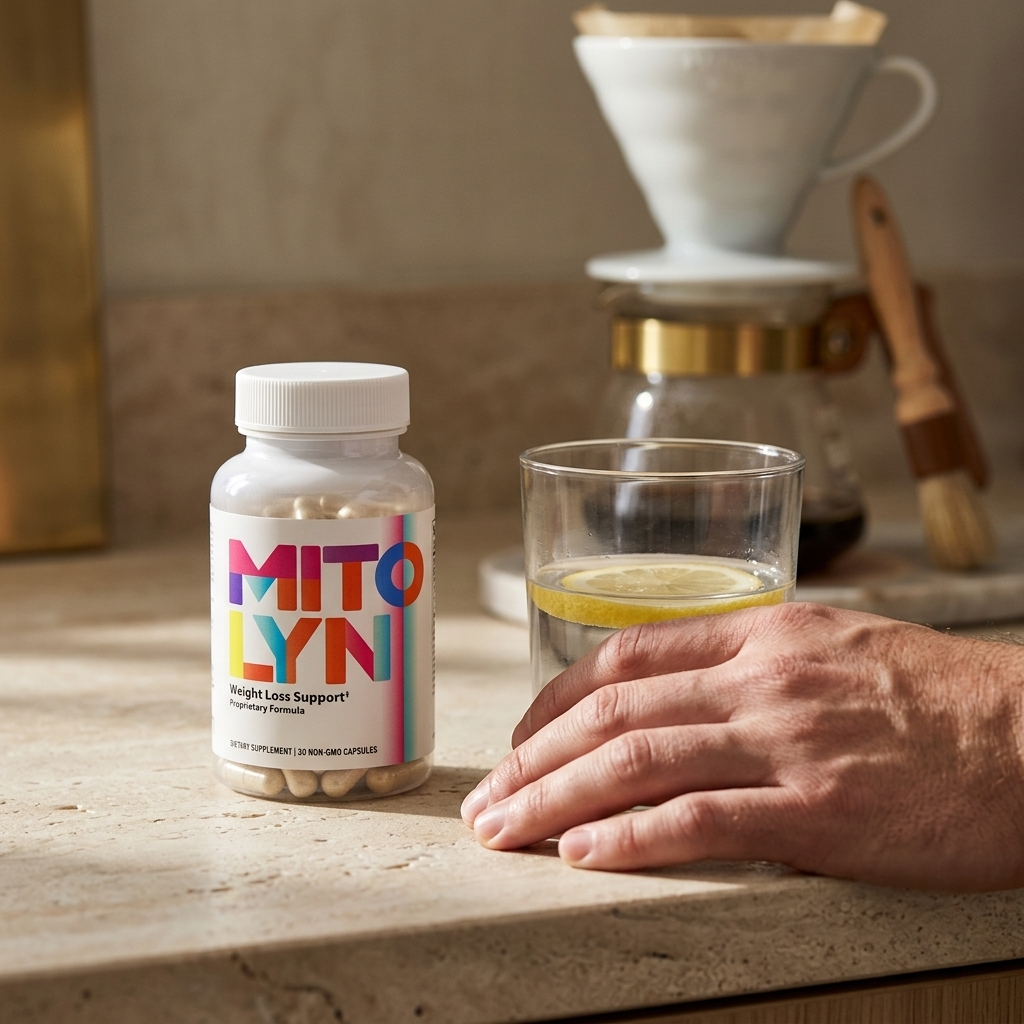
Energy That Starts Deeper
Your cells make the energy. This gives them what they’ve been missing
Mitolyn is a plant-based formula built around one idea: support the mitochondria-dense tissue your body already has. With Maqui Berry, Rhodiola, Schisandra, and Astaxanthin, it targets brown adipose tissue — the metabolically active cells that turn stored fuel into usable energy. Not a stimulant. Not a shortcut. A foundation.
-
Supports mitochondrial density where energy is actually produced
-
Natural compounds that work with your body’s existing biology
-
Designed for the gap between “healthy enough” and truly thriving
Each of these targets a different part of the cellular puzzle. Any one of them can help. But the thing that shifted the most for me came from a direction I hadn’t expected.
⸻
When the biology clicked

I’d been reading about mitochondrial density — not just how well your mitochondria work, but how many of them your cells actually have. Because it turns out that some of the most metabolically active tissue in the body isn’t muscle. It’s a kind of fat most people have never heard of.
Brown adipose tissue. Unlike white fat, which stores excess energy, brown fat is packed with mitochondria. That’s what gives it its color. Brown fat cells burn calories to generate heat, and in doing so, they activate some of the most energy-intensive cellular processes in the body. People with more active brown adipose tissue tend to have stronger metabolic function, more stable energy, and better cellular resilience. And the amount you carry isn’t fixed — it can be influenced.
That’s what led me to Mitolyn.
It’s a plant-based supplement designed to support mitochondrial function by targeting brown adipose tissue levels. The formula uses natural compounds — things like Maqui Berry, Rhodiola, Haematococcus, Schisandra, and Astaxanthin — to support the body’s ability to activate and sustain metabolically active brown fat. Which means more mitochondria-dense cells actively producing energy, not just storing it. I almost didn’t try it. I’d been let down before. But the mechanism made biological sense in a way that most supplements don’t, and I was tired of being tired in a way that sleep couldn’t fix.
What three months felt like

The first ten days — nothing perceptible. I’ve learned to read that as a good sign. Real cellular support doesn’t announce itself on day two.
Around week two, something shifted in my hands. That’s the only way I can describe it. The slowness I’d noticed — the lag between intention and grip — started to thin. I was opening jars without noticing. Typing felt fluid again. It wasn’t strength. It was responsiveness, like something in my cells had woken back up.
By the end of the first month, the mid-afternoon sag started lifting. Not disappearing — just lifting. The hours between two and four stopped feeling like a wall I had to climb and started feeling like a slope I could walk. I wasn’t amped. I wasn’t buzzing. I just had more of what I’d been missing: access to my own baseline.
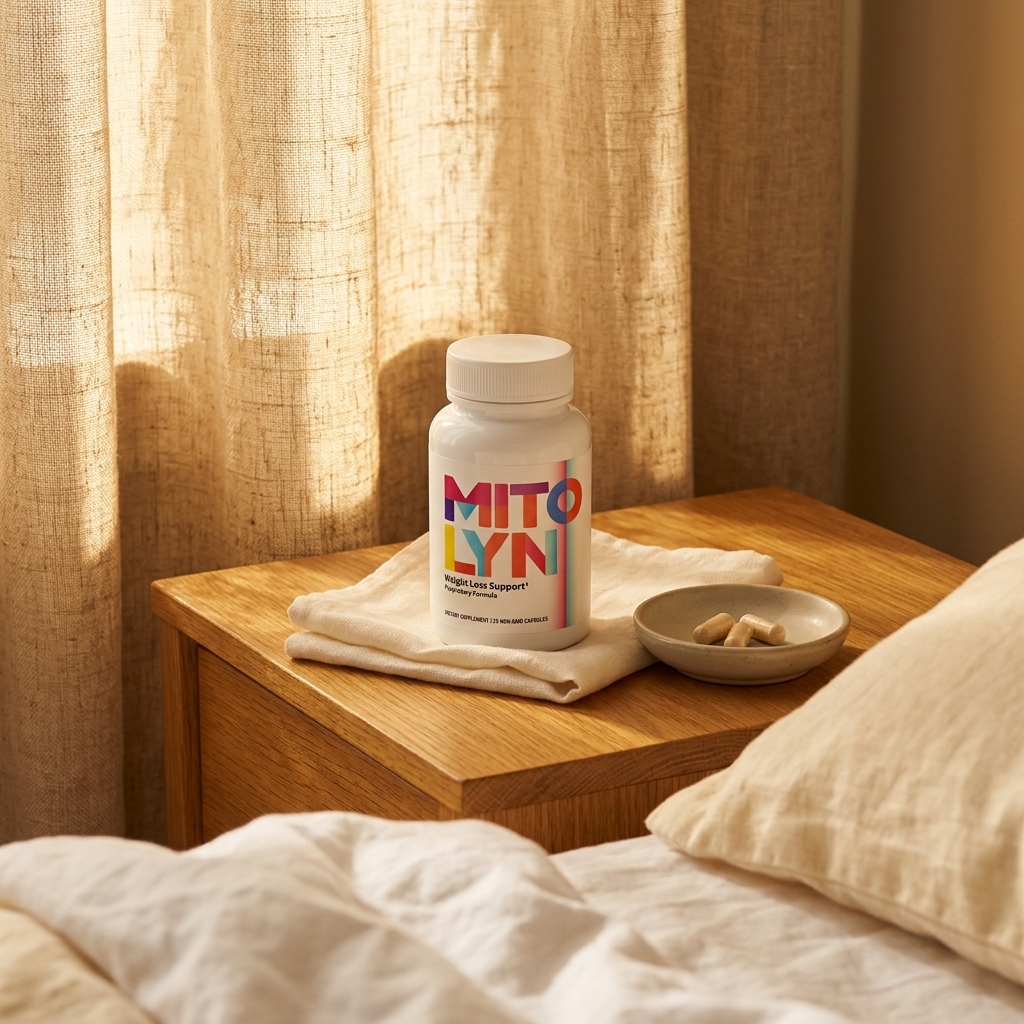
Your Floor Just Rises
Not a spike. Not a rush. Just more of what you’ve been missing
Mitolyn works at the level most supplements never reach — brown adipose tissue, where mitochondria are densest and energy production is most active. Maqui Berry, Rhodiola, Haematococcus, and Schisandra support the body’s ability to sustain metabolically active cells. The result isn’t dramatic. It’s structural. Your worst days get quietly better.
-
Targets the mitochondria-rich tissue that powers real, sustained energy
-
Plant-based ingredients that support what your body already knows how to do
-
Built for the long arc — not day-two miracles, but month-two shifts
Somewhere in the second month, I noticed something I hadn’t expected. My mornings were warmer. I’d been waking up cold for so long I’d stopped registering it. But the chill was gone. I’d get out of bed and my skin felt alive, present, circulating. It was such a small thing, but it was the one that made me stop and think:
This is what it feels like when your body is actually producing energy at the level it’s supposed to.
By month three, the shift wasn’t dramatic. It was structural. My floor had risen. The worst version of any given day was better than it used to be. I recovered faster from workouts. I held focus longer into the evening. I stopped thinking about energy entirely — which, if you’ve spent months monitoring your own fatigue, is its own kind of freedom.
⸻
What I’d say to someone standing where I was

If you’re the kind of person who’s already doing the work — sleeping enough, eating well, moving your body — and you still feel like your engine is idling lower than it should, the answer probably isn’t another habit change.
It might be the cells themselves.
Start with one compound that makes biological sense to you. Give it a real window — not five days, but five weeks. Pay attention to the edges of your day: the first twenty minutes after waking, the two o’clock stretch, the space between dinner and sleep. That’s where cellular health shows up first. Not as a burst. As a quiet recalibration.
For me, the thing that finally closed the gap was supporting mitochondrial density itself — not just feeding the mitochondria I had, but encouraging my body to activate more of them. Mitolyn was how that happened. Quietly. Without fanfare. Like something my body had been waiting for without knowing how to ask.
I still take it. It sits next to my morning water, next to the window where the light comes in. It’s become one of those things I don’t think about because I don’t have to.
And the hands? They’re fast again. Not young-fast. Just mine.
Written by Elias Menden — for those who seek steady energy and quiet strength.