
I was halfway through a smoothie—spinach, blueberries, walnuts—the whole brain-boosting diet lineup—and yet my mind felt like a browser with 37 tabs open. I could taste the goodness, but I couldn’t find the gear. If you’ve cleaned up your meals and still fight fog, I’ve been there.
Here’s the quiet truth: food lays the foundation; life pokes holes in it. Travel, deadlines, broken sleep. Supplements can patch the gaps—if you choose wisely. They aren’t pre-approved by the FDA the way drugs are, and labels can run ahead of evidence, so a little discernment goes a long way. (The FDA doesn’t approve supplements before sale and forbids disease-treatment claims; that’s on purpose so consumers look for quality and fit.
I spent a year testing what actually helped—stacking compounds that support neurotransmitters, stress resilience, and cellular energy. Below is the short list I still use.
Short answer: the best brain health supplements for focus usually help most when you already have the food basics in place and you know which problem you are trying to solve. Brain fog, recall slips, stress-heavy focus loss, and low-energy concentration are not the same pattern, so I try not to treat them with one louder capsule.
| Focus problem | Best supplement lane | What to check first |
|---|---|---|
| Brain fog after poor sleep | Start with omega-3 coverage and a calmer routine | Sleep debt still outranks any capsule. |
| Stressy, scattered attention | Adaptogen or nootropic support | Ask whether the day is overloaded before you add more inputs. |
| Forgetful, low-energy focus | B-vitamin coverage and food quality | Review diet quality and clinician guidance if symptoms persist. |
The 5 that ride with my brain-boosting diet

L-theanine (100–200 mg)
The calm-focus amino acid from green tea. It smooths the edges without dulling your drive. I like it with a little caffeine when I need clean concentration—no clenched jaw, just clarity.
Citicoline / CDP-Choline (250–500 mg)
Think of it as premium fuel for acetylcholine, the “remember-what-matters” messenger. I notice better recall on deep work days and less mental “static” when switching tasks.
Rhodiola rosea (200–400 mg)
Your stress buffer. On big-meeting mornings, Rhodiola helps me stay alert yet unruffled. I tend to run it for 4–6 weeks, then pause so it stays potent for me.
Omega-3s (focus on DHA)
You’re building membranes, not just moments. DHA-rich fish oil or algae oil supports the pliable, well-insulated wiring your neurons rely on. I aim for a daily dose that supplies several hundred milligrams of DHA, and let meals do the rest.
PQQ (10–20 mg)
Small acronym, big role: a cofactor linked to mitochondrial efficiency—the tiny engines that convert food and oxygen into usable energy. When my days get full, PQQ helps me feel “even” instead of empty.
Nootropics, fatty acids, and adaptogens—how they work together

Nootropics (like citicoline and PQQ-forward blends) are your quick-lift and deep-support duo—faster focus with better cellular housekeeping over time. Fatty acids (DHA) refurbish the hardware: flexible cell membranes and calmer inflammation signals, which tend to pay off across weeks, not hours. Adaptogens (Rhodiola) moderate the stress cascade so your brain keeps its rhythm when life doesn’t.
Together, they create a daily “arc”: fast clarity, long-game brain health, and resilience—without overdosing caffeine.
The one bottle that made this simple

After months of piecing together capsules, I wanted fewer steps and more synergy. That’s when I tried Neuro-Thrive—a formula that combines mitochondrial support (including PQQ) with classic memory and focus nutrients like Bacopa and Alpha-GPC. It fit the Iyomend way of thinking: repair the cell, and performance follows. It also meant one decision in the morning instead of five.
Industry roundups have put Neuro-Thrive among the top performers in its category, highlighting its mitochondria-first angle for cognitive support. That’s exactly what I felt—a steadier baseline, fewer jitters, more “I’ve got this.”
If you’re done guessing and want a clean, consolidated stack: Start where I did. Try Neuro-Thrive. It’s built to charge your cells and return your focus from the inside out.
How I stack my day with a brain-boosting diet

- Morning (7–8 AM): Coffee + L-theanine (to take the edge off) + Citicoline (switch on memory/drive) + Neuro-Thrive (my all-in foundation).
- Midday (12–1 PM): Rhodiola before lunch for poise under pressure; B-complex with food on heavier workload days.
- Afternoon (3–4 PM): If there’s a dip, I’ll sip matcha or do a second small L-theanine. Most days I don’t need extra caffeine because the base is solid.
Your rhythm might be earlier, later, or split—what matters is consistent cadence. Supplements can’t outrun a dysregulated day; they amplify good basics.
Why food still leads (and how supplements complete it)
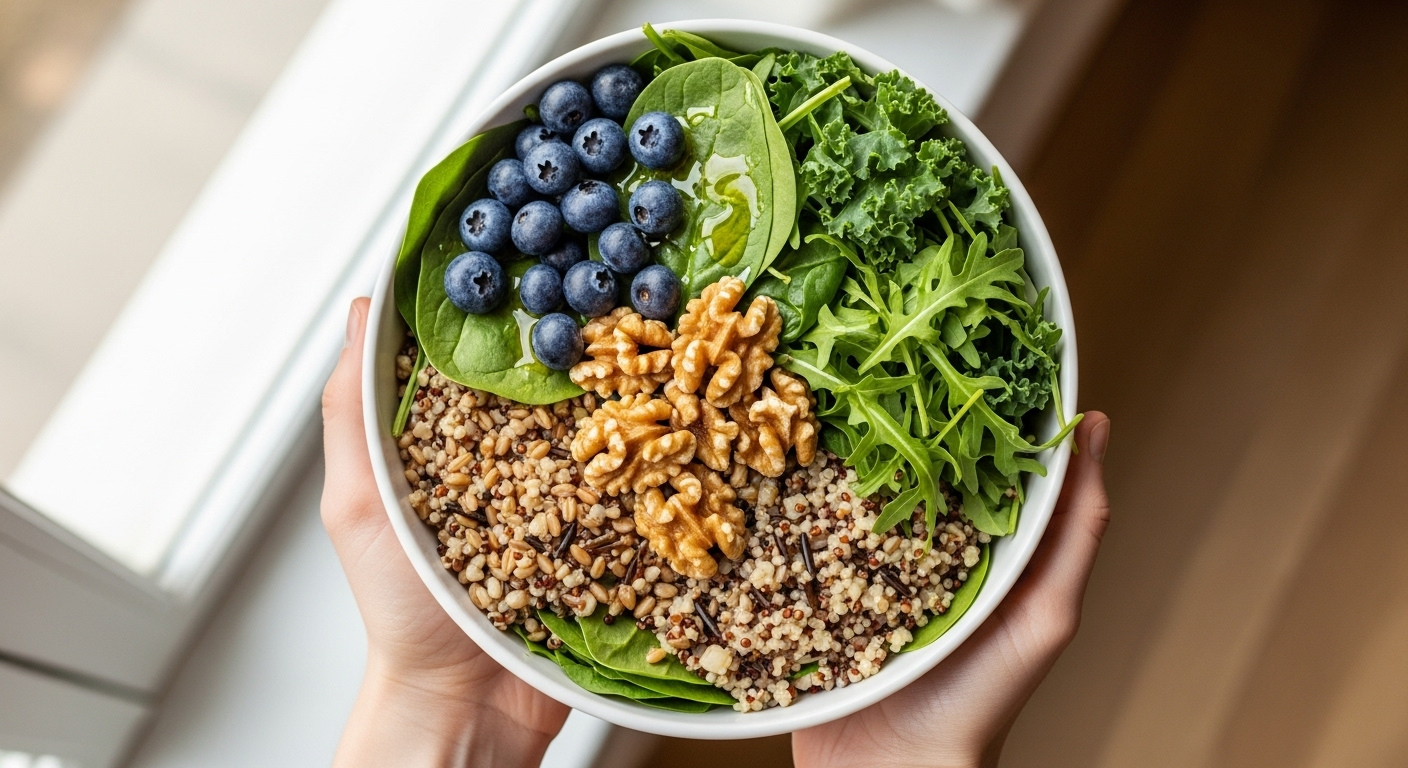
A brain-boosting diet is still the star: colorful plants, quality protein, smart fats, minerals your neurons drink like water. Supplements are the quiet scaffolding—filling the hard-to-reach gaps when travel, stress, or seasons punch holes in the plan. And remember, supplements aren’t pre-approved by the FDA and can’t claim to treat disease; buy intentionally, read labels, look for sane doses and clear disclaimers.
I am stricter on trust language whenever focus or memory is involved. The National Institute on Aging keeps the big picture honest in its guide to cognitive health: sleep, movement, blood pressure, and social connection still matter. The NIH Office of Dietary Supplements also has a clean consumer summary on omega-3s, while NCCIH’s page on using supplements wisely and the FDA’s explainer on dietary supplements are the right reminder that labels are not proof of results. If focus loss is sudden, comes with weakness, severe headache, speech trouble, or new confusion, do not treat that like a supplement problem.
Quick Q&A
How fast will I feel anything? Nootropics like citicoline or PQQ-forward blends can feel interesting within days to a week. DHA and adaptogens usually show their best over 4–8 weeks of steady use.
Can I take these together? Often, yes—in reasonable doses and with food as needed. If you’re on medication or have a condition, get a thumbs-up from your clinician.
Do I still need the brain-boosting diet if I supplement? Absolutely. Supplements fill gaps. The diet builds the house.
If you are still sorting the pattern, I would read the brain fog supplement guide, the diet for brain fog plan, and the healthy fats for brain clarity explainer before you buy a bigger stack. Those pages make the “food first, supplement second” logic easier to apply in real life.
Bring it home

Back to that smoothie morning. The ingredients were right; the energy wasn’t. Cleaning up my inputs helped, but stacking the right supports—and then consolidating them with Neuro-Thrive—finally gave my brain the calm, reliable stride I was after. If you’re standing in that same kitchen, spoon in hand, mind still buzzing, start here:
—
Written by Elias Menden — for those who seek clarity, strength, and steady focus.
The supplement rule I keep coming back to
Supplements earn their place by what they let you stop doing, not by what they let you do more of. The ones I still take are the ones that removed a daily fight I didn’t realize I was having — the magnesium that stopped my calves from cramping at night, the omega-3s that made my mornings feel less inflamed, the B-complex that smoothed out the 3 p.m. dip I used to reach for coffee to patch. Each one closed a small leak. None of them made me superhuman. All of them made the baseline more livable.
How I’d pick from this list today
If I were building this stack from scratch today, I’d pick one at a time, not all five at once. Two weeks per add. Track one thing: does my afternoon feel easier or the same? If easier, the supplement stays. If the same, it leaves. The five on this list are the ones that survived that test for me. Yours might be different. The process matters more than the list — because the list without the process is just another stack that’ll gather dust on a shelf.
The part of supplementing I most underestimated
The part most people underestimate isn’t the choosing. It’s the noticing. I’d pop a capsule, move on with my morning, and forget to track whether anything actually changed. Once I slowed down enough to pay attention — how my afternoon felt, whether my sleep got cleaner, whether my thinking sharpened — I started making better decisions faster. The better results didn’t come from a better stack; they came from a more attentive owner. Supplements work when you meet them halfway. They ask you to notice in order to earn their place, and the noticing is free.
Written by Elias Menden — for readers who want clearer focus without turning normal stress into a diagnosis.


