
I used to answer emails under a dim kitchen light at 10:43 p.m., spoon deep in a tub of “just a little” ice cream. I’d crawl into bed warm and wired. At 2:18 a.m., my mind would click back on like a hallway sensor light. By morning, my body felt smoky and slow.
Then I changed one small thing. I swapped the sugar for a simple evening rhythm: a balanced dinner, water earlier in the day, and a calm pre-sleep stack. Sometimes it was Greek yogurt with a few kiwis, sometimes chamomile and magnesium. Within days, my nights felt heavier—in the best way—and my recovery after workouts finally matched the effort I was putting in.
Why diet is the missing link in sleep quality
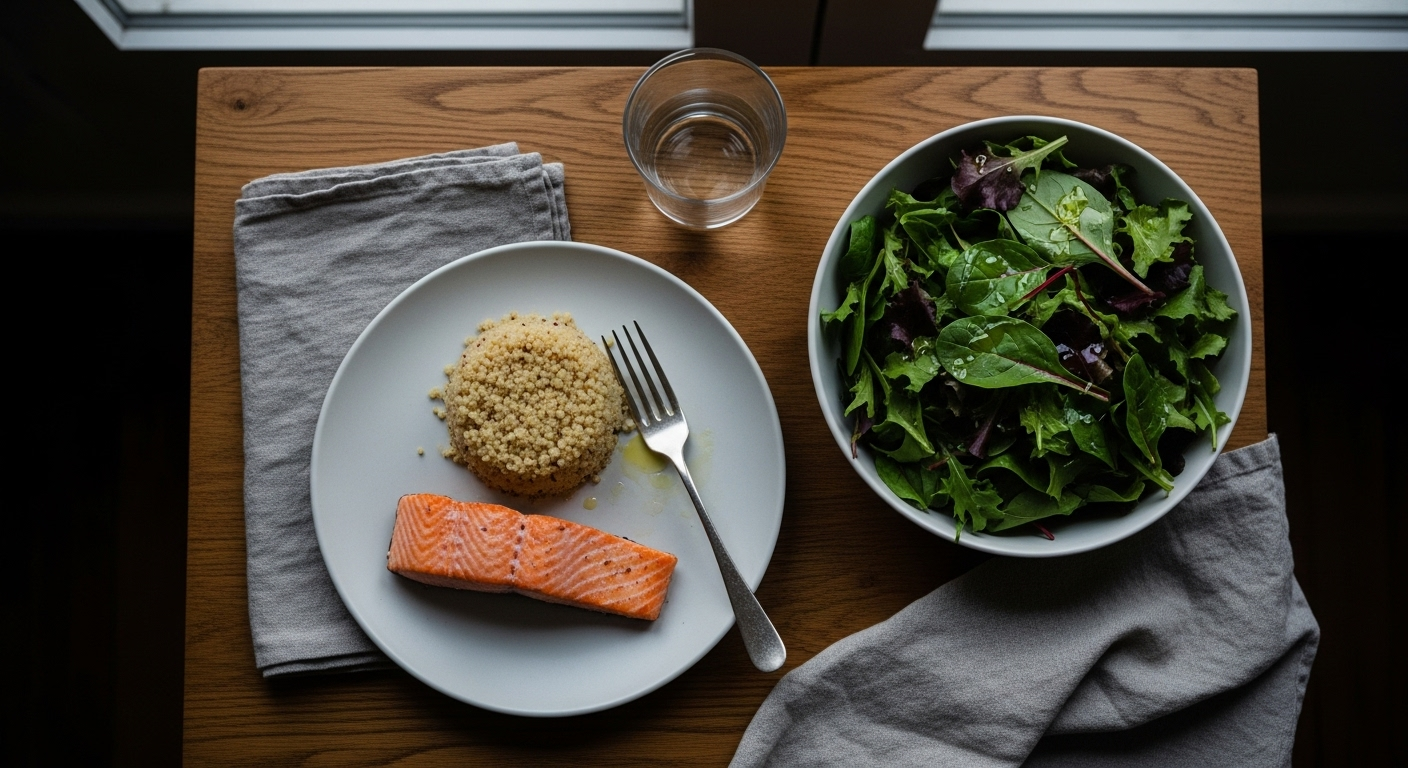
Sleep isn’t only a bedtime ritual; it’s a metabolic conversation. What you eat shapes hormones like serotonin, melatonin, and cortisol—the messengers that set your circadian rhythm. Diets loaded with sugar and saturated fats tend to fragment REM and make nights feel shallow. Fiber-rich, nutrient-dense meals do the opposite: they steady blood sugar and signal safety to your nervous system.
Here’s the evening pattern that changed my nights:
- Balanced dinner: lean protein, complex carbs, and healthy fats. Think salmon, quinoa, olive oil, and greens.
- No grazing late: stop eating 2–3 hours before bed so digestion winds down as your brain powers down.
- Smart hydration: sip steadily through the day, then taper an hour before lights out.
When I replaced late-night sweets with protein and calm carbs—Greek yogurt or kiwi—my sleep deepened and my morning mood evened out. That’s biohacking sleep at the simplest level: aligning food with biology.
The science behind biohacking sleep with food

Your cells want rhythm. Protein at dinner helps build the precursors for sleep hormones. Complex carbs guide tryptophan into the brain. Healthy fats keep blood sugar from spiking and crashing. All of it tells your body, “We’re safe. You can repair now.”
Four nutrients that prime your body for rest
- Tryptophan: in turkey, dairy, and eggs. Your body uses it to make melatonin naturally.
- Magnesium: the relaxation mineral—eases muscle tension and settles the nervous system.
- Omega-3s: anti-inflammatory fats that support hormone balance and recovery.
- Glycine: an amino acid that can promote a cooler, calmer body state at night.
A diet rich in these nutrients sets the stage for steadier sleep and better morning energy.
The sleep-support stack that works: where Resurge comes in

Even with great food, some nights your system needs help shifting from “on” to “off.” That’s where Resurge fits. It’s a gentle, nighttime formula designed to support deep, restorative sleep—the kind that does the real repair.
What I noticed when I added it about an hour before bed:
- Smoother descent: I felt the day loosen its grip.
- Deeper cycles: Sleep felt heavier, and I woke up clearer.
- Better recovery: Soreness faded faster; focus returned sooner.
Resurge doesn’t replace nutrition—it completes the rhythm. Food lays the foundation. Resurge helps your brain and body follow through.
If you’ve been feeling that same burnout I once had, start where I did. Try Resurge. It’s built to recharge your cells and rebuild your energy from the inside out.
Timing your meals and supplements for optimal sleep

Think of your evening like a sunset dimmer:
- Dinner: finish 2–3 hours before bed; include protein, greens, and slow carbs.
- Caffeine cutoff: stop by 2 p.m.; caffeine blocks adenosine, the “sleep pressure” signal.
- Supplements: magnesium and Resurge about 60 minutes before bed.
- Hydration: taper liquids in the last hour to avoid wake-ups.
This simple cadence aligns digestion with circadian rhythms so your body can slide into deeper sleep with less friction.
Create your personalized sleep biohacking routine

Your blueprint will be your own, but this framework helps:
- Track your meals, caffeine, and sleep for 7 days to find your baseline.
- Swap in nutrient-dense foods at night—kiwi, tart cherries, Greek yogurt, or a small protein bowl.
- Add Resurge to amplify deep sleep and overnight recovery.
- Experiment with timing—earlier dinners, dim lights, and a short breathwork session.
- Keep what works. Let the rest go.
Give it a couple of weeks of honest practice. Most people notice fewer awakenings, steadier mornings, and better recovery across work and training.
Final word: biohacking sleep is a biological reset

When you line up food, rhythm, and support, sleep stops being a mystery and becomes a practice. Dinner tells your hormones what to do. Your winding-down routine tells your nervous system it’s safe. And Resurge helps your brain drop into the deeper cycles where repair actually happens.
If you’re ready to take your sleep seriously, start tonight. Eat for calm, dim the noise, and support your deep cycles with Resurge. Biohacking sleep isn’t flashy—it’s consistent. But that consistency gives you back your mornings.
Written by Liora Menden — for those who seek soft strength, steady energy, and real rest.
h
e
s
i
n
g
l
e
t
i
m
i
n
g
s
h
i
f
t
t
h
a
t
m
o
v
e
d
m
y
s
l
e
e
p
m
o
s
t
:
s
t
o
p
p
i
n
g
d
i
n
n
e
r
t
h
r
e
e
h
o
u
r
s
b
e
f
o
r
e
b
e
d
.
N
o
t
b
e
c
a
u
s
e
o
f
c
a
l
o
r
i
e
s
—
b
e
c
a
u
s
e
o
f
d
i
g
e
s
t
i
o
n
.
W
h
e
n
t
h
e
b
o
d
y
i
s
s
t
i
l
l
p
r
o
c
e
s
s
i
n
g
a
m
e
a
l
a
t
l
i
g
h
t
s
–
o
u
t
,
d
e
e
p
s
l
e
e
p
r
u
n
s
s
h
o
r
t
.
M
o
v
e
d
i
n
n
e
r
e
a
r
l
i
e
r
,
e
v
e
n
b
y
a
l
i
t
t
l
e
,
a
n
d
t
h
e
f
i
r
s
t
h
a
l
f
o
f
t
h
e
n
i
g
h
t
d
e
e
p
e
n
s
i
n
a
w
a
y
a
s
l
e
e
p
t
r
a
c
k
e
r
c
a
n
a
c
t
u
a
l
l
y
s
h
o
w
y
o
u
.
S
m
a
l
l
c
h
a
n
g
e
,
o
u
t
s
i
z
e
d
r
e
t
u
r
n
.
The timing that made the biggest difference
The single timing shift that moved my sleep most: stopping dinner three hours before bed. Not because of calories — because of digestion. When the body is still processing a meal at lights-out, deep sleep runs short. Move dinner earlier, even by a little, and the first half of the night deepens in a way a sleep tracker can actually show you. Small change, outsized return.


