The breaking point wasn’t dramatic.
It was a Wednesday morning when I realized I’d been mentally sorting my weeks into “can do” and “can’t do” categories without even thinking about it.
- Block off Tuesday for the presentation—that’s a good week.
- Reschedule the dinner—that’s a bad week.
I was living like I had two operating systems, and I never knew which one would boot up.
The confusing part? Nothing external had changed. Same routines. Same sleep schedule, more or less. Same green smoothies I kept promising myself would fix everything.
But every couple weeks, I’d wake up feeling like someone had turned down my brightness settings. Not sick. Not depressed. Just… dimmed.
And the worst part wasn’t the tiredness itself.
It was the creeping suspicion that maybe I just wasn’t built for consistency.
When I finally started learning how to balance hormones for energy, it wasn’t some lightning-bolt revelation. It was quieter than that. More like adjusting my eyes to a pattern that had always been there, waiting for me to notice it.
My energy didn’t skyrocket.
It just stopped ambushing me.
My energy didn’t skyrocket.
It just stopped ambushing me.
The pattern I kept missing
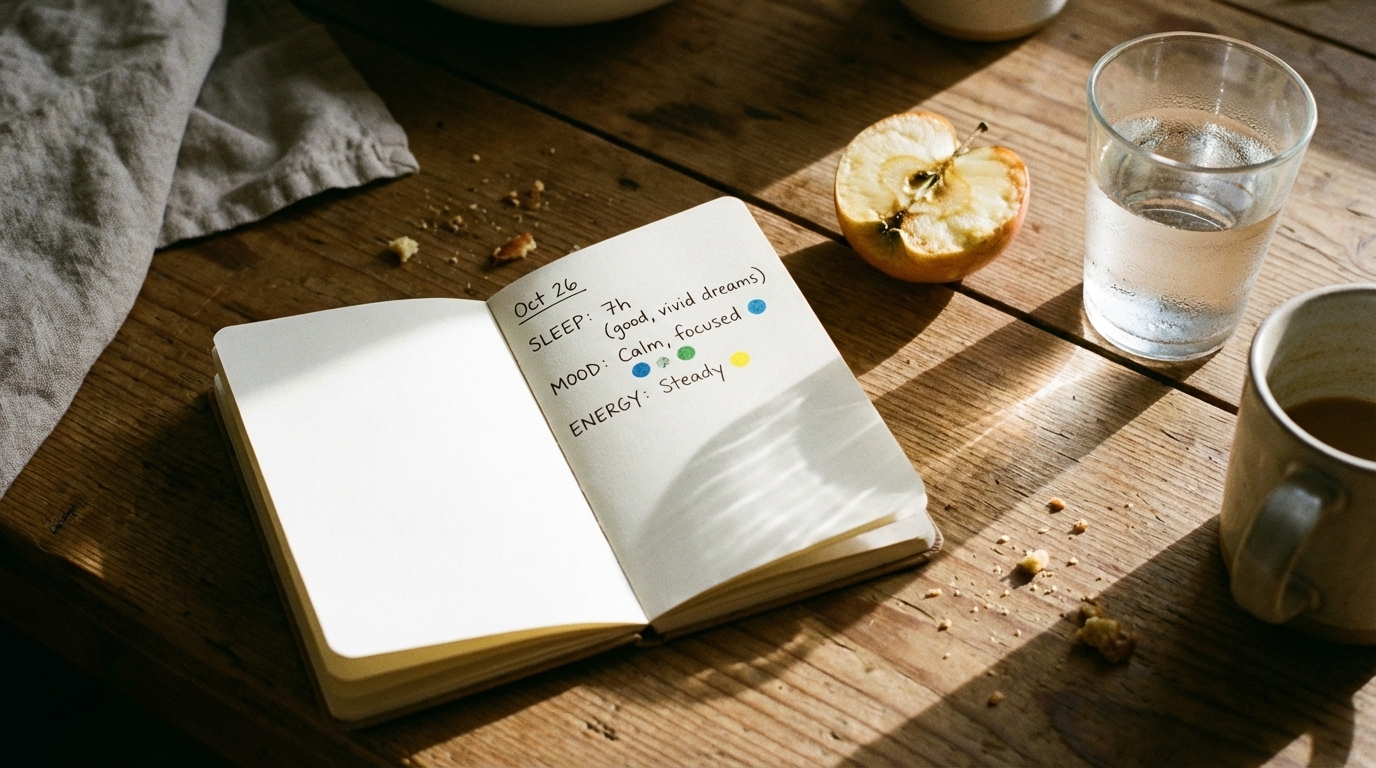
I never called it “hormonal.” That word felt too clinical, too outside my control.
But when I started actually writing things down—not obsessively, just casually noting how I felt each day—the pattern became impossible to ignore.
- Early cycle days: foggy, inward, needing extra time to get moving.
- Days 8–14: a gradual brightening. Conversations felt easier. My to-do list didn’t feel like a threat.
- Mid-cycle: the sweet spot. Everything clicked. I could handle noise, people, decisions, all of it.
- Days after ovulation: a slow descent. Shorter fuse. Stronger cravings. That specific 3 p.m. feeling where lying on the floor seemed like valid self-care.
Once I could see it laid out, week after week, I stopped wondering if I was imagining things.
This wasn’t mood swings. This was my body moving through its monthly weather system.
Estrogen climbs and falls. Progesterone rises and drops. Cortisol responds to everything—stress, sleep, that argument you’re replaying at midnight. When these hormones shift, so does everything downstream: energy, focus, appetite, resilience.
The problem wasn’t that my hormones were changing.
The problem was that I kept expecting myself to stay the same.
What happened when I stopped resisting the rhythm
I didn’t approach this like a project. More like an experiment in being kinder to myself.
Instead of forcing the same intensity every single week, I started asking: What does this week actually have capacity for?
Not as an excuse. As information.
I tracked only what mattered.
Not ten metrics. Three: energy level, sleep quality, mood.
That was enough to see my month’s shape. And once I could see it, I could plan around it instead of crashing into it.
I moved my hard things to my high-capacity days.
I used to schedule important calls and tough conversations randomly, then beat myself up when I felt shaky or scattered.
Now I aim for follicular and ovulation phases when my brain naturally has more bandwidth.
I changed how I moved, not whether I moved.
Some weeks my body wants to sweat and push. Other weeks it wants to stretch and breathe.
Matching the intensity to what I actually had—instead of what I thought I should have—stopped feeling like giving up and started feeling like respecting the reality I was working with.

Steady Energy, All Month
Stop losing a week to the “dimmed” days
Thyrafemme Balance is a daily formula made for women’s thyroid and hormone rhythm support. If your energy flips on you mid-month, this is your baseline builder—simple, consistent, and easy to keep. Take it daily and give your body the steady support it’s been asking for.
-
Smoother mornings with less fog
-
More even mood in the late-cycle stretch
-
Fewer “crash and crave” afternoons
That shift alone gave me more consistent energy than any motivational quote ever did.
The food shift that stabilized everything

Here’s what surprised me most: the biggest lever wasn’t what I ate.
It was when and how I ate relative to where I was in my cycle.
I’d been approaching nutrition like it was one-size-fits-all. But my body didn’t want the same fuel every week.
Skipping breakfast in my luteal phase? Blood sugar chaos by 11 a.m.
Eating only salads during my period? I’d be hunting for snacks an hour later.
Once I started matching my meals to my hormonal phase, the crashes smoothed out.
Early cycle (follicular)
Light, fresh, energizing. My appetite was smaller anyway, so I leaned into it.
Fruit, grains, lighter proteins. Simple meals that didn’t weigh me down.
Mid-cycle (ovulation)
My body wanted color and crunch. I ate more vegetables, drank more water, kept things bright.
This was my “yes, I’ll have the salad and actually enjoy it” week.
Late cycle (luteal)
This is where I used to lose it. If I didn’t plan ahead, I’d ricochet between cravings all day.
Now I anchor with slower-burning foods: oats, roasted vegetables, rice bowls, soups that feel grounding.
I prioritize protein in the morning because skipping it made the afternoon slump brutal.
And magnesium-rich foods when I remember them—dark leafy greens, pumpkin seeds, actual good chocolate.
Menstrual phase
Warm, mineral-dense, gentle. Lentils, beans, broth-based meals.
Less grabbing, more preparing something that feels nurturing.
None of this is rigid.
But having a loose framework stopped the daily guessing game of “why do I feel terrible after eating?”
The evening routine that changed my sleep (and my cortisol)
If you’ve ever been bone-tired but also somehow wired, you know this feeling.
My luteal phase didn’t just bring fatigue. It brought a restless mind that wouldn’t settle.
I’d lie in bed running through tomorrow’s problems like I was prepping for a test.
I realized: my cortisol wasn’t getting the memo that the day was over.
So I started treating evenings differently. Not as a crash zone, but as a transition space.
Small changes that added up:
- Lights lower after 8 p.m.
- Phone charging in another room (even just across the room helped)
- A warm shower that released the tension I’d been carrying in my shoulders
- Five minutes writing down whatever my brain was trying to solve so it didn’t have to solve it at 2 a.m.
When your stress hormones stay elevated, everything downstream suffers. You can eat perfectly, supplement carefully, and still feel like you’re moving through quicksand if your nervous system never downshifts.
I didn’t need more productivity hacks.
I needed permission to wind down.

Less Wired. More You.
If your late-cycle nights feel loud, don’t white-knuckle it
Thyrafemme Balance is built for women who want steadier energy and mood through the month. Add it to your daily routine and support your thyroid and hormonal rhythm—especially during the final week when you usually feel off. Keep it simple: take it daily, stay consistent, feel the difference in your baseline.
-
Helps late-cycle days feel more manageable
-
Supports a calmer, steadier mood
-
Encourages consistency without forcing intensity
The steady support I didn’t expect to matter so much

I’m not going to oversell this, because that’s not what happened in my experience.
But I can tell you what I noticed.
My luteal phase—that final week before my period—used to feel like trying to function with the sound turned down. I could still do everything, technically. But every task took more out of me.
A friend mentioned Thyrafemme Balance, a formula designed for women’s thyroid and hormonal rhythm support.
I didn’t leap into it expecting transformation. I tried it the way I approach most things now: with low expectations and consistent follow-through.
What I noticed wasn’t fireworks.
It was steadiness.
Mornings felt less like wading through fog. My mood held more stable in that final pre-period stretch.
The afternoon energy dip didn’t vanish, but it softened into something manageable.
I felt more like myself, even during the part of my cycle where I used to feel most disconnected.
And that mattered because the luteal phase was where I’d spiral into doubt. Where I’d question whether I was capable of anything at all.
Having something in my corner that created a baseline—not excitement, just reliability—made the whole month feel less volatile.
It didn’t replace the other changes. It supported them.
And that’s the kind of help that actually lasts.
What I wish I’d known sooner
When friends describe that same exhausting pattern—capable one week, drained the next—I don’t tell them to power through.
I tell them to look for their rhythm first.
Not to shrink their life around it. But to stop being constantly surprised by their own capacity.
If you’re working to balance hormones for energy, here’s what actually moved the needle for me:
- Track your cycle as data, not judgment
- Adjust your movement to match your actual energy, not your ideal energy
- Eat in a way that prevents the crash, especially in your luteal phase
- Treat your evening routine as part of your energy strategy
- Consider one reliable support that aligns with what your body’s asking for
And if your cycle is irregular? You can still track your own signals—sleep, appetite, mood shifts, energy patterns.
Your body still communicates, even when the calendar doesn’t cooperate.
⸻
Where this leaves me now

My cycle didn’t become seamless. I still have low-energy days. I still crave comfort food. I still feel more tender some weeks than others.
But I don’t feel blindsided anymore.
That’s the shift that matters most.
⸻
I stopped treating inconsistent energy as a character flaw and started treating it as information. Information I could work with instead of against.
⸻
And yes—Thyrafemme Balance became part of that support structure, especially during that final week when I used to feel most depleted. Not as a cure-all. As a steady presence that made the whole cycle more navigable.
If you’ve been trying to decode your own energy patterns and you’re tired of feeling unreliable to yourself, I hope this offers something useful.
Not pressure.
Perspective.
Because once you learn to balance hormones for energy, you stop chasing the version of yourself that only shows up half the month… and you start building a steadiness you can actually count on.
Written by Liora Menden — for those who seek steadiness.
Related reading
- How I Finally Learned to Support Hormones for Weight Loss (and Stopped Fighting My Body)
- Hormones and Weight Gain: The Day I Stopped Treating My Body Like a Math Problem
- Fatty Acids for Cellular Energy: What the Science Quietly Changed in Me
- I Spent Two Years Feeling Like My Body Was Betraying Me—Here’s What Natural Cortisol Regulation Actually Changed