Three months ago, I caught my reflection in a department store mirror under those unforgiving fluorescent lights, and something stopped me cold. The woman staring back looked tired in a way that had nothing to do with sleep. Her skin had that dull, reactive quality that speaks of something deeper than surface-level neglect. The fine lines around her eyes seemed to have multiplied overnight, and there was a puffiness that no amount of jade rolling could address.
That woman was me, and in that moment, I realized I had been asking the wrong questions entirely. Instead of wondering which new serum might help, I started asking why my skin had suddenly begun aging faster than my actual years.
The answer, as it turned out, was living in my digestive system.
The Morning Your Skin Stops Cooperating

It starts subtly. You wake up one morning and notice your complexion looks a little less bright than usual. Maybe there’s a small breakout where you never used to get them, or the area under your eyes seems more shadowed despite a full night’s rest. You attribute it to stress, hormones, or perhaps that new face wash you tried.
But then it continues. Your skin becomes more sensitive, reacting to products that never bothered you before. The texture changes—not dramatically, but enough that your usual makeup doesn’t sit quite right. Your pores seem more visible, and that natural glow you once took for granted starts requiring more and more effort to achieve. You begin investing in better creams, more targeted treatments, expensive facials.
Yet despite your efforts, your skin continues this subtle rebellion, aging at a pace that feels disconnected from the care you’re giving it.
What you’re witnessing isn’t just the natural passage of time—it’s the external manifestation of an internal conversation gone awry.
Ready to address the real source of your skin concerns?
The Conversation You Never Knew Was Happening

Your gut and your skin are in constant communication, though this dialogue happens far below the level of conscious awareness. Through a complex network of neural pathways, immune responses, and chemical messengers, your digestive system sends continuous updates about its state to every other part of your body—including your largest organ, your skin. When your gut is functioning optimally, this conversation supports skin health in remarkable ways. Beneficial bacteria produce compounds that reduce inflammation throughout the body.
A healthy intestinal lining prevents harmful substances from entering your bloodstream, where they might trigger immune responses that show up as skin irritation or premature aging. Your digestive system also determines how well you absorb the vitamins and minerals your skin needs to repair itself, maintain elasticity, and produce the collagen that keeps it looking youthful.
But when digestive health declines—whether from stress, poor diet, medication use, or simply the natural changes that come with age—the tone of this gut-skin conversation shifts dramatically.
Your skin has been trying to tell you something important.
What Digestive Distress Looks Like on Your Face
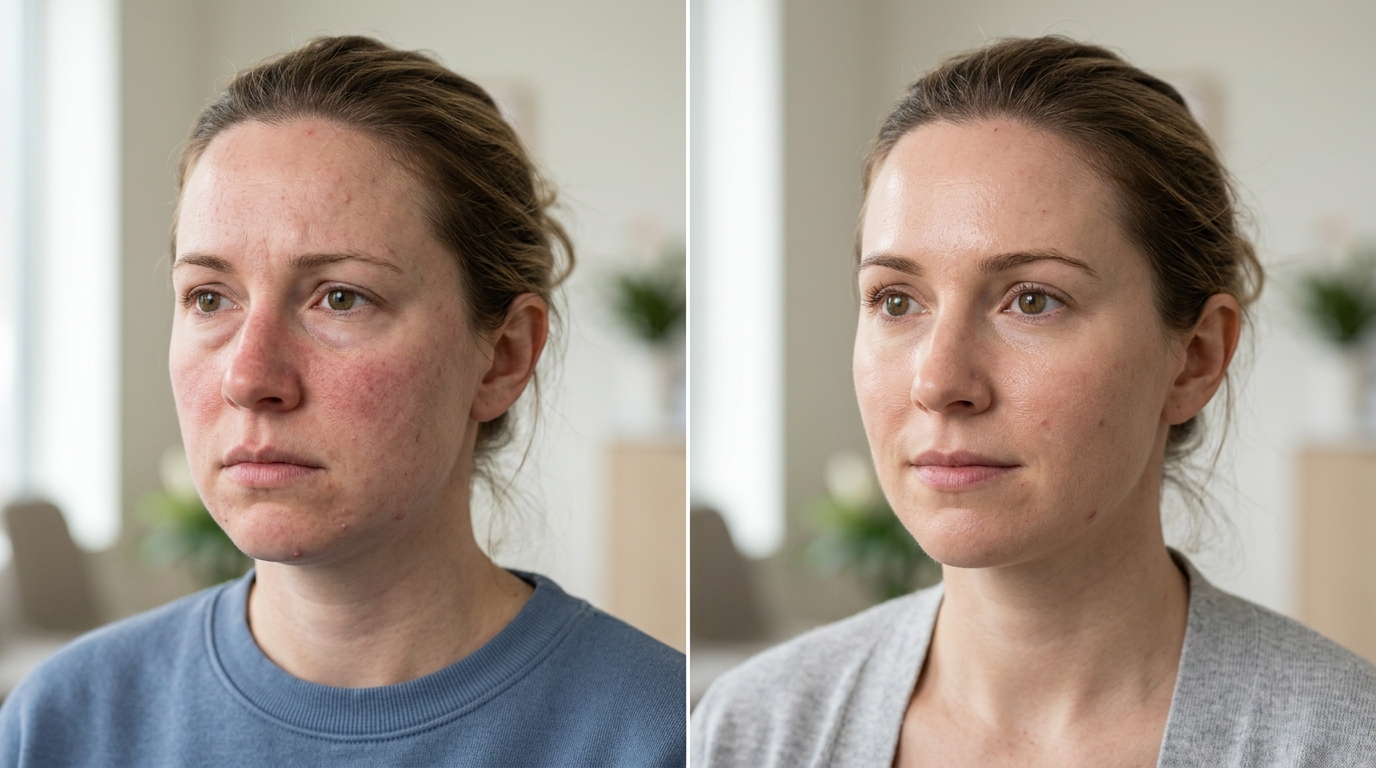
The signs are more obvious than you might expect, once you know what to look for. That persistent puffiness, particularly around the eyes, often reflects inflammation originating in the digestive tract. The dullness that no amount of exfoliation seems to address frequently stems from poor nutrient absorption, leaving skin cells without the building blocks they need to regenerate effectively. Sudden sensitivity to products you’ve used for years typically indicates that your gut lining has become compromised.
Those fine lines that seem to deepen overnight often accelerate when chronic inflammation breaks down collagen faster than your body can produce it. Even changes in skin tone and texture frequently trace back to digestive imbalances. When harmful bacteria overgrow in the gut, they produce toxins that must be eliminated through alternative routes—including your skin.
Perhaps most telling is when multiple skin issues appear simultaneously. If you’re dealing with dryness and breakouts, sensitivity and dullness, or inflammation and premature aging all at once, your digestive system is likely struggling to maintain the delicate balance your skin depends on.
Stop treating symptoms and start nurturing the foundation of radiance.
Why Your Expensive Skincare Routine Isn’t Enough

I spent months—and considerable money—trying to address what I thought were surface-level skin concerns. High-end serums promising to boost collagen production. Professional treatments designed to resurface and rejuvenate. Supplements targeting skin health specifically, hoping to feed my complexion from within. Each product worked to some degree, but the improvements were temporary and incomplete.
I would see initial progress, only to watch my skin gradually return to its previous state of subtle rebellion. The expensive creams could temporarily plump fine lines but couldn’t address why those lines were forming so rapidly.
The breakthrough came when I realized I was treating symptoms rather than addressing the source. All the topical care in the world couldn’t compensate for the inflammatory cascade happening inside my body. My digestive system wasn’t processing nutrients effectively, wasn’t maintaining the bacterial balance my skin needed to thrive, and wasn’t providing the internal environment that could support lasting skin health.
This isn’t to say that good skincare doesn’t matter—it absolutely does. But when your gut-skin axis is compromised, even the most sophisticated external care becomes an uphill battle against internal dysfunction.
Restore Your Inner Glow
When your gut thrives, your skin shows it in ways no cream can replicate.
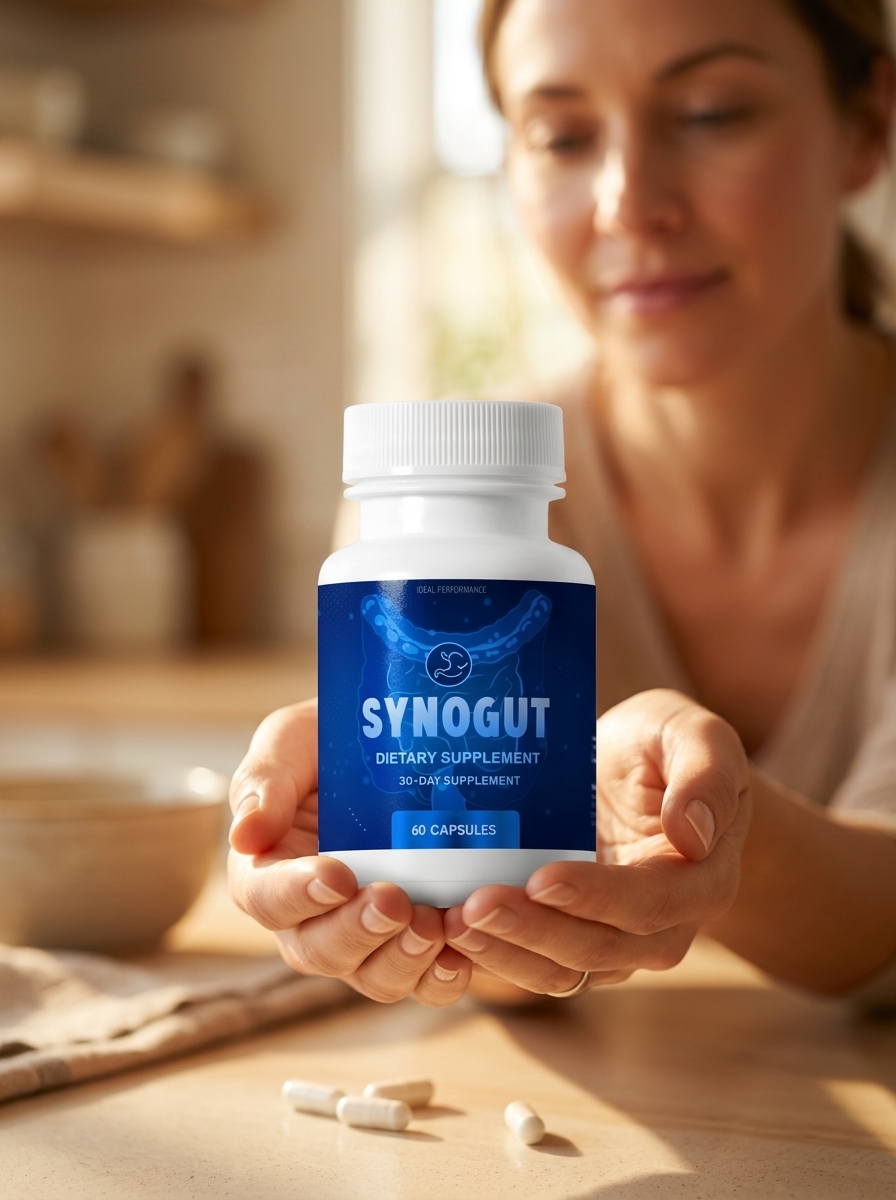
Your digestive system controls more than digestion—it’s the foundation of radiant skin. SynoGut’s natural blend supports beneficial bacteria, strengthens your gut lining, and helps reduce the inflammation that ages your complexion from within. Transform how you look by nurturing how you feel.
- ✓ Visible brightness within weeks
- ✓ Reduced morning puffiness
- ✓ Natural resilience restored
The Internal Reset Your Skin Has Been Waiting For

Real transformation begins when you address digestive health as the foundation of skin health. This means supporting the beneficial bacteria that help regulate inflammation throughout your body. It means strengthening your intestinal lining so that harmful compounds can’t enter your bloodstream and trigger the immune responses that accelerate skin aging. A targeted approach to gut health involves providing your digestive system with the specific nutrients and compounds it needs to function optimally.
This includes prebiotics that feed beneficial bacteria, digestive enzymes that improve nutrient breakdown and absorption, and natural compounds that help maintain the integrity of your intestinal lining. SynoGut offers a comprehensive approach to digestive wellness that addresses multiple aspects of gut health simultaneously. Its carefully selected blend of natural ingredients works to restore bacterial balance, support digestive function, and strengthen the gut lining that serves as your body’s primary barrier against inflammatory compounds.
What makes this approach particularly relevant for skin health is how it addresses the root causes of the inflammation and nutrient deficiencies that show up as premature aging.
Experience what happens when your gut and skin work in harmony.
When Your Skin Starts Speaking a Different Language

The changes don’t happen overnight, but when they begin, you notice them in the smallest details first. Your morning complexion looks a little brighter, as if you’ve had better sleep even when you haven’t. The puffiness that had become your new normal starts to subside gradually, revealing the bone structure you remembered from years past.
Your skin begins to feel different under your hands—smoother, more resilient, less reactive to the environmental stresses that once sent it into a spiral of irritation. Products you had to abandon due to sudden sensitivity become tolerable again, sometimes even beneficial. The makeup that had been sitting differently starts to glide on the way it used to, catching light in places you had almost forgotten could glow.
Perhaps most remarkably, you begin to see a quality in your reflection that no cream could have provided: the kind of vitality that can only come from true internal wellness.
Give your skin the internal support it’s been waiting for.
The Mirror as Friend Again

Six months after that harsh department store lighting showed me a version of myself I didn’t recognize, I found myself in another mirror—this one in my own bathroom, in the gentle morning light I’ve always preferred. The woman looking back was familiar again, but also somehow renewed. The fine lines hadn’t vanished entirely, nor should they have. But they had softened into something that looked more like character and less like damage.
The dullness had lifted, replaced by a subtle luminosity that seemed to come from within. Most importantly, my skin had regained that quality of resilience I had taken for granted in younger years—the ability to bounce back from stress, weather, and the occasional skincare experiment gone wrong.
The transformation wasn’t just cosmetic. It was the restoration of confidence that comes from feeling at home in your own skin again. The relief of waking up each morning without immediately cataloging new concerns in the mirror.
Sometimes the most profound changes happen when we shift our focus from fighting symptoms to nurturing the systems that create true, lasting wellness. Your skin has been trying to tell you something. Perhaps it’s time to listen.
Written by Liora Menden — for those who seek radiant vitality from within
Ready to see your reflection with confidence again?