There was a season when I stopped trusting mirrors. Not out of vanity — but because what I saw there felt disconnected from who I was on the inside. The dullness around my eyes, the fine lines that seemed to deepen overnight, the skin that had quietly lost something I couldn’t quite name. I tried serums. I tried sleeping more. I adjusted the lighting. But the reflection stayed the same, and eventually, I started wondering if I was asking the wrong surface the right question.
It turns out, gut health and aging skin are more tightly woven together than most of us are ever told. The skin doesn’t age in isolation. It responds — sometimes loudly, sometimes in whispers — to everything happening beneath it. To what we absorb, what we don’t, to the delicate balance of microorganisms living in our digestive system, quietly influencing processes we can’t feel but absolutely can see.
This is the conversation I wish someone had started with me sooner. Not about products on the outside, but about the quiet biology unfolding within.
The Mirror Doesn’t Lie — It Just Doesn’t Show the Whole Story

Most of us approach aging skin from the outside in. We layer on creams, add SPF, drink more water, adjust our routines. And some of that matters. But the skin’s surface is really just the final expression of a much longer, much more internal conversation. What appears as dryness, loss of elasticity, or that particular flatness that settles into the complexion over time — these aren’t just skin events. They’re signals.
The skin is the body’s largest organ, and like all organs, it depends on what it receives. Nutrients have to be absorbed to be used. Repair processes need fuel. Collagen production requires building blocks that start in digestion. When the gut is working well, this supply chain hums along steadily. When it’s not, the skin often shows us first — before we notice anything else.
This is what makes skin such an honest messenger. It doesn’t complain dramatically. It just slowly, gradually reflects the state of what’s going on beneath. And for many women, what’s going on beneath is a gut environment that’s shifted — often quietly, often over years — away from the balance it once held effortlessly.
Curious what working from the inside actually feels like?
What Changes in the Gut as We Age
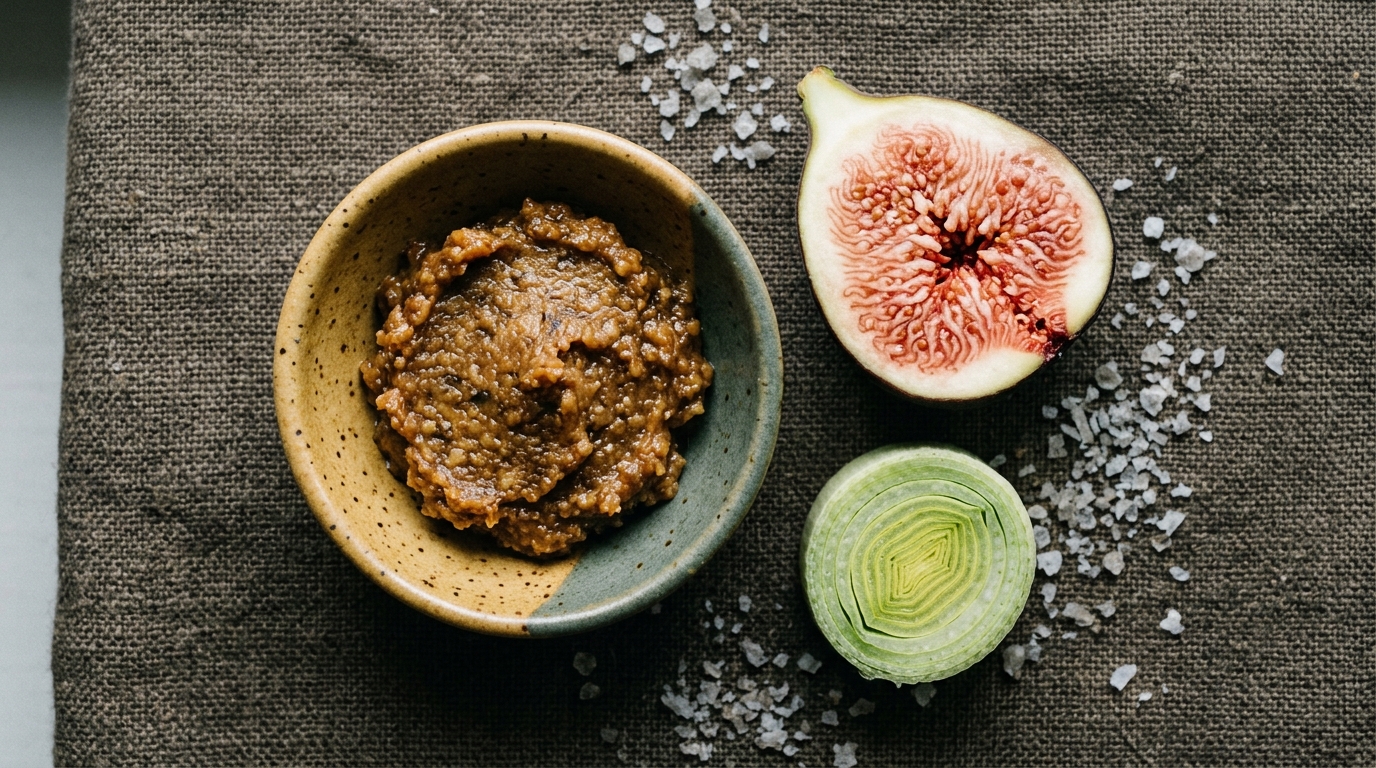
In our twenties, the gut microbiome tends to be diverse and resilient. It tolerates disruption and recovers relatively quickly. But with time — through stress, dietary shifts, antibiotic exposure, hormonal changes, and the natural arc of aging — that diversity begins to narrow. Certain beneficial bacterial strains decline. Others, less cooperative, find more room to settle in.
This matters for the skin in a very specific way. A healthy gut microbiome helps regulate inflammation throughout the body. It supports the gut lining — the thin barrier that determines what gets absorbed into the bloodstream and what doesn’t. When that lining becomes more permeable than it should be, inflammatory compounds can slip through, circulating in ways that eventually reach the skin and accelerate the visible aging process.
Beyond inflammation, a less balanced gut also affects how well we absorb the nutrients that skin actually needs — vitamins like A, C, and E, minerals like zinc, and the amino acids that become collagen. You can eat a beautiful diet and still not absorb it fully if the environment within isn’t prepared to receive it. The gut isn’t just a passageway. It’s the gatekeeper of everything your skin is hoping to use.
Your skin has been waiting for this conversation to begin.
Why Topical Solutions Only Go So Far

There’s a reason the beauty industry is a place where loyalty is hard to earn. We try something, it works for a season, and then our skin adjusts, or the results plateau, and we’re back to searching. What rarely gets discussed is that topical products work exclusively at the surface level — and the surface is downstream of everything else.
Serums and creams can moisturize, create a barrier, deliver antioxidants to the uppermost layers of skin. But they can’t reach the cells that are forming beneath the surface. They can’t slow the rate of inflammation that’s arriving via the bloodstream. They can’t help collagen production that starts several layers deeper than any cream can penetrate. These limitations aren’t a failure of the products — they’re simply a matter of biology.
Skin cell turnover — the process by which fresh, new skin cells rise to the surface and replace the old ones — naturally slows as we age. In our twenties, the cycle takes roughly a month. By our forties, it can stretch to twice that or longer. Dull, congested, or lined skin is often the result of this slowdown, compounded by a gut environment that isn’t sending the right signals to support renewal. No serum changes that. But working from the inside just might.
The glow you’re looking for doesn’t start at the surface.
The Gut-Skin Axis — A Two-Way Conversation
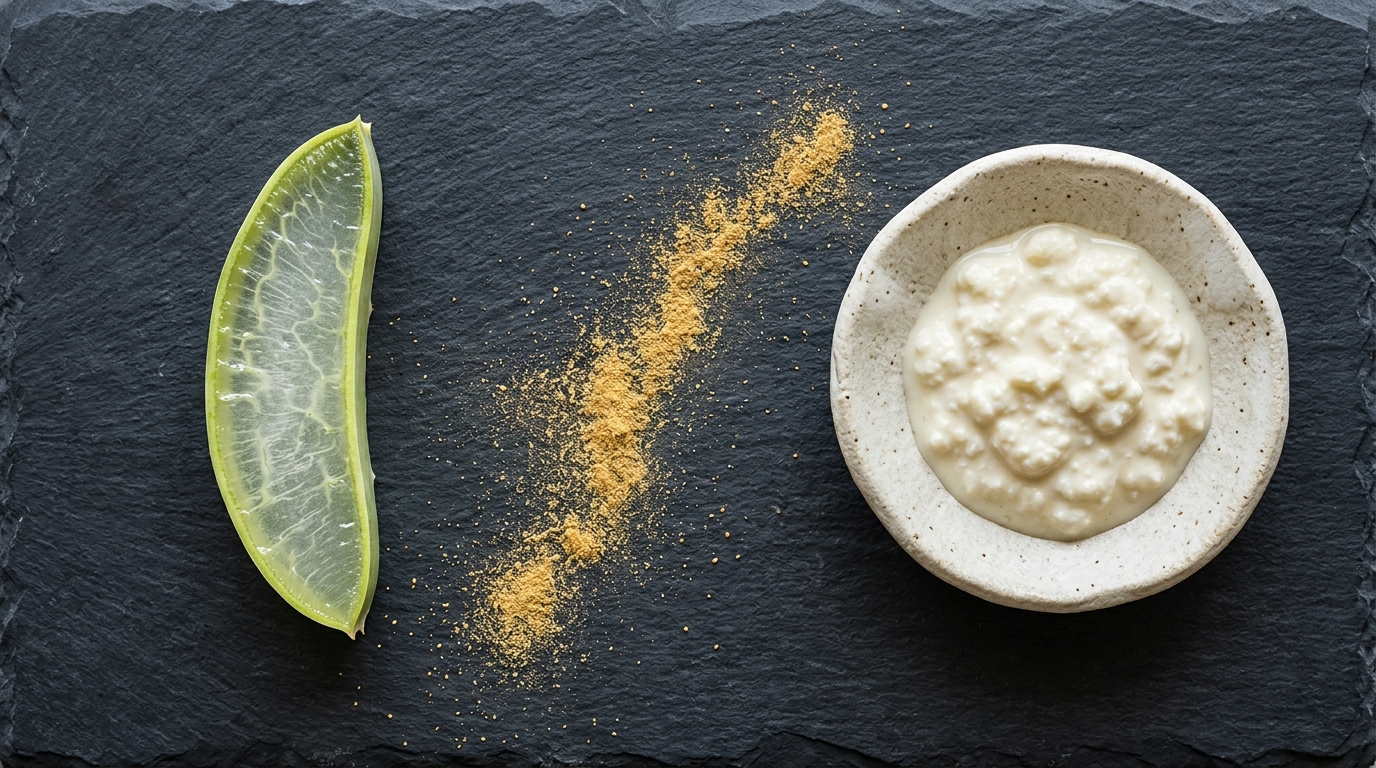
Scientists now refer to this relationship as the gut-skin axis, and while the phrase is clinical, what it describes is beautifully intuitive. The gut and the skin are in constant, bidirectional communication — sharing signals through the immune system, the nervous system, and the circulatory system. When one shifts, the other responds.
Gut bacteria, for instance, produce short-chain fatty acids that help regulate skin’s inflammatory response. They influence how much cortisol circulates in the body — and cortisol is one of skin’s great antagonists, breaking down collagen and disrupting repair cycles. They even help modulate the production of certain hormones that affect oil production, hydration levels, and how quickly the skin recovers from environmental stress.
Nurturing the gut isn’t just a digestive act. It’s a beauty act — and yet it’s the piece most beauty conversations still quietly leave out.
When the microbial community in your gut is diverse, well-fed, and working in your favor, the skin tends to reflect that. A certain brightness returns. The texture softens. Something in the face starts to feel more awake, more itself.
One daily ritual. The place where real skin change begins.
A Daily Ritual That Begins Beneath the Surface

This is the part where the question shifts from “what should I put on my skin?” to “what can I do for what’s underneath it?” And for many women, the answer involves rebuilding something — gently, consistently — at the gut level.
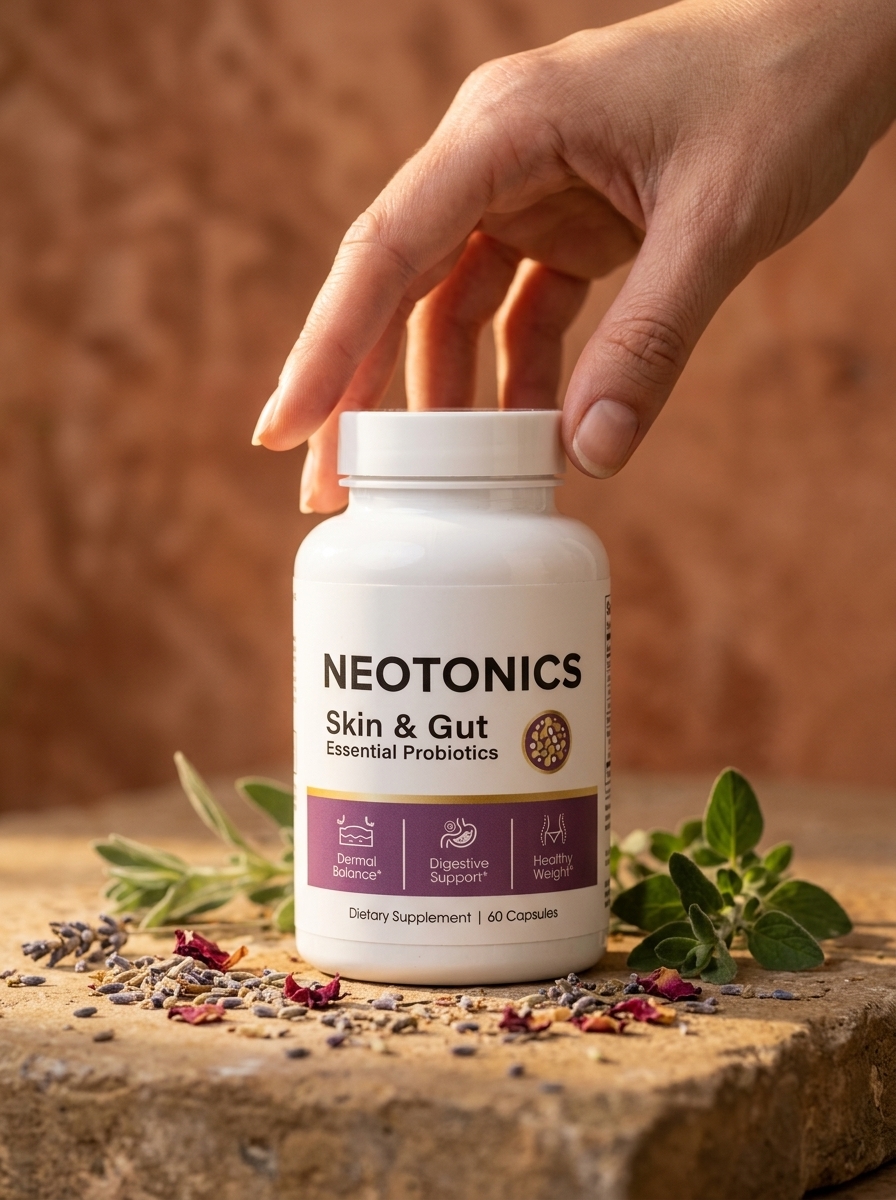
Neotonics was developed with exactly this connection in mind. It’s a skin and gut formula that works through the gut-skin axis — supporting the microbiome with a carefully selected blend of probiotics and botanicals to encourage skin cell turnover from within, soften the appearance of fine lines, and help restore that quiet luminosity that tends to fade when the gut environment shifts. It isn’t positioned as a topical replacement. It’s the interior counterpart — the part of your beauty routine that goes to work where creams can’t reach.
What makes it feel different as a daily ritual is its specificity. It doesn’t scatter its attention. It focuses on the relationship between a well-functioning digestive environment and visible skin renewal — and supports both simultaneously, in one thoughtful, consistent step each day.
Beauty That Starts Within
When the gut shifts, the skin follows. Neotonics works where creams simply can’t reach.
Neotonics is a skin and gut formula built around the gut-skin axis — the biology your topical routine was never designed to address. With a blend of probiotics and botanicals, it supports skin cell turnover from the inside, helping to soften fine lines and restore the luminosity that quietly fades when your gut environment shifts. One daily ritual. Real, interior change.
- ✓ Skin that feels more itself — softer texture, less tightness after washing
- ✓ A glow that comes from within, not from what’s sitting on top
- ✓ Consistent, quiet renewal — not a quick fix, but a real foundation
What Cellular Renewal Actually Feels Like

The changes that come with supporting skin from within don’t arrive like a dramatic reveal. They come the way morning light does — gradually, until suddenly the room feels different and you can’t remember when it changed. Women who begin prioritizing the gut-skin connection often describe the shift in small, specific ways. The skin starts to feel less tight after washing. There’s a softness in the texture that wasn’t there before. Makeup sits differently — more smoothly, more naturally. The face in the mirror begins to feel more like the one you recognize.
Cellular renewal, when it’s properly supported, brings a particular kind of glow — not the kind that sits on top of the skin, but the kind that comes from within it. Fresh cells reaching the surface more reliably. Less accumulation of the old, dull layer. A complexion that reflects light the way it did when the body’s internal systems were working in better harmony. This is what gut support, done consistently, has the potential to restore.
You’ve tried the outside. Give the inside a turn.
Small Habits That Support the Gut-Skin Relationship
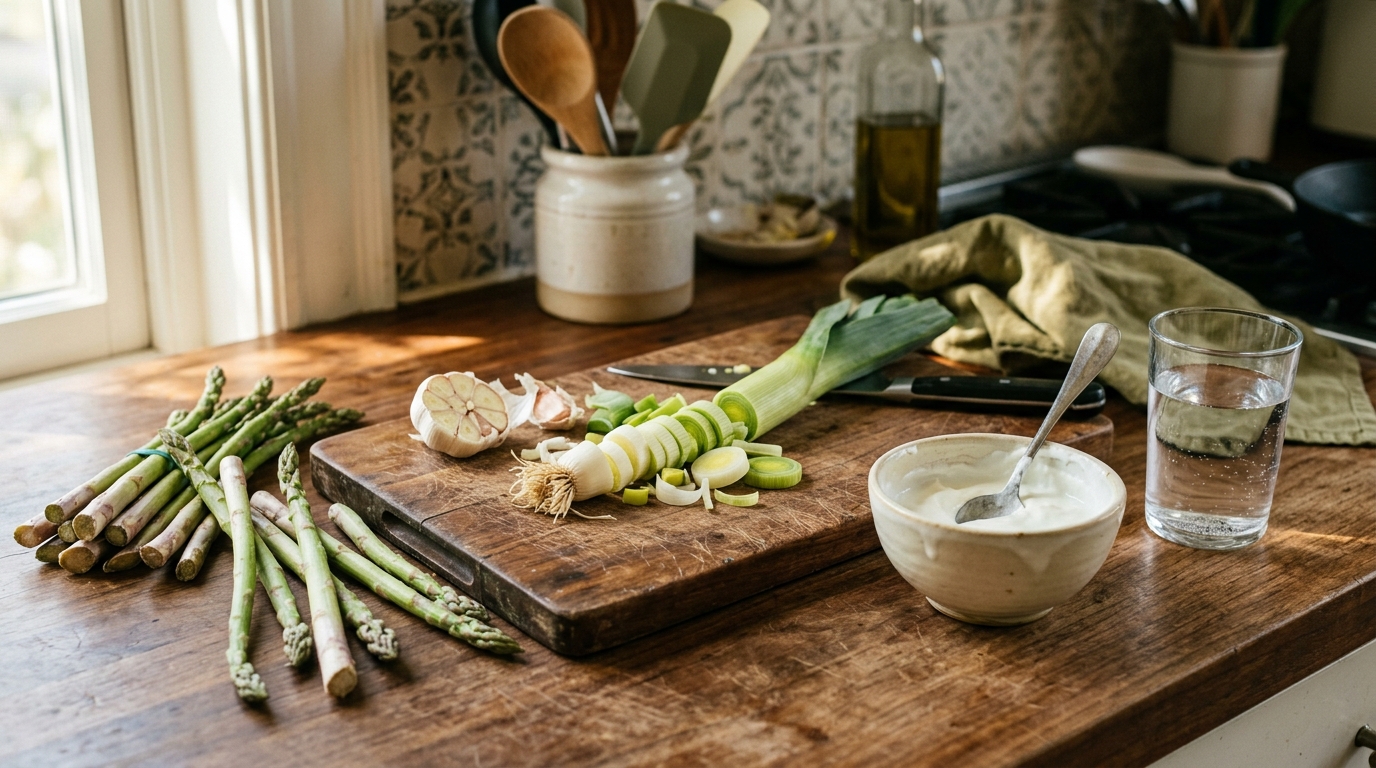
No single supplement does its best work alone. The gut microbiome thrives within a lifestyle that gives it something to work with — and there are quiet, sustainable shifts that create a stronger foundation for everything else. Foods rich in prebiotic fiber — things like garlic, leeks, asparagus, and slightly underripe bananas — feed the beneficial bacteria that are already present. Fermented foods like plain yogurt, miso, and kefir introduce additional microbial diversity. Reducing ultra-processed foods matters, not because of restriction, but because the gut genuinely performs differently without the constant noise of artificial additives.
Sleep, which so many of us deprioritize, is also a key player. The gut does significant repair work during sleep, and skin cell turnover is most active in the overnight hours. Chronic sleep disruption affects both. Managing stress — even imperfectly, even incrementally — matters too, because the gut-brain axis is real, and sustained cortisol disrupts the microbiome in ways that eventually reach the skin’s surface. These habits don’t replace support from within, but they amplify it. They create the internal environment where renewal can actually take root.
Support the gut — and let the skin follow naturally.
Coming Back to Yourself, One Layer at a Time

There’s something quietly profound about the realization that beauty isn’t something you put on — it’s something that rises up from within, when the conditions inside are right. Gut health and aging skin aren’t separate conversations. They were never meant to be. The skin has always been reflecting the body’s deeper truth, and when we start working at that deeper level, what comes back isn’t just better texture or fewer lines.
It’s a sense of recognition. Of feeling like yourself again in your own face.
Neotonics exists in that space — not as a promise, but as a daily act of care that reaches the place where real change begins. The gut. The cells. The quiet, invisible processes that eventually surface as the glow you thought you’d lost. Starting there changes everything about what becomes possible at the surface.
Written by Liora Menden — for those who seek beauty that begins within
Beauty that rises from within is the kind that lasts.